
Each evening after sunset, a group calling itself the Belfast Nightwatch First Division gathers near CS Lewis Square in east Belfast to patrol the streets. The vigilantes, typically a dozen strong, target dark-skinned males, demanding identity documents and explanations for their presence. Interrogations are filmed and posted on social media, accompanied by music and praised by followers.
This campaign of intimidation has driven families from their homes and prompted many to consider leaving Northern Ireland. Mohammed Idris, a 51-year-old Sudanese refugee who lost his shop in a riot last year, said: “It’s worse than ever now. Everyone is scared. You don’t know exactly what will happen the next day. I don’t think I see a future here.” Another shopkeeper, who gave his name only as Mo, described racist abuse as normalised, recounting an incident where a man told him to “get the fuck back to your country” and slapped another person.
Anti-immigrant riots in England last August inspired copycat eruptions in Belfast and emboldened a campaign of thuggery across Northern Ireland. Families from Africa, many employed in healthcare, have had windows smashed and cars burned in County Antrim. In June, mobs targeted Roma homes in Ballymena, forcing hundreds to flee. This week, youths in south Belfast threw bottles and water balloons at ethnic minorities.
The vigilantes operate in the loyalist, Protestant part of east Belfast, claiming on their Facebook page to be “concerned parents … working together, patrolling Belfast streets, for the safety and protection of our children and vulnerable people.” However, almost half of those arrested for race hate disorder in Belfast last summer had previously been reported for domestic abuse. Misinformation on social media portrays immigrants as predators.
Mohammed, Sherif, and Adel, software engineers from Egypt who moved to Belfast with their families, said intimidation has become more brazen. Since April, they have been approached, filmed, and followed in public spaces; their car number plates have been photographed. “We’ve stopped going out after 9pm. We used to feel that Northern Ireland was home but these days, no longer,” said Sherif. All three plan to return to Egypt.
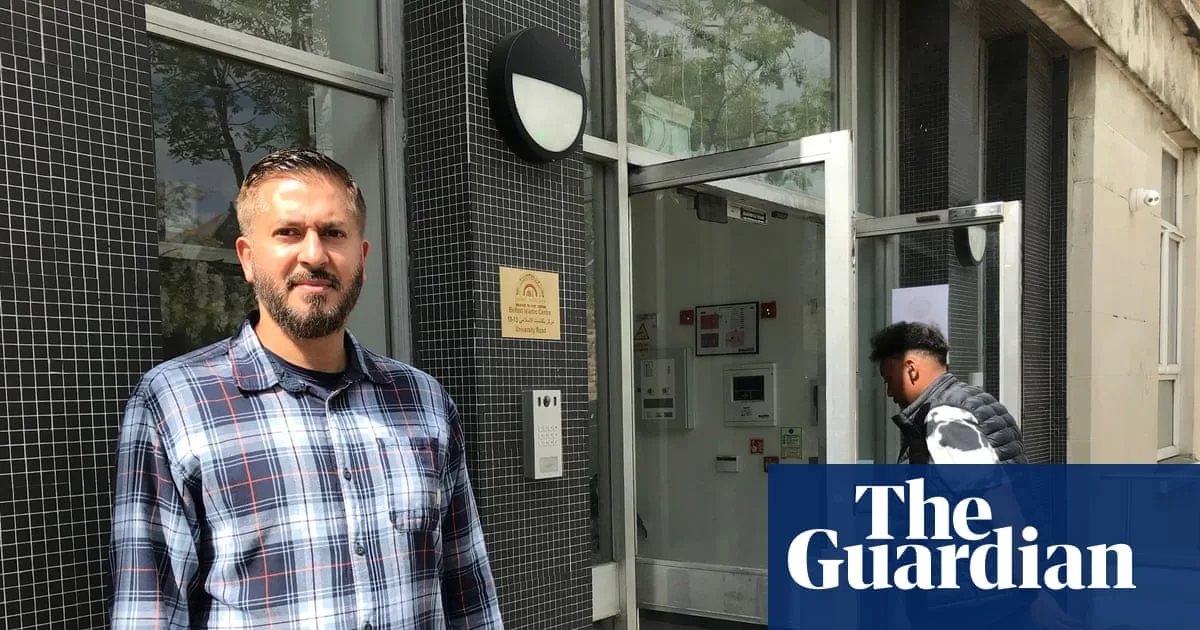
Kashif Akram, a board member of the Belfast Islamic Centre, which was attacked in June, said immigrants are being scapegoated. “This all stems from one thing, which is hate.” He hopes a police race and ethnicity action plan will help deter aggression. Police monitor the vigilantes and recently arrested a 37-year-old on suspicion of assault, theft, and criminal damage.




