Northern Ireland Leaders Clash Over Prospect of Irish Unity Referendum
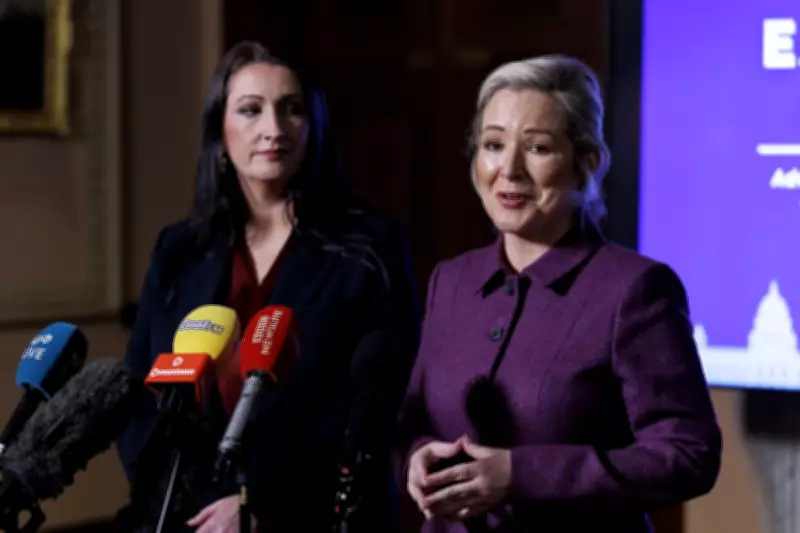
Deputy First Minister Emma Little-Pengelly has declared that momentum for an Irish unity referendum "doesn't exist" in Northern Ireland, directly contradicting First Minister Michelle O'Neill's position on the contentious constitutional issue.
Divergent Views on Constitutional Future
The Democratic Unionist Party's Ms Little-Pengelly and Sinn Fein's Ms O'Neill expressed their opposing perspectives during separate interviews on Sky News' Sunday Morning With Trevor Phillips programme. Their comments highlight the deep political divisions that continue to characterise Northern Irish politics nearly three decades after the Good Friday Agreement.
Ms Little-Pengelly firmly rejected the notion that support for Irish unification has gained significant traction, stating: "I think it's important to say that in Northern Ireland, nationalism and republicanism haven't increased their vote from 1998, despite demographic change. They're sitting in and around the same percentage that they had in 1998."

Unionist Perspective on Constitutional Stability
The DUP deputy leader articulated her belief that Northern Ireland's best future lies within the United Kingdom, particularly during what she described as a period of global instability. She emphasised: "When we look across the globe at a time of instability, of a lot of concern and apprehension, a strong and United Kingdom, working together, fighting together, defending together, I think, is what serves all of our citizens better."
Ms Little-Pengelly further argued that proponents of Irish unity consistently attempt to create a false sense of momentum, adding: "I have no doubt that you will hear that again, because to serve their purpose is to try to get that sense of momentum towards that. That doesn't exist in Northern Ireland."
Sinn Fein's Vision for Border Poll by 2030
In stark contrast, First Minister Michelle O'Neill reiterated her party's longstanding position, stating she "absolutely" could imagine a border poll occurring during her tenure. She declared: "My party's view is that we should have this by 2030, that's only a short way away. So now is the time for the planning, the preparation."
The Sinn Fein leader drew parallels with the Brexit referendum, warning against repeating what she described as a damaging process: "I don't want done to the people here what was done in relation to Brexit. Brexit was a massive act of economic self-harm, it was done against the wishes of the people here."
Building an Inclusive Future
Ms O'Neill outlined her vision for what she termed "a new Ireland," emphasising inclusivity across different identities: "We have an ability to take control of our own fortunes. I encourage all political leaders to reach for that together. Let's find accommodation for each other. Let's build a new Ireland where those of us that have an Irish identity, a British identity, and those people have made here their home. We can make this a much better place for all of us, an inclusive place. That's the prize I'm reaching for."
Constitutional Framework and External Perspectives
Under the provisions established by the 1998 Good Friday Agreement, a border poll would only be called if the UK Secretary of State believes a majority in Northern Ireland would likely vote for Irish unification. This constitutional safeguard ensures that any referendum would require clear evidence of shifting public opinion.
The debate occurs against a backdrop where Irish Taoiseach Micheal Martin has previously indicated he is not planning for a border poll by 2030, suggesting that while Sinn Fein advocates for the timeline, it lacks broader political consensus across the island of Ireland.
The contrasting positions articulated by Northern Ireland's two most senior political figures underscore the ongoing constitutional questions that continue to shape political discourse in the region, with fundamental disagreements about both timing and desirability of any future border poll.