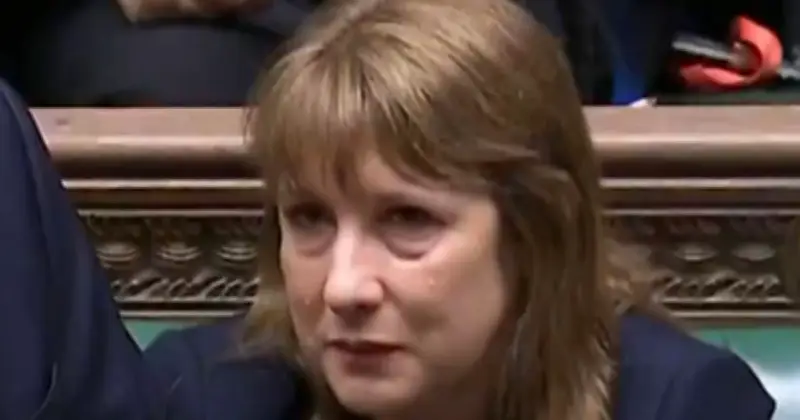
Chancellor Rachel Reeves has spoken candidly about the moment she broke down in tears during Prime Minister's Questions (PMQs) last year, describing it as her "toughest moment" in office. In an interview with the BBC's Laura Kuenssberg, Reeves revealed that seeing images of herself crying on television and in newspapers was one of the hardest experiences of her career.
Emotional Breakdown at PMQs
The incident occurred on Wednesday, July 2, during a tense session of PMQs. Reeves was visibly emotional in the House of Commons chamber, prompting widespread speculation about her future as Chancellor. At the time, a spokesperson attributed her distress to an unrelated "personal issue," but Reeves had not previously elaborated on the matter.
In the interview, Reeves said: "I would say, don’t cry on national television. That was probably my toughest moment – or perhaps even tougher, seeing the photos of me crying on national television on the front pages of every newspaper the following day." She added: "It was a tough day, we all have tough days. I talk to my friends, and people wrote to me saying 'that happened to me once,' and the only difference is that I was on the telly. People have difficult days at work, and that was one for me."

Political Context and Pressure
The emotional moment came during a stressful week for the Chancellor, as the Labour Party faced internal challenges over its welfare reforms. During the PMQs session, Conservative leader Kemi Badenoch remarked that Reeves looked "absolutely miserable" and questioned Prime Minister Sir Keir Starmer on whether the Chancellor should remain in her position.
Reeves, who made history as the first female Chancellor, also reflected on her legacy in the interview. "I will go down in history as the first female Chancellor," she said. "But what I really hope is that – something I said, actually, when I gave my first speech as Chancellor, that I would know my time in office was a success if young women and girls felt there should be no ceiling on their ambition."
Public and Personal Reactions
Following the broadcast, many viewers and political commentators expressed support for Reeves, acknowledging the pressures of high-profile public office. The Chancellor's openness about the incident has been seen as a humanizing moment in a often adversarial political environment.