

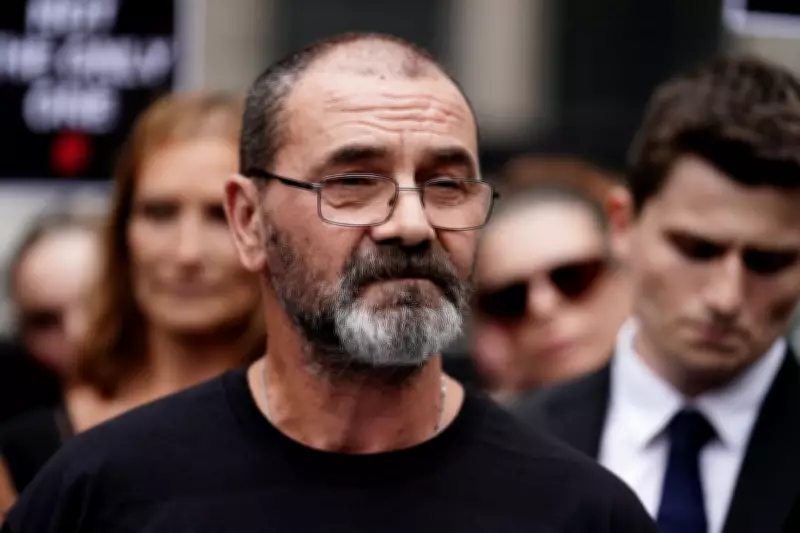
Andrew Malkinson, who was wrongfully convicted of a brutal rape and served 17 years in prison, has revealed that prosecutors asked him to give evidence in the trial of the actual perpetrator, Paul Quinn. The request brought back painful memories and caused his emotions to "immediately boil up."
Background of the Case
Paul Quinn, 52, was found guilty of the 2003 sex attack on April 17 after a six-week trial at Manchester Crown Court. The attack occurred in the early hours of July 19, 2003, when Quinn assaulted a young mother walking home in Little Hulton, Salford. Malkinson, then a security guard at a local shopping centre, was wrongly identified in an identity parade and convicted despite his protests of innocence.
Flawed Investigation
During the original trial in 2003, the victim expressed doubts about having identified the right man, but police dismissed her concerns as "just trial nerves." A DNA sample from the victim's vest top, recovered and analysed in 2007, excluded Malkinson, a development that should have "set alarm bells ringing," according to Quinn's trial. However, it took until 2022 for advanced DNA testing to match the sample to Quinn, with a billion-to-one probability.

Malkinson's Reaction to the Request
In his first full interview since Quinn's conviction, Malkinson told The Sunday Times that he was horrified at the idea of returning to the same court where he was wrongly convicted 22 years earlier. "They've got a billion-to-one DNA, what possibly could I add to that? It's total flashback territory," he said. He feared that his emotional state might jeopardise the trial, saying, "I knew I couldn't do it because my emotions immediately boiled up on hearing the request. I thought I might even jeopardise the trial somehow … like by saying the wrong thing."
Ongoing Investigations and Concerns
Five former Greater Manchester Police (GMP) officers and one currently serving officer are under investigation by the Independent Office for Police Conduct (IOPC) over the case. The chair and chief executive of the Criminal Cases Review Commission (CCRC) have resigned, and a public inquiry is underway after a 2024 review found failings that could have exonerated Malkinson a decade earlier.
Malkinson expressed concern that retired officers might not cooperate with the IOPC, as those who retired before 2017 are not required to attend misconduct hearings. "They can just say: 'Oh, I've retired now, so it doesn't matter,'" he said, adding, "Can bank robbers say: 'I've retired now, doesn't matter'? No. That really annoys me."
Impact on Victims
Malkinson said both he and the victim were "deceived by agencies." He stated, "I'm sure she hated my name for many, many years, thinking: 'Well, this is the identity of my attacker.' It's just been devastating for me, and I'm still suffering very much the consequences. And I'm sure, similarly, the victim has suffered and is suffering and in all probability will continue to."
Conviction and Compensation
Upon learning of Quinn's conviction while on holiday in Rome with his son, Malkinson described it as a "fantastic moment." He celebrated with margaritas and tequila, though he noted, "It would be unseemly to get drunk." His compensation payout for the injustice is being finalised, but he criticised the system, saying, "There's a great deal wrong with the compensation system. It's all been carefully managed so they can pay the bare minimum they can get away with."
Assistant Chief Constable of GMP, Steph Parker, expressed confidence that the IOPC is "determined to find answers for what went on in 2003" and that the force will learn from the findings.






