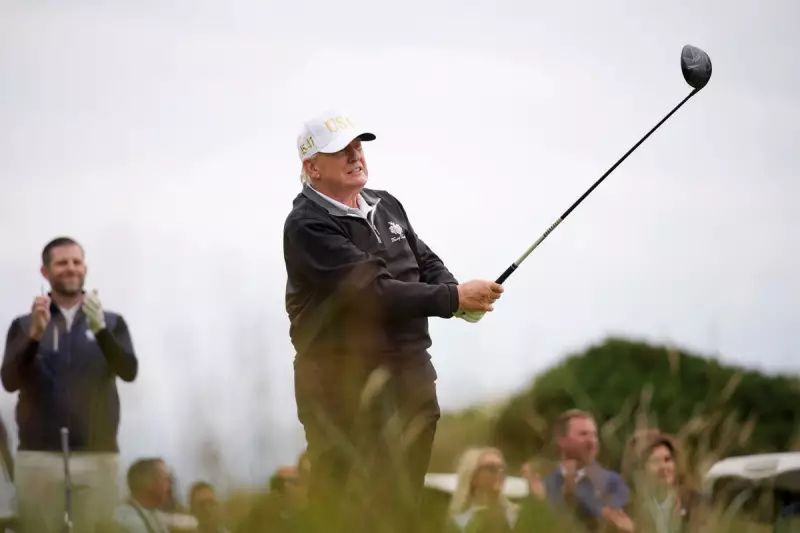
Explosive new details have emerged from secret grand jury testimony, suggesting that former US President Donald Trump is not above bending the rules on the golf course. The claims come from an unlikely source: his long-time political ally, Senator Lindsey Graham.
Under Oath Allegations on the Fairway
According to transcripts obtained by the New York Times, Senator Graham made the insinuation during his 2022 testimony before a Georgia grand jury investigating election interference. When questioned about Trump's habits, Graham offered a telling anecdote about the former president's competitive nature.
"Some people say you may outdrive him, but you’re not going to outdrive his caddy. It is what it is," Graham reportedly stated. This cryptic comment has been widely interpreted by observers as a suggestion that Trump receives illicit assistance during games, perhaps through his caddy improving his lie or distance.

Golf and Election Denial: A Pattern of Refusal to Lose
The testimony intriguingly linked Trump's attitude on the golf course to his behaviour following the 2020 presidential election. Graham told jurors that Trump exhibited a similar refusal to accept defeat in both arenas.
In a striking comparison, Graham indicated that Trump would be more inclined to believe "martians came and stole votes" than to concede he lost the election fairly. This remark underscored Graham's assertion that he did not share Trump's core belief that the 2020 election was stolen, highlighting a significant "difference on this point" between the two Republicans.
From Testimony to Dismissal: Graham's Changing Stance
Despite his candid testimony under oath, Senator Graham has since publicly dismissed the Georgia election interference case as a "politically driven hit job." This shift highlights the complex dynamics within the Republican Party, where private acknowledgements often conflict with public loyalty.
The revelation, first reported on Wednesday 14 January 2026, adds a bizarre yet revealing layer to the public understanding of Donald Trump's character. It paints a picture of a man for whom losing—be it a political race or a leisurely game—is seemingly unacceptable, prompting allegiances and actions that continue to ripple through the American political landscape.