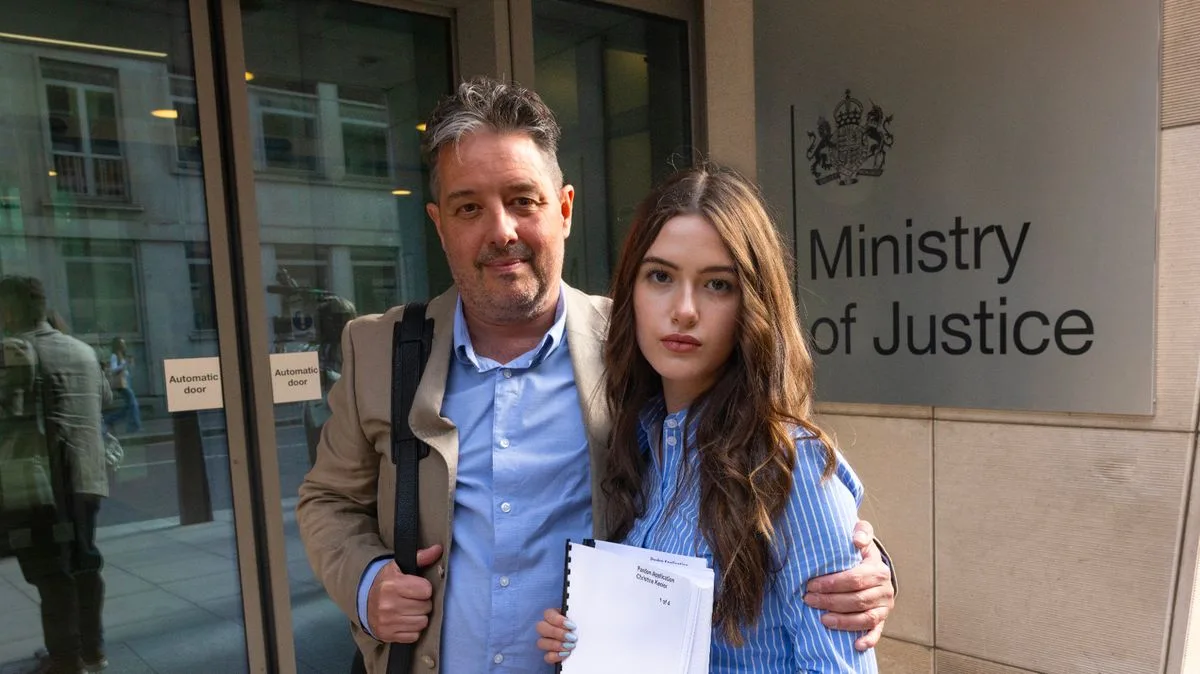
The family of Christine Keeler, central figure in the Profumo scandal, is intensifying its campaign to secure a posthumous pardon for her perjury conviction, more than six decades after the case that shook British politics.
Keeler, who died in 2017 at age 75, was jailed for nine months in 1963 for perjury in a trial unrelated to the Profumo affair. Her family argues the conviction was a deliberate attempt to discredit her over the scandal. In her will, Keeler urged her son, Seymour Platt, to 'tell the truth about her life'.
In May, Platt and his 16-year-old daughter, Daisy Devine-Platt, submitted a 300-page dossier to the Ministry of Justice, calling for a royal prerogative of mercy. This rare mechanism would allow the King to pardon Keeler if all other judicial routes are exhausted and new evidence demonstrates her innocence.

Human rights barrister Felicity Gerry KC backed the campaign, stating: 'I'm hoping 2026 is the year when we realise that Christine's case was such a terrible miscarriage of justice that her pardon matters to all women.'
The Criminal Cases Review Commission previously declined to refer the case to the Court of Appeal, acknowledging that Keeler could not have received a fair trial due to prejudicial media coverage, but noting the court's limited ability to correct the public record regarding the Profumo affair.
Keeler's family maintains she was a victim of stalker Aloysius 'Lucky' Gordon, who attacked her in 1963. They argue the perjury conviction stemmed from pressure on witnesses and a biased trial. The family now pins its hopes on the Justice Secretary recommending a pardon, a step reserved for cases where the individual was 'morally and technically innocent'.