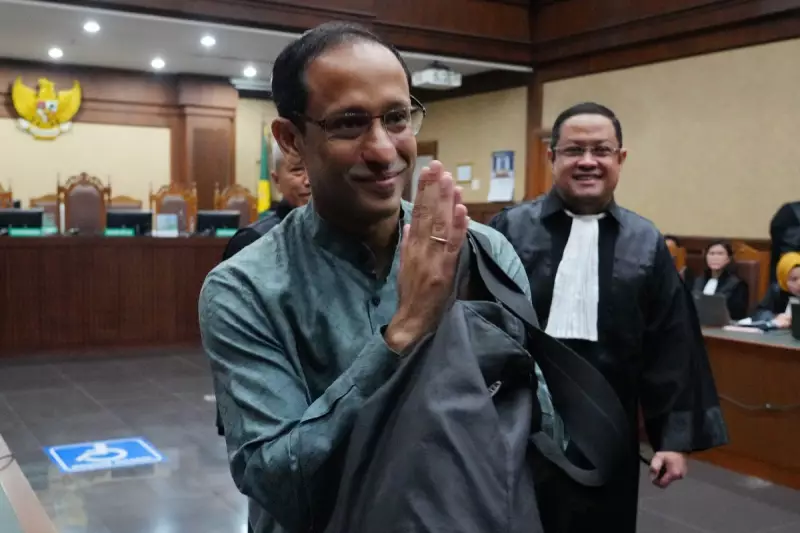
A high-profile corruption trial has begun in Jakarta, centring on allegations that a former minister and tech mogul steered a multi-billion dollar government contract for personal gain. The case has sent shockwaves through Indonesia's political and business circles.
The Core Allegations: A Minister's Conflict of Interest
On Monday 5 January 2026, the Jakarta Corruption Court opened proceedings against Nadiem Anwar Makarim, the 41-year-old co-founder of the ride-hailing giant Gojek. Makarim, who served as Indonesia's Education, Culture, Research, and Technology Minister from 2019 to 2024, is accused of corruption linked to a government project to buy Google Chromebook laptops for schools.
Prosecutors allege that Makarim, while in office, improperly favoured Google's Chromebook for a national school digitalisation drive, despite ministry researchers refusing to recommend the model. The indictment states the laptops were ineffective for remote regions lacking reliable internet access.

The prosecution's central claim is that Makarim directed the 2020–2021 procurement "entirely for personal business interests." They allege he pressured Google to invest in PT Aplikasi Karya Anak Bangsa (PT AKAB), Gojek's parent company. In return, Makarim is said to have received approximately 809 billion rupiah ($48.2 million).
A Web of Deals and Denials
Lead prosecutor Muhammad Fadli Paramajeng told the court the procurement of over 1.2 million Chromebooks was designed to cement Google's dominance in Indonesia's education technology sector. He linked it to subsequent Google investments totalling around $787 million in PT AKAB via Google Asia Pacific.
Prosecutors further argued that Makarim's 2019 resignation from Gojek to join President Joko Widodo's cabinet was a "strategic concealment" to mask conflicts of interest. They claim he maintained indirect control by appointing close associates as directors.
Makarim has vehemently denied all charges. His defence team, led by lawyer Ari Yusuf Amir, stated he did not personally receive any funds from the laptop scheme. They contend that Google's investment largely predated his ministerial role and was routine corporate activity, unrelated to the procurement. The defence also noted Makarim divested from PT AKAB upon taking office, saw his wealth halve during his term, and insisted procurement decisions were made by technical teams, not the minister.
Severe Consequences and a Wider Net
Makarim faces the severe possibility of life imprisonment if convicted under Indonesia's stringent 2001 Corruption Law for causing state losses and misusing public funds. The alleged scandal is valued at a staggering $125 billion.
The trial is not isolated. Two former education ministry officials and a former tech consultant have also been charged in the case. Authorities are seeking another staff member who remains at large.
This case highlights the intense scrutiny on public-private dealings in the rapidly growing EdTech sector and poses serious questions about governance and accountability in major government digital infrastructure projects.