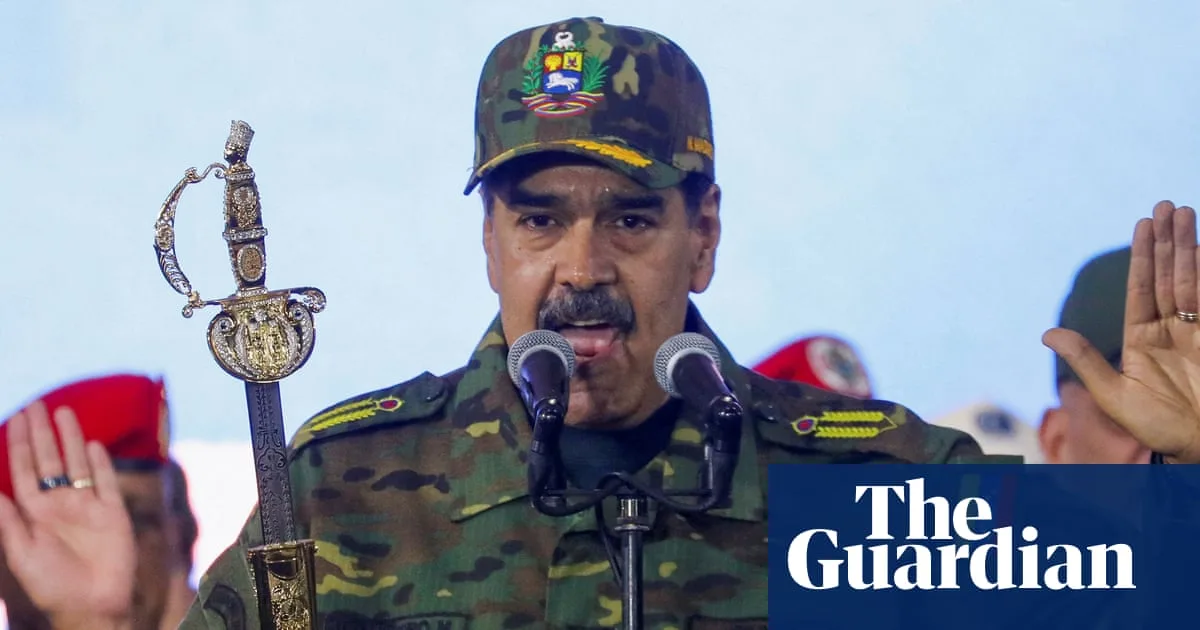
In a stunning and audacious military operation, United States forces successfully captured Venezuelan President Nicolás Maduro on his home turf, ending a months-long intelligence and planning effort of unprecedented scale.
The Intelligence Build-Up and Rehearsal
For months prior to the raid, American intelligence operatives meticulously tracked the Venezuelan leader's every move. As General Dan 'Raizin' Caine later revealed, US spies had cultivated a mole within Maduro's inner circle, providing a constant stream of detailed information. They knew the locations of his safe houses, his and his wife Cilia Flores's travel patterns, their daily routines, and even the pets they kept.
This surveillance was so comprehensive that the US military built a full-scale replica of Maduro's fortress-like residence to practice for the mission, codenamed Operation Absolute Resolve. The goal was clear: capture the leader of a hostile regime on his own soil.
A 'Ballet in the Sky' Awaits the Green Light
By late December 2025, a formidable aerial armada was poised for action. Approximately 150 aircraft from 20 US bases across the Western Hemisphere were tasked and ready, awaiting final authorisation from President Donald Trump. The force mix was overwhelming, including cutting-edge F-22 Raptors and F-35s, F/A-18 Hornets, B-1 bombers, electronic warfare planes, command aircraft, helicopters, and a fleet of drones.
One analyst described the planned coordination as a "meticulously orchestrated 'ballet in the sky.'" However, General Caine warned that the failure of any single component in this "well-oiled machine" would have jeopardised the entire mission. The plan required aircraft to ingress at low altitude, making perfect weather conditions essential to minimise the risk of civilian casualties.
Secrecy was paramount. To prevent leaks, no advance notice was given to members of Congress. Key figures, including Secretary of State Marco Rubio and Attorney General Pam Bondi, were integrated into the preparations. From his Mar-a-Lago estate during the Christmas period, President Trump received constant weather updates, as low cloud cover delayed the operation for four days.
Execution: The Raid on Caracas
On Friday, 3 January 2026, the weather finally broke. "The weather cleared just enough, opening a path that only the most skilled aviators in the world could move through," General Caine stated. With a clear forecast, President Trump gave the final order at 10:46 PM US Eastern Time, messaging all units: "Good luck and Godspeed."
Mission operations were quietly managed from within Mar-a-Lago. Vice President JD Vance monitored proceedings via secure video link, having avoided the estate that night to prevent his motorcade movements from alerting Venezuelan forces.
The complex operation involved Space and Cyber Command disabling ground lights and air defence systems. Helicopters carrying the extraction force—including elite Delta Force operators and law enforcement officers armed with an arrest warrant for drug charges—flew in at just 100 feet above the water. They maintained the element of surprise until the final moments before reaching the palace.
At 1:01 AM US Eastern Time (an hour later in Venezuela), the force fast-roped onto Maduro's compound. They encountered gunfire and responded with what Caine termed "overwhelming force." Guided in real-time by intelligence teams via headsets and with aerial cover overhead, the operators located Maduro as he attempted to flee to a secure bunker.
"He managed to get to the other side but not close the door in time," President Trump later revealed. Maduro and his wife subsequently surrendered. By 3:39 AM Eastern Time, the helicopters were back over international waters, transporting the captured leader and his spouse to the USS Iwo Jima.
One US aircraft sustained damage but remained operational and returned safely. Venezuelan authorities reported civilian casualties but did not provide specific numbers.
Reflecting on the mission's success, General Caine said, "We watched, we waited, we remained prepared. This was an audacious operation that only the United States could do. It required the utmost precision." The capture of Nicolás Maduro marks a dramatic escalation in US interventionism, with profound and uncertain consequences for regional stability.




