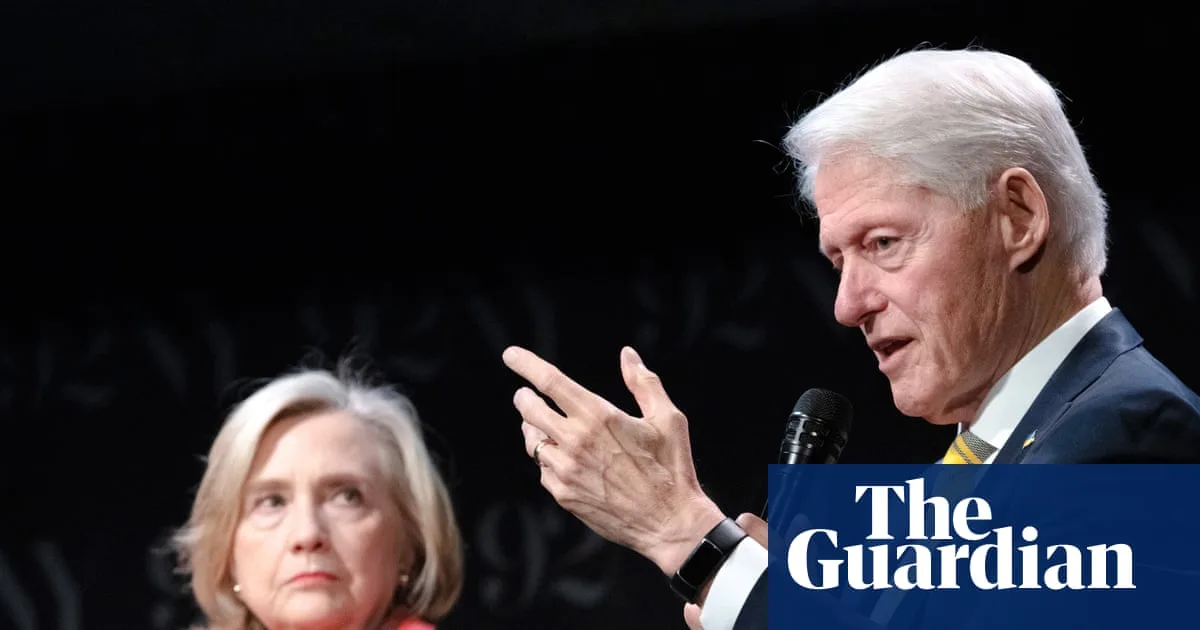
The political theatre surrounding the Jeffrey Epstein case has taken a sharp turn, with former President Bill Clinton and former Secretary of State Hillary Clinton publicly refusing to comply with congressional subpoenas. The move escalates a Republican-led investigation that critics label a deliberate distraction from the Trump administration's own handling of the Epstein files.
A Subpoena and a Scathing Rebuttal
This week, the Clintons made their position unequivocal, announcing they would not testify before the House Oversight Committee. The committee, chaired by Republican James Comer, had issued subpoenas last August demanding testimony related to the "horrific crimes perpetrated by Jeffrey Epstein." In a letter to Bill Clinton, Comer cited his "past relationships" with Epstein and Ghislaine Maxwell as justification.
In response, the Clintons released a fiery statement on social media, framing their defiance as a principled stand. "Every person has to decide when they have seen or had enough and are ready to fight for this country, its principles and its people, no matter the consequences," they wrote. "For us, now is that time." Comer has since stated the committee will seek to hold both in criminal contempt of Congress.
The Political Backdrop: A Calculated Distraction?
The confrontation occurs against a backdrop of intense scrutiny over connections between powerful figures and the late sex offender. While Bill Clinton's ties to Epstein are documented—including at least 17 visits to the White House in the early 1990s and joint travel—he has never been formally accused of wrongdoing and says he cut ties in 2005.
Commentators and observers, however, see the timing of the committee's aggressive pursuit as politically motivated. The Trump administration has faced growing pressure to fully release the Epstein files, with supporters and critics alike expressing frustration over the delay. Just this week, podcaster Shawn Ryan, a former Trump backer, accused the president of "protecting pedophiles" over the issue.
This has led to accusations that focusing on the Clintons is a strategic effort to shift the narrative. As columnist Arwa Mahdawi noted, the tactic appears designed to "take the heat off Trump’s Epstein connection" by redirecting attention. Comedian Jon Stewart offered a nuanced take, arguing the Clintons should comply, but only if the Department of Justice also complies by releasing all files. "This is bonkers how long this is going on," he remarked.
Broader Implications and a Pattern of Contempt
The standoff transcends the individuals involved, highlighting a deeper cynicism in Washington. The spectacle of holding the Clintons in contempt while the executive branch is accused of foot-dragging on transparency is seen by many as emblematic of a government showing contempt for the American public.
Critics of the Clintons' statement were swift to question their newfound moral stance, pointing to their record on other issues. Nonetheless, the core allegation remains: that the investigation is less about justice for Epstein's victims and more about creating a political sideshow.
Ultimately, the strategy of focusing on the Clintons may prove ineffective. Unlike the cult-like loyalty commanded by Donald Trump, the Clintons do not preside over a similar movement. Should evidence of wrongdoing emerge, few would argue they be shielded because of their party affiliation. The ongoing saga, therefore, risks merely underscoring the perceived hypocrisy and political gamesmanship dominating the Epstein case, leaving the public further disillusioned.