There was no triumphant celebration, no champagne; just a quiet exhalation of relief and, later, a takeaway pizza. There is no precedent for how to react when you have been cleared of charges of driving your first wife to suicide after allegedly carrying out a 'tsunami of abuse' including sexual violence.
But for IT consultant Christopher Trybus, acquitted last month of the manslaughter of his wife Tarryn Baird after an eight-week trial, there was a palpable sense that an immense weight had been lifted from him.
It would have been extremely unusual for England and Wales had the court ruled that he was criminally liable for her death, and there are few precedents. His acquittal on a series of heinous charges – in the face of what seemed like a welter of damning evidence against him – left those who had pre-judged him as guilty in shock.

But the grisly catalogue of images of bruises and wounds on Tarryn's face and body in numerous selfies exhumed from her mobile after her death and the 'rape tape' that the prosecution attested proved he had sexually assaulted her – it all failed to convince the jury of his guilt. The husband who always professed to love his wife 'deeply' was exonerated.
Chris was abroad when Tarryn died, and she had alleged in a note written just before she took her life that his abuse had driven her to suicide. He was also found not guilty of coercive and controlling behaviour and cleared on two counts of raping Tarryn. The jury deliberated for 40 hours before returning its verdicts.
Relief and Grief
'I started crying as they were reading them out,' says Chris, speaking out for the first time since his trial ended. 'One or two jurors smiled at me. There was such a mix of emotions; relief of course, and I was upset that Tarryn had made the allegations, but I also try to understand.'
'She was struggling with her mental health but it felt, in large part, a happy marriage and it is difficult now. I don't want her memory tarnished. I don't want her remembered for the wrong reasons.'
'The grief at her death stays. It's always there. It's like a big black hole, but life grows around it. It isn't something you get over. You cannot possibly celebrate when it's been such an awful tragedy.'
He's right: there are no winners here. Tarryn died, aged 34, in desperately sad circumstances, beset by mental demons, leaving loved ones blindsided by her loss.
Since Tarryn took her life in November 2017, Chris has found new happiness with Bea, now his second wife. But he has also endured indignity and public disapprobation, the innermost secrets of his first marriage – including intimate sexual habits – laid bare for public consumption and his reputation trashed in the court of public opinion before the trial had even finished.
A New Life, Shadowed by the Past
Today Chris, 44, and Bea, 39, are sitting at the table in the vast kitchen-dining room of their honey-stoned house in the countryside near Swindon, surrounded by the trappings of family life: kids' trainers, photos and books. Bea has a son, 15, and daughter, 12, from her first marriage, and refers to them as 'our' children.
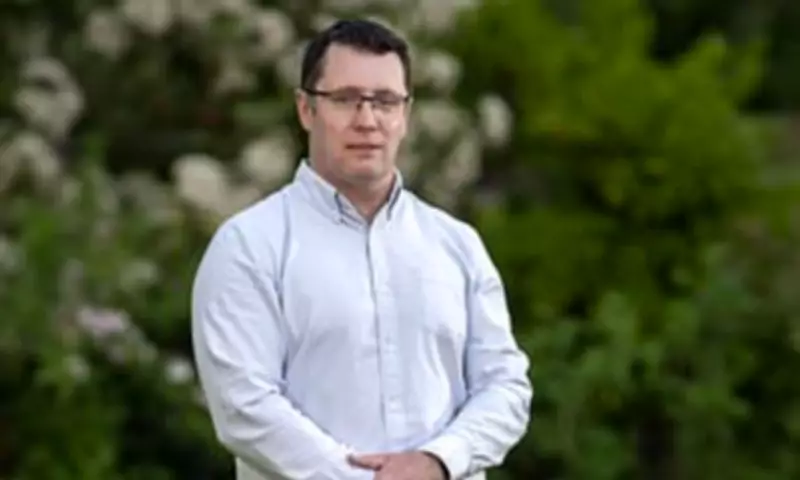
Chris, five days after his acquittal, looks weary, his eyes pink-rimmed behind spectacles. He speaks tentatively; seemingly still worried he is being legally cross-examined. Only a hint of his native South African inflection remains. Polish-born Bea, poised, elegant, sweet-natured, reaches intermittently to touch his hand.
The managing director of a financial compliance consultancy, she has always, unequivocally, believed in his innocence and was there throughout the eight-week trial at Winchester Crown Court. When he was acquitted of all charges, Bea, who was in the public gallery, says: 'I couldn't see him, I was sitting upstairs. I wanted to run down and hug him. I hugged his brother instead. We were with his mum, holding her hands, and we were all crying.'
It is difficult, sitting in their stylish home – a home they may have to sell to pay the £250,000-plus legal bill Chris has accrued – to conjure up the litany of grotesque abuses of which he was accused. Indeed it is hard to square the accusations Chris faced with the man in front of me today.

Mildly professorial in his pale blue shirt and chinos, he wears an Apple watch with a Snoopy face that Bea bought him. She insists he is 'the kindest, nicest man; very shy, even awkward at times'. She adds: 'He's the opposite of coercive and controlling. I'd have run a mile from a man like that because I've experienced it in previous relationships.'
The Allegations
But there is no escaping those terrible accusations – all of them, of course, vehemently denied by Chris, that are detailed in Tarryn's diaries, in hundreds of text messages sent to her friends, and in her suicide note. She was found in the garage of the couple's Swindon home having called mental health services just before and visited police a day earlier.
The year before her death, in early 2016, South African-born Tarryn – who had come to the UK with childhood sweetheart Chris in 2007 – wrote in her diary that the abuse 'started slowly over the years without me even knowing it', reaching a point where she felt the 'line had been crossed'.
Tom Little KC, prosecuting, alleged this 'tsunami of abuse' unmasked a 'hidden side' to their marriage. In the two years before her death, Tarryn made more than 30 reports of domestic abuse to professionals, the court heard. She claimed to her GP that Chris had hit her with a metal pole, wrapped a rope around her neck until she passed out, and kicked and punched her in the face and abdomen. A psychiatric nurse testified that, months before her death, Tarryn said she saw only 'two choices of a way out: either to leave her husband or die'.
'That was deeply painful to hear,' says Chris. 'The picture being presented of our relationship was not one I recognised and was not the truth of our marriage. I knew that Tarryn was struggling, dealing with mental health issues, but what I did not know was that she had been making allegations of domestic abuse against me.'
'It meant there was a whole part of what was being said to professionals that I simply did not know about and therefore couldn't respond to or address.'
He is unequivocal: 'I absolutely never hurt her, and I never would have. I loved her, and the idea that I would deliberately harm her is very upsetting to me and completely contrary to who I am and to the relationship I knew.'
Intimate Details and Inconsistencies
There were excruciating details of their sex life, too. Giving evidence, Chris said they had used a 'fluffy collar', which the prosecution said had caused a specific injury to Tarryn's neck during sex. A 'rape tape', an audio recording Tarryn made covertly of a sexual encounter between them in October 2017 – which the prosecution maintained was evidence of Chris sexually assaulting her – was played several times to the jury.
But Katy Thorne, KC, acting for Chris, said while he had bought a bondage sex kit on Amazon, Tarryn had also bought sex toys on the internet, among them heavy-duty handcuffs, and she had joked with her friends about 'rough sex'. Thorne also referred to the popularity of the Fifty Shades Of Grey book series, which depicts a sadomasochistic relationship.
Today, Chris agrees they liked consensual rough sex and had used restraints on each other. 'Yes, it was around the time Fifty Shades Of Grey came out. It was something we got into and we both enjoyed it,' he says, reaching across to clasp Bea's hand – a gesture of reassurance – as he speaks. 'There was one audio recording Tarryn made of us. I wasn't aware of it at all.'
You can sense his acute embarrassment. What was it like to face public cross-examination about such matters in court? 'It was extremely uncomfortable and upsetting,' he admits. 'I'm quite a private person, and having intimate details of our marriage, including our sex life, discussed publicly was very difficult. But I understood the court process required difficult and personal issues to be examined. I just tried to get through it as best I could.'
What of Tarryn's bruises and injuries charted in selfies and messages? Did he not notice them? 'I did see some bruises, but I can't say whether I saw all of them,' he says. 'I was given explanations for them that appeared innocent at the time, such as fainting, slipping or accidents at home. I had no reason then to understand them in the way they were later presented.'
Of her mental health struggles he says: 'I'd ask her how I could help, and how her appointments or therapy sessions had gone. I encouraged her to engage with the professionals involved in her care and to use her GP and other services to access the support they felt was appropriate.'
'I cared about her deeply and wanted her to get the right help. I did what I could as her husband, but I also placed trust in the professionals around her.'
Whenever he travelled for work, which he did often, Tarryn reassured him that she had 'support, plans and resources in place if she felt she was in crisis'. But, like any husband grappling with the unfathomable tragedy of suicide, he reproaches himself. He says: 'Looking back, of course I've asked myself whether I could have noticed more or done more. I think it's a natural reaction for anyone who's lost a loved one to suicide. But I acted on what I knew at the time, and tried to support her as best I could.'
He points out, too, that there were crucial inconsistencies in Tarryn's accounts of her injuries. Chris provided evidence that he was not even in the country when Tarryn made some allegations to a doctor and her friends; namely that he had beaten her and punched her in the face on November 13, 2016, and hit her with a metal bar five days later. He was in Sweden from November 8 until November 23.
So it is baffling: why would Tarryn have fabricated such stories? 'I don't think we'll ever really know,' Chris says. 'Unfortunately she wasn't diagnosed by a psychiatrist while she was alive and I don't want to speculate.'
Her mental health struggles were rooted in her upbringing in South Africa. At 16, she saw her father held at gunpoint by carjackers on the drive of the family home in Johannesburg. Later she witnessed a car robbery and saw a woman shot in the stomach. Tarryn fled, the gang in pursuit, shaking them off only as she approached a police station. She returned to sit with the victim until emergency services arrived.
These traumas prompted Tarryn and Chris to come to the UK to start a new life in 2007, believing they would be safer. 'At our old house in Swindon, we also had a couple of attempted break-ins, and Tarryn started having nightmares and panic attacks, waking up in the night and struggling with loud noises. She said she had dark thoughts, but you don't for a minute think you'll be implicated...' Chris's voice trails off.
The Aftermath and Moving Forward
He was working in Germany when, on November 28, 2017, he learnt of Tarryn's suicide after her mother, Michelle Baird, called him. 'It was all a blur,' he recalls. 'I booked a flight immediately, drove to the airport. I was on autopilot, then I broke down in tears. I just dumped my car at the rental place and asked for a seat at the front of the plane so I could get off quicker. I just remember crying all through the flight to Heathrow and my brothers were there to take me to Swindon.'
'I went straight to Michelle's house. I'd wake crying in the middle of the night, for months. I'd been with Tarryn all my life, basically. We'd been at high school together. It was difficult to be at home on my own. I also felt I needed to support Michelle, just as she supported me, so I stayed with my in-laws for six months, sleeping on their sofa.'
Bit by bit, he pieced his life back together. He met Bea, via a dating app, in 2019, two years after Tarryn's death. She turned out to be a near neighbour in Swindon. 'By the time I met Chris I'd been on a lot of bad dates,' says Bea. 'I had given up really. But I found Chris easy to talk to, kind. Having been in an unhappy marriage, I never wanted to be in that position again.'
Did she already know about Tarryn's suicide? 'Because I lived in Chris's neighbourhood, I already knew. But we never really said it out loud in the beginning,' she recalls. 'I was a little worried that he came with baggage, but I had my own, too. I knew he'd had a beautiful wife he loved very much, and this amazing life. Actually, I felt second best.' Chris adds: 'And I was conscious I didn't want you to feel that.'
Even then there were intimations that Chris was on the police's radar. After Tarryn's death, the hospital coroner noted underlying injuries on her body and ordered an investigation. Police questioned Chris, but a criminal inquiry was not pursued. Chris hid nothing from his new wife Bea. She says: 'When he told me about the accusations, I'd already come to know him as a kind, patient and caring person. The claims simply didn't align with reality.'
In June 2020, when Covid had hit, they decided to move in together, so Bea was fully aware when the case was reopened later that year after Michelle unearthed selfies on her daughter's phone of bruises on her face and body, as well as the audio recording. How does Chris feel about his former mother-in-law now? 'We'd been very friendly, but you can understand that she needed answers. She was suffering intense grief,' he says.
Meanwhile, Bea's faith in Chris's innocence never wavered, even though, four months after they married in August 2024, the peace of their lives was shattered. 'The police told Chris he was accused of rape, coercive control and manslaughter,' says Bea. 'I knew there was no way he had done any of it and I was focused on getting him the right legal representation.'
They engaged ABV Solicitors, which specialises in criminal, fraud and sexual offences. Chris's biggest fear was a miscarriage of justice: 'I'd read about people, in jail for years before they found some exonerating evidence. That's what worried me most.'
After the case came to court – and so became public knowledge – Chris was acutely conscious of being pre-judged. He recalls: 'As a result of the publicity I struggled to find work. Customers just let me go.' But friends and family rallied. Bea says: 'There was not one who turned against us.'
I ask what was her darkest moment during the trial? She says: 'I think when it dawned on me Chris might go to prison. It was just so scary. We had discussions about the 'what ifs', and I never wanted to imagine my life without him. We'd both be lying awake, worrying, at 3am.'
Today a calm, of sorts, has been restored. However, the couple still feel emotionally bruised by the ordeal. 'We haven't celebrated,' says Bea. 'We just ordered a Domino's pizza for dinner when Chris was acquitted. We're still recovering. I feel it's such a blessing now that we can think about the weekend, and what's happening in the summer.'
Chris adds: 'I do wonder how long we can hang on in this house, and whether the stain on my name will follow me for ever. You just don't know. But my freedom is the most important thing, and if we have to sell the house so be it.' 'Losing material things doesn't matter at all,' agrees Bea. 'Now everything's done, we're just pleased to get on with our lives.'
For support for those feeling suicidal, go to samaritans.org or call the helpline free on 116 123.