Stonehenge Tunnel Fiasco: £220 Million Wasted on Abandoned Project
Stonehenge Tunnel: £220 Million Wasted on Abandoned Plan

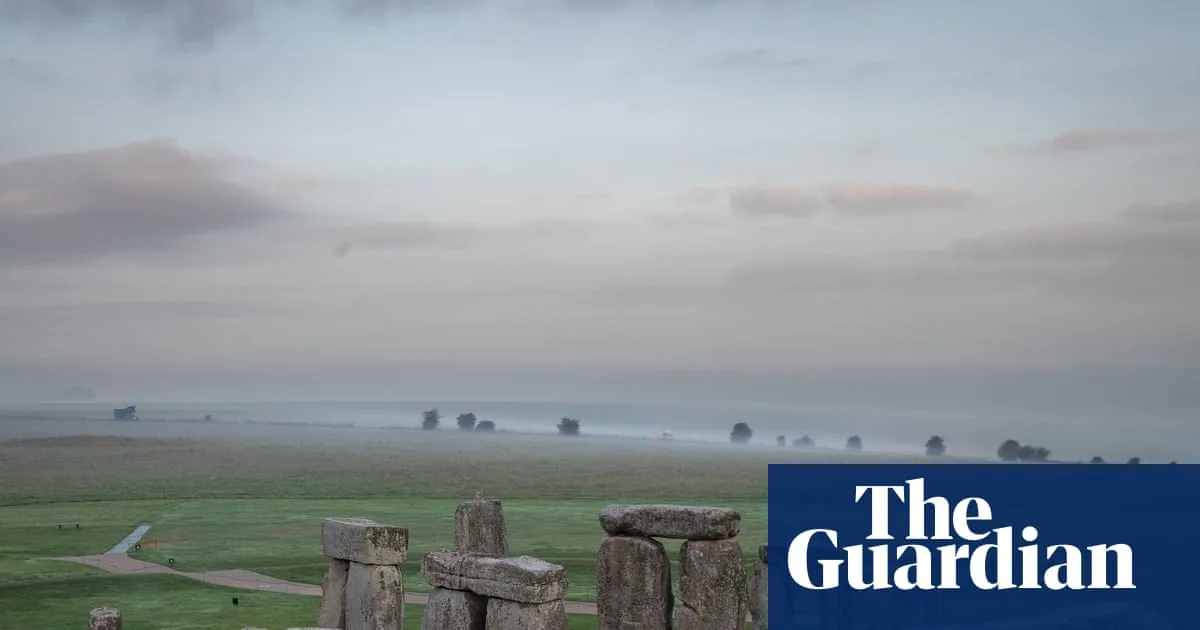
Heaven knows what our Neolithic forebears would make of the present-day Stonehenge tunnel fandango. What those civil engineers of 4,500 years ago achieved – dragging the central megalith 500 miles from Scotland to Salisbury Plain and others from Wales, for instance, then ensuring the stone circle aligned precisely with the sun and stars – was a dazzling feat of ingenuity. Certainly, it makes our own attempts to build a road under the World Heritage Site seem embarrassing by comparison.

The traffic-easing tunnel scheme has popped up in various incarnations over the past 30 years. Yet it never once got off the ground, never mind under it. Last month the controversial project was finally put out of its misery, with the Government declaring it too expensive. Stone Age man, it seems, was able to construct his awe-inspiring masterpiece some 1,000 years before the invention of the wheel – but his high-tech 21st century counterpart couldn't even build a road to do the monument justice.

And yet the most shameful aspect of this long-running debacle is not even that the project failed so abysmally. Rather, that successive governments blew more than £220 million of taxpayers' money on it. All we have to show for a cavalcade of planning inquiries, public consultations, archaeological, topographical and ecological surveys, court hearings (yes, lawyers lined their pockets too, of course) and much else besides, is a giant hole in the public purse.

Wide Pickt banner — collaborative shopping lists app for Telegram, phone mockup with grocery list

Not forgetting miles of power cables, installed two years ago at a cost of £6.5 million, to serve the tunnel in anticipation of it being built. A hasty move it transpired. Like the scheme itself, the cables ended up going nowhere and now remain buried under the A360, serving no purpose whatsoever. Villagers nearby speak bitterly of how the road was closed for four months while the work was carried out.

'The whole tunnel plan was a dog's dinner,' says Alun Rees, author of Stonehenge Deciphered. 'I would suggest that the resourceful people who built Stonehenge – masters of logistics – could show our political classes a thing or two about finding solutions to problems. They had a vision and just went for it. And they were unencumbered by red tape and grasping lawyers.'

Certainly, the tunnel seems to exemplify post-industrial Britain's depressing tendency to talk a good game while ultimately failing to roll up its sleeves and get things done. Yet this is only half the story. As many in these parts will tell you, the tunnel, at least in the form proposed, wasn't such a smart idea anyway. According to the historian Tom Holland, the scheme's most prominent opponent, it would have desecrated 'our most sacred prehistoric landscape' and posed grave risks to the archaeological treasures that litter the area. He calls the very idea of a tunnel 'monstrous'.

So how did we end up spending so much money on such a questionable plan which, had it ever been completed, would have cost at least £1.7 billion in total? And who jumped aboard the gravy train? Perhaps unsurprisingly, there is notable reluctance by firms involved to talk about their role and how much taxpayers' cash they trousered.

The lion's share went to a consortium tasked with building the tunnel. Oddly, given that Stonehenge is one of our greatest national treasures, National Highways decided not to rely on a British firm. Instead, it chose Webuild from Italy, Spanish construction firm FCC and Austria's BeMo Tunnelling. Signed in 2022, the three-way contract was worth £1.25 billion. How much each was paid before the project was scrapped is not known. But we do know that not a shovel ever broke ground.

Wessex Archaeology, meanwhile, won a £35 million contract for 'archaeological protection and excavation work'. The company did not respond to a request for comment last week. There is, though, a small clue to how much it received in figures released by the National Highways. The Government quango said £33.67 million was spent on 'design work on the chosen schemes, archaeological surveys and liaison with utility companies'. Although it remains unclear how much of that could have gone to Wessex Archaeology.

Pickt after-article banner — collaborative shopping lists app with family illustration

Next, a £60 million contract was signed with civil engineering group Costain and consultants Mott MacDonald 'to ensure programme timescales are maintained'. Asked how much it got paid, Costain said it couldn't say due to 'confidentiality'. At one stage experts were drafted in at great expense to design 'green bridges' featuring 'landscaped earth mounds and planted hedgerows that align with a current bat flightpath'. None of the bridges was built, needless to say.

Lawyers were also key beneficiaries of the Whitehall largesse over the years, with sources involved in the project saying that the legal fees picked up by taxpayers ran into millions. Campaigners fighting to overturn the tunnel scheme recalled last week how they would cobble together money to pay for a single lawyer to represent them at various hearings over the years – only to turn up to find as many as seven top barristers and their respective teams ranged against them on the Government side. 'Hats off to one young female barrister, Victoria Hutton, who took on seven Government appointed barristers back in 2019 and beat them,' said one campaigner and archaeologist Professor David Jacques. 'It was David and Goliath stuff.'

Even the most vehement anti-tunnel campaigners believed that something needed to be done – and still does – about the traffic-choked A303, the road from which you catch your first thrilling glimpse of Stonehenge as you crest a hill when travelling westwards near Amesbury. At its nearest point the stone circle is just 165 metres from the road. Last week, under a cloud-dappled blue sky, the monument loomed into view as magnificent as ever. And for once the single carriageway stretch of road near the monument was unusually clear. Even in the late 1950s, when there were fewer cars on the road, there were reports of 15-mile traffic jams past Stonehenge. Just as they did then, motorists slow down to admire the stones, occasionally causing accidents. In fact, the accident rate on the A303 is more than 50 per cent higher than the average for similar roads.

The tunnel scheme was first proposed in the 1990s, though arguments about what to do with the road had raged for years. English Heritage, which manages Stonehenge, urged the Government to run a £27 million tunnel under the site as an alternative to a road-widening scheme or a route around the stones. From the outset the scheme was mired in controversy. The Government was wary of costs and didn't seem to want to move quickly. At issue was whether a £125 million cut-and-cover tunnel four lanes wide, should be dug through the World Heritage Site or whether a much longer, deep-bored tunnel, costing more than £300 million, would be more appropriate.

The Government favoured the cheaper option. So too did English Heritage. In 1998, however, Lord Kennet, later to become chairman of the campaign group Stonehenge Alliance, called the cut-and-cover tunnel (in which a trench is dug, the roof constructed and soil replaced) 'an abomination'. 'No other country in the world would contemplate treating a site which is a world icon in such a way. The money for the long-bore tunnel must be found,' he said.

Fast forward a few years and the Blair government had come round to Lord Kennet's thinking. This was partly thanks to lobbying by the National Trust, which had decided that a cut-and-cover tunnel would destroy important archaeological remains. In 2005, a year after a public inquiry came down in favour of the project with a few modifications, the estimated cost of the tunnel had mysteriously increased to £510 million. At this point, the Government dropped the whole thing.

The scheme was, however, revived by the coalition government in 2013. Despite detailed plans in place already, the Highways Agency (National Highways' predecessor) set to work from scratch and came up with a different design, and a longer 1.8-mile tunnel. Astonishingly, it took another seven years to finalise the route. By this time, objectors had formed themselves into the Stonehenge Alliance, representing conservation and heritage groups. It claimed that any tunnel shorter than 2.7 miles long would cause 'irreparable damage to the landscape'. Villagers in nearby Winterbourne Stoke were also unimpressed, particularly when they learned that spoil from the tunnel was going to be dumped in a valley outside the village.

In 2020, the scheme was pushed through by Grant Shapps, the then Transport Secretary, against the recommendations of independent planning officials. Another protest group called Save Stonehenge World Heritage Site quickly launched a judicial review, complaining that if the road went ahead it would lead to UNESCO delisting Stonehenge as a World Heritage Site. The following year a high court judge quashed the order, saying that Shapps hadn't been presented with a document laying out the heritage aspects of the plan and that he hadn't given enough consideration to alternative road proposals – even though 50 such routes had been considered by the Department for Transport in the 1990s.

The Government reissued the order to begin work and, three years later, in February 2024, the same judge, hearing a fresh judicial review from Save Stonehenge World Heritage Site, this time dismissed their objections. Finally, it seemed, the road could go ahead. That indeed was the case until the Government cancelled the plans last month. The Department for Transport yesterday said it revoked the development consent order (DCO) for the tunnel, two junctions and a northern bypass, adding that it was doing so under 'exceptional circumstances'. It means the project is officially scrapped and anyone wanting to revive it would have to begin the planning process from scratch.

A Department of Transport spokesman says: 'Given the challenging financial picture we inherited, we had to make difficult decisions about a number of road projects as they were unfunded or unaffordable. We remain committed to investing in projects that deliver for the taxpayer and drive growth, which is why we are providing nearly £5 billion in this year alone on our motorways and key A-roads to support maintenance, enhancement, and to ensure smoother journeys.'

National Highways says there are no plans to turn the A303 into a dual carriageway past Stonehenge, although there may be 'smaller scale improvement projects to address safety and congestion challenges'. It declined to suggest what these might be and how long it might be before they were built. For its part, English Heritage says it remains 'ready to engage constructively should future opportunities arise'.

Another challenge would come as little surprise to campaigner 'King' Arthur Pendragon (born John Rothwell), one of Britain's most senior druids. He said yesterday: 'I'm sure it won't be the last we hear of this. Successive Governments have behaved like spoilt brats, jumping up and down until they get the answer they want. I've given up on how many public inquiries I've been to. Every time we beat them, they come back after a few years with the same idea. It goes to another public inquiry and another waste of taxpayers' money. It's all a gravy train, jobs for the boys.'

If only those Neolithic engineers could see us now. It is tempting to imagine them sitting round a campfire in head-shaking bemusement – then erupting in side-splitting mirth.