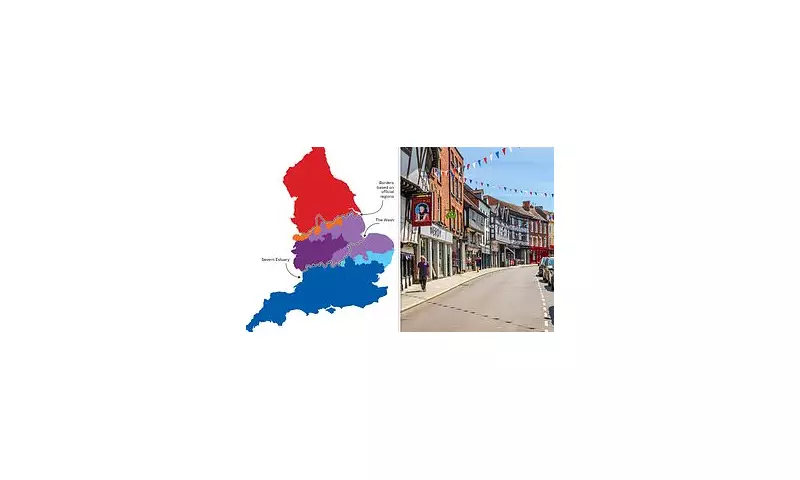
For generations, a simple question has sparked friendly rivalry and fierce debate across England: where exactly does the North end and the South begin? Now, the most comprehensive survey of its kind claims to have drawn the definitive line, settling an argument that some trace all the way back to the Viking age.
The Great Divide: A Line from Shrewsbury to Grimsby
Respected pollsters YouGov conducted the largest-ever study on the topic, quizzing 46,000 adults from every corner of the country on where they feel they truly belong. The results paint a clear, if complex, picture of England's regional identities.
According to the data, the perceived northern boundary runs diagonally across the country from Shrewsbury in the west to Grimsby on the east coast. Conversely, the southern realm is seen to stretch from the River Severn across to Great Yarmouth.

Strong Identities at the Extremes, Confusion in the Middle
The survey revealed unsurprisingly strong regional loyalties at the nation's extremes. In the North East, North West, and Yorkshire and the Humber, an overwhelming 91% to 95% of residents identified as northern. In the South East and South West, the figures were similarly decisive at 94% and 89% respectively identifying as southern.
The picture becomes far more fragmented in the Midlands, a traditional battleground for this identity crisis. In the West Midlands, a significant 78% of people stated they live in neither the North nor the South. This feeling was echoed by 69% of those in the East Midlands.
Northern Identity Creeps Southwards
Delving into county-level data uncovered fascinating nuances. Northern identity appears to stretch southwards into the Midlands more readily than southern identity pushes north.
In the High Peak area of Derbyshire, 94% of residents consider themselves northern, aligning their identity with traditional northern heartlands. Significant northern affinity was also found in Bassetlaw, Nottinghamshire (75%), and in parts of north Shropshire, Staffordshire, and Derbyshire, where 55-58% identified as northern.
In contrast, there is less desire in the Midlands to claim a southern identity. Beyond 21% in Northamptonshire and 12% in Herefordshire, few Midlanders see themselves as southern. Even in the East of England, many in the Anglian region reject the southern label.
Pockets of "neither-ness" persist further south, with notable numbers in Milton Keynes (25%), Gloucestershire (14%), and Essex (12%) feeling they belong to neither region. Reflecting its distinct cultural character, 10% of people in Cornwall, England's southernmost county, do not consider themselves part of the South.
More Than Just a Joke: A Divide With Real Consequences
While the debate often surfaces in light-hearted jokes about greetings ("hello" vs "ey up") or chip shop condiments (ketchup vs curry sauce), the north-south divide has serious implications. Studies have repeatedly highlighted its correlation with stark differences in health outcomes, economic prosperity, house prices, political voting patterns, and levels of public investment.
This new YouGov map, based entirely on public perception, may not officially redraw the map of England. However, by giving a powerful voice to 46,000 people, it provides the most authentic snapshot yet of how the nation truly sees itself, finally offering a data-driven answer to one of England's oldest questions.