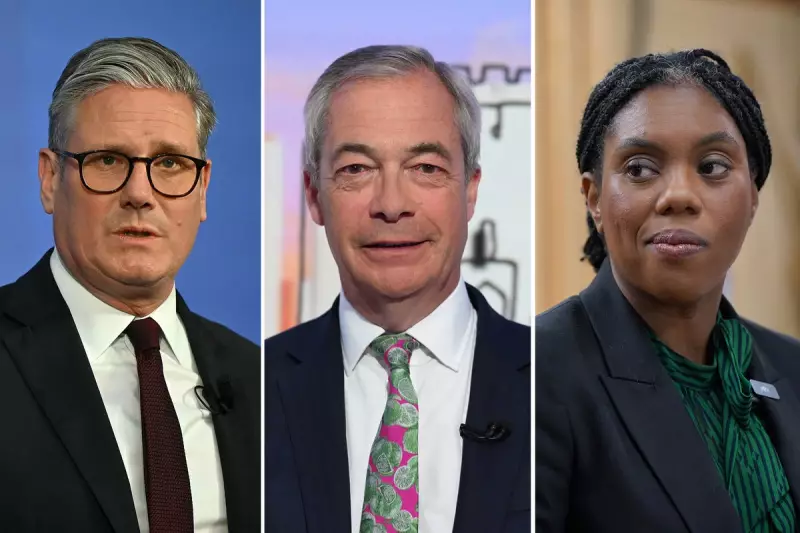
In a dramatic reversal of political fortunes, recent opinion polls indicate the Conservative Party has now overtaken Labour to become the primary national opposition to Nigel Farage's Reform UK. This shift challenges Prime Minister Keir Starmer's central election narrative and signals a significant realignment of voter support since the 2024 general election.
A Modest Tory Recovery at Labour's Expense
Analysis of polling data since December reveals a stark new landscape. Four out of five polling companies now place the Conservatives ahead of Labour in their most recent surveys. The latest YouGov poll, published on Tuesday 6th January 2026, encapsulates this trend, putting the Tories on 19% and Labour languishing in third place on just 17%. On average, the Conservatives currently stand at 19%, narrowly leading Labour's 18%.
This represents a continued slide for Labour, whose rating has hit a new low. Conversely, the Conservative tally, while still representing a five-point fall from their record low of 24% at the 2024 election, shows a modest two-point recovery since the autumn party conference season. Notably, this Tory rebound has come largely from reclaiming support lost to Reform UK.

The Reform UK Challenge and Shifting Voter Blocs
The dynamics of voter migration are crucial to understanding this shift. After the 2024 election, the Conservatives haemorrhaged support to Nigel Farage's party, with an average of 34% of 2024 Tory voters defecting to Reform by the conference season. That figure has now fallen back to 27%, indicating a partial recovery for the Tories.
This retrenchment is a key reason why average support for Reform itself has dipped below the 30% mark for the first time since the party's success in county council elections last May. Analysts attribute part of this to an improvement in Conservative leader Kemi Badenoch's popularity following her well-received conference speech and response to the Budget.
Meanwhile, Labour has failed to make any inroads in winning back voters from Reform. Simultaneously, its hold on the progressive vote is being eroded by a resurgent Green Party under new leader Zack Polanski. The Greens now command 13% of voter support nationally, a four-point rise since September.
Starmer's Uncomfortable Electoral Arithmetic
The polling data presents Keir Starmer with a profound strategic dilemma. His argument that the next election is a binary choice between Labour and Reform, designed to attract anti-Farage voters from the Liberal Democrats and Greens, is losing credibility. Just over one in ten 2024 Labour voters now say they would support Reform, a figure that has remained stable.
More damagingly, around 16% of 2024 Labour voters have switched to the Greens, a six-point increase since autumn, while 10% have moved to the Liberal Democrats. This splintering of the centre-left vote weakens Labour's ability to present itself as the unified bulwark against a Reform UK government.
Professor Sir John Curtice of the University of Strathclyde highlights the irony: the most effective route to stopping Nigel Farage from entering Downing Street is to reduce Reform's support. Currently, it is the Conservatives – the original source of much of Reform's support – who are having some success in this endeavour. In contrast, Labour's capacity to challenge Reform appears weaker than ever.
As the political battlefield reshapes, the traditional two-party system continues to fragment. The Conservatives' fragile recovery offers them a glimmer of hope, but the real story is Labour's declining position and the sustained threat from Reform UK, which continues to redefine British politics.