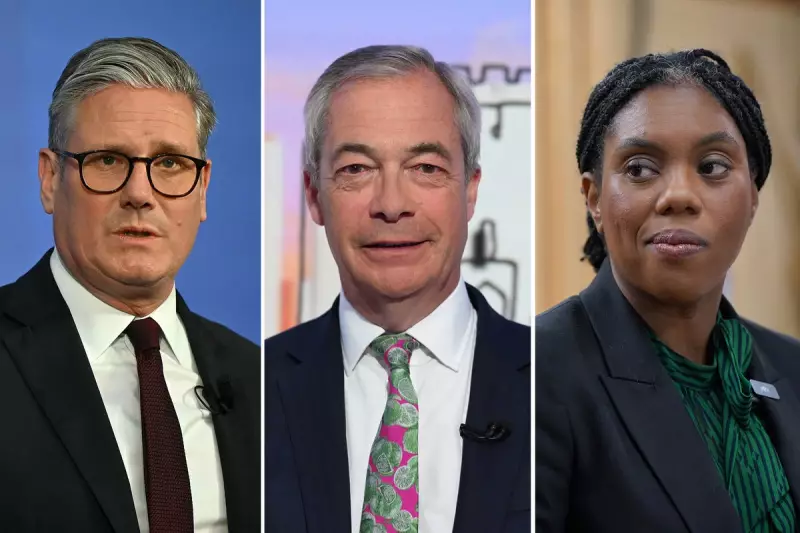
In a stunning reversal of political fortunes, the Conservative Party has now edged ahead of Labour in recent opinion polls, suggesting it is they, not Sir Keir Starmer's party, who are becoming the principal national challengers to Nigel Farage's Reform UK. This shift fundamentally undermines the Prime Minister's core electoral strategy and paints an uncomfortable picture for Labour's future.
The Polling Picture: A Dramatic Reversal
Analysis of surveys conducted since the start of December reveals a clear trend. Four out of five polling companies have placed the Conservatives ahead of Labour in their most recent soundings of voter intention. The latest YouGov poll, published on Tuesday 6th January 2026, is emblematic of this new reality. It puts Labour on just 17%, languishing in third place behind Reform UK, with the Conservatives slightly higher at 19%.
This means Sir Keir Starmer's party now sits a mere two percentage points above the Greens nationally. On average across these polls, the Conservatives stand at 19%, narrowly leading Labour's 18%. While the Tory tally is hardly impressive—representing a five-point fall from their record low of 24% at the 2024 election—it marks a modest two-point recovery since the autumn party conference season. In stark contrast, Labour's average rating has continued to slide to a new nadir.

Where is the Support Coming From?
The most significant twist in this tale is the source of the Conservatives' fragile recovery. Much of the modest Tory gain has come directly at the expense of Reform UK, the party to which they haemorrhaged support catastrophically in 2024. During the party conference season, an average of 34% of 2024 Conservative voters said they had switched to Reform. That figure has now fallen back to 27%.
This improvement appears linked to a notable boost in the popularity of Conservative leader Kemi Badenoch. Her well-received conference speech and response to the Budget have seemingly helped win back some of the support lost to Mr Farage's ranks. This is a key reason why average support for Reform itself has, for the first time since May 2025, slipped below the symbolically important 30% mark.
Labour's Deepening Crisis
While the Tories show faint signs of life, Labour's position is deteriorating on multiple fronts. The party has made no progress in reclaiming the support it lost to Reform; just over one in ten of its 2024 voters still say they would back Mr Farage's party. Simultaneously, Labour's grip on the progressive vote is being loosened by a resurgent Green Party under new leader Zack Polanski.
Overall Green support now runs at 13%, up four points since before the leadership ballot result in September. On average, polls suggest around 16% of 2024 Labour voters have now switched to the Greens, a six-point increase since the autumn. A further 10% have moved steadily to the Liberal Democrats.
These trends present Sir Keir Starmer with a profound strategic dilemma. The most effective route to stopping Nigel Farage from entering Downing Street is to reduce support for Reform. Currently, it is the Conservatives—the original source of much of Reform's support—who are enjoying marginal success in this endeavour. Labour's ability to challenge Reform now looks weaker than ever, calling into question the very foundation of the Prime Minister's re-election argument.
Analysis by Professor Sir John Curtice, professor of politics at the University of Strathclyde, and a senior fellow at the National Centre for Social Research and UK in a Changing Europe.