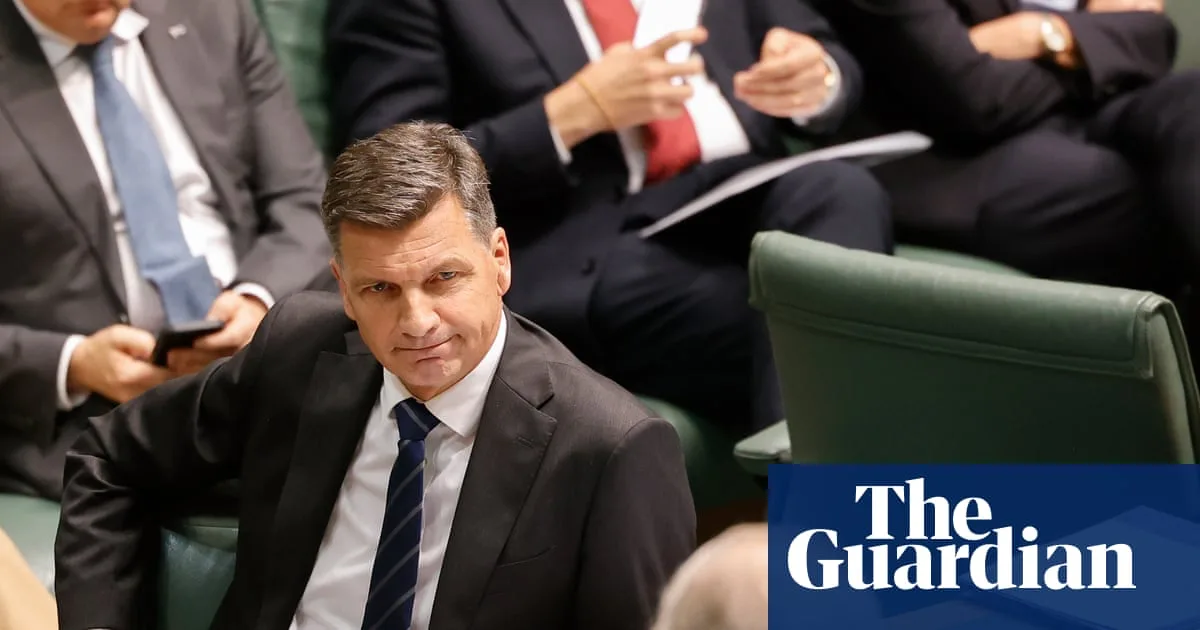
Albanese Approval Slumps 15 Points as Labor Holds Poll Lead Despite Scandals
Albanese approval slumps in new poll as Labor lead holds

A new national poll has delivered a stark warning for Prime Minister Anthony Albanese, revealing a significant slump in his personal approval ratings, even as his Labor Party maintains a solid two-party preferred lead over the Coalition.

Polling Details and Political Fallout

The special Resolve Political Monitor survey, conducted exclusively for the Nine newspapers between December 17 and 20, interviewed 1,010 voters in the aftermath of the terror attack at Bondi Beach. It found Labor leading the Coalition by 54 per cent to 46 per cent on a respondent-preferred basis. This represents a one-point gain for the Coalition since the previous poll in early December.

However, the primary vote tells a more nuanced story. Support for Labor fell three points to 32 per cent, while the Coalition rose two points to 28 per cent. One Nation gained two points to reach 16 per cent, and the Greens were up one point to 12 per cent.

The most dramatic shift was in the Prime Minister's personal standing. Anthony Albanese's net approval rating collapsed by 15 points to -9, its lowest level since the May election. Some 49 per cent of respondents rated his performance as poor, compared to 40 per cent who rated it good. Deputy Liberal Leader Sussan Ley also saw her net approval fall seven points to -4.

Public Sentiment on Security and Social Cohesion

The poll explored public attitudes following the Bondi attacks and amidst ongoing debates about social cohesion. By a margin of 46 per cent to 29 per cent, respondents believed the federal government's response to the Bondi incident was weak rather than strong. Yet, by 37 per cent to 30 per cent, they felt social cohesion in Australia was currently good rather than poor.

A significant majority, 72 per cent to 9 per cent, agreed there had been a rise in racism in Australia due to the Israel-Gaza conflict. Furthermore, by 55 per cent to 13 per cent, respondents believed there had been more antisemitism than Islamophobia in recent months.

On the issue of gun control, public opinion was overwhelming. 76 per cent of those surveyed wanted gun laws to be toughened, with only 6 per cent advocating for them to be relaxed. Four out of five specific proposals for strengthening firearm regulations garnered over 80 per cent support.

Policy Priorities and Additional Polling Data

When asked to select two top priorities for the government, preventing terrorism led at 49 per cent, followed by tackling crime generally (45 per cent) and restricting access to guns (35 per cent). There was strong backing (66 per cent to 9 per cent) for stronger laws to ban hate speech based on religion and faith.

Separately, a Morgan poll covering December 8 to 14 showed Labor's two-party lead narrowing to 54.5-45.5. When calculated using preference flows from the 2025 election, Labor's lead would be approximately 53-47, which analysts note is the slimmest Labor advantage in any poll since the last election.

In a small piece of good news for Labor, the New South Wales sub-sample of around 300 voters showed Premier Chris Minns' net likeability jumping eight points since November to +22.

The data presents a complex picture for the Albanese government: retaining electoral support but haemorrhaging confidence in its leader, with the public demanding decisive action on security, social cohesion, and hate speech in a tense political climate.