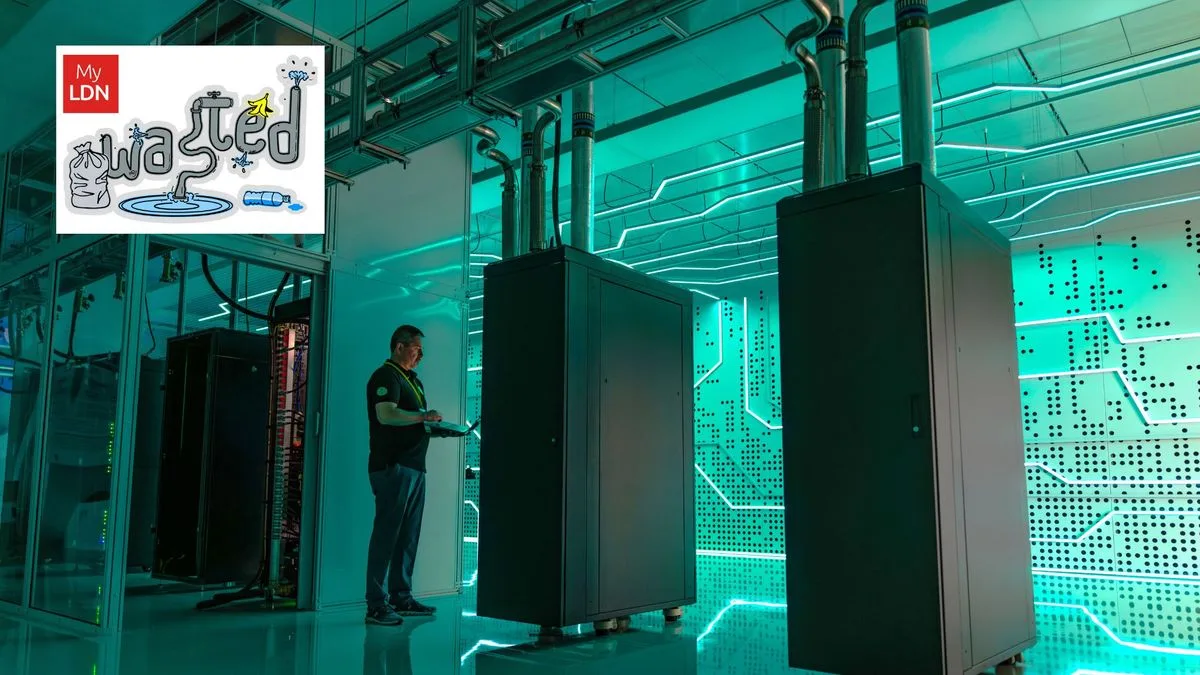
London's rapid expansion of data centres is causing friction between economic growth and environmental goals, with concerns over energy use, housing delays, and water consumption. There are currently 99 data centres in the capital, with more than two dozen in the pipeline, according to the London Assembly.
A report from the London Assembly Planning and Regeneration Committee last year indicated that several housing projects in west London were stalled because data centres had used up all available electrical grid capacity. Campaigners warn the situation could worsen as the majority of new data centres are planned for London.
Oliver Hayes, Head of Policy and Campaigns at Global Action Plan, told the Local Democracy Reporting Service that London is a 'unique' case due to its high concentration of data centres. He said the recent AI boom has driven demand for much larger facilities requiring significantly more energy and water for cooling.

Hayes warned that Londoners may face a lack of grid capacity because of data centres, and that developers are increasingly turning to on-site gas power, which could increase climate emissions and air pollution. He also noted that cash-strapped boroughs may see data centres as a quick economic fix, despite opaque planning applications.
The tech sector argues that UK-built data centres are relatively green, but environmental groups say they conflict with the Mayor's decarbonisation goals. The debate over whether more data centres will help or hinder London is expected to continue.