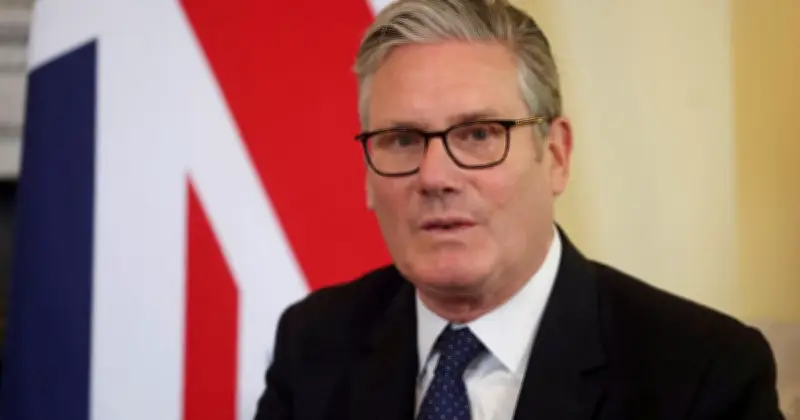
Prime Minister Sir Keir Starmer's EU reset will cost billions, hamstring industry, and jeopardise US trade, according to a scathing new analysis by a senior Thatcher-era minister. The Policy Exchange report, titled 'A Triumph of Hope Over Experience', was authored by the Rt Hon Lord Lilley, who as Trade and Industry Secretary oversaw Britain's entry into the EU single market. It accuses the Government of pursuing ideological alignment with Brussels despite Labour's manifesto pledge of 'no return to the single market or free movement'.
Hidden Costs of the Reset
Drawing on 28 years of UK experience inside the single market, Lord Lilley warns that the reset — including a Sanitary and Phytosanitary (SPS) veterinary agreement, participation in the EU electricity market, and merging carbon trading schemes — amounts to 'partial participation' in the single market. This triggers EU demands for financial contributions, regulatory alignment, and youth mobility schemes.
The report tallies substantial hits. Aligning with higher EU Emissions Trading Scheme prices would add £1.1 billion annually to British firms. Fisheries concessions freezing UK catches in home waters for 12 years could cost £500 million a year. Reversing post-Brexit divergences on plant protection products and other agri-rules might add another £500-810 million yearly.

These alone dwarf the Government's claimed £9 billion cumulative benefit from the SPS deal over 15 years — equivalent to just £600 million annually. Dynamic alignment across sectors would burden the 92% of UK firms that do not export to the EU with costly EU regulations, stifling innovation and competition.
Electricity Market and Trade Risks
Electricity market linkage requires the UK to adopt EU renewables targets and pay Brussels' administrative costs, despite the EU exporting four times more power to Britain. The reset also risks reimposing barriers on imports from the rest of the world to satisfy EU rules, complicating deals like the CPTPP and exposing the UK to potential US tariffs under a Trump administration wary of aligned regulations.
Youth Mobility and Erasmus Revival
Despite manifesto assurances, the EU is pushing youth mobility and rejoining Erasmus, projected to cost £810 million annually — mostly subsidising EU students in the UK — while scrapping the cheaper Turing scheme focused on British students. Lord Lilley notes that past EU free movement delivered massive net inflows of young people, contradicting Government claims of balance based on Commonwealth schemes.
Failed Magic of the Single Market
Lord Lilley dismantles the core economic case. During 28 years of single market membership, UK goods exports to the EU grew by less than 1% per year. By contrast, exports to 111 WTO-term countries surged 87%. He writes: 'The magic failed to work.' Unilateral dynamic alignment offers no reciprocal easements for UK exporters, who already meet EU standards, while handcuffing domestic policy.
The report mocks the Government's pivot to strategic arguments post-Trump, noting that cooperation with European NATO allies does not require adopting their laws or paying billions for joint procurement.
Lilley's Blunt Verdict
Lord Lilley attributes the lopsided terms to negotiating naivety: conceding on fishing upfront, declaring reset essential for growth (signalling weakness), and lacking experienced trade hands or a credible BATNA. Ministers ignored WTO SPS rules already binding the EU and failed to demand equivalence over alignment.
The NFU and City voices have raised alarms. The report urges ministers to pull back before signing away more sovereignty. However, Lord Lilley's verdict is blunt, branding it a bad deal born of hope over hard-won experience, risking billions while delivering scant return. With US relations strained and domestic industries squeezed, Sir Keir's reset faces mounting scrutiny as the true price tag emerges.

A Government spokesperson said: 'The reality is that red tape at the border has added billions in costs, fueling inflation and choking growth. No one wants to see food rotting at the border; it's a massive waste that takes money straight out of the pockets of British families and businesses. Our SPS deal will add up to £5.1 billion a year into the economy and slash red tape that drives up supermarket prices. This is about making Brexit work for the British people.'