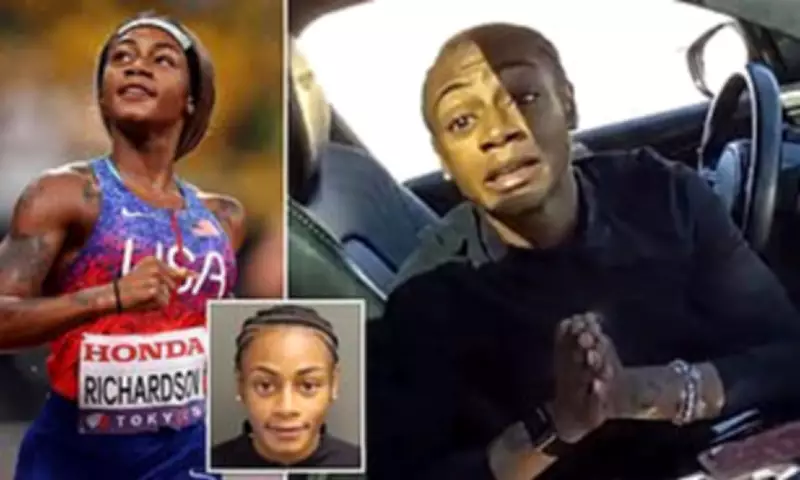
Newly released bodycam footage has captured the dramatic moment Olympic gold medalist Sha'Carri Richardson desperately pleaded with police officers not to take her to jail following her arrest for allegedly driving at dangerously high speeds in Florida.
Dramatic Traffic Stop Unfolds
The Team USA sprint star was booked into Orange County Jail on Thursday after authorities claimed she had been dangerously tailgating other vehicles and traveling across multiple lanes to overtake motorists. According to a sheriff's department spokesperson, Richardson's driving behavior posed a significant risk to other road users before she was eventually pulled over.
Excessive Speed Allegations
In the remarkable footage, officers initially clock Richardson's Aston Martin traveling at 101mph using radar equipment before she allegedly accelerated to 104mph in a 65mph zone. The Olympic champion was subsequently charged with dangerous excessive speeding at 100mph or more, a serious offense under Florida's relatively new traffic legislation.

When approached by the officer, Richardson initially claimed to have an issue with her back tire, but the responding officer quickly challenged this explanation. "So you're driving at 104mph in a 65mph zone with sub-par equipment, flashing people to get out of your way, following too close, using every lane to pass everybody, cutting me off, passing a car on the inside shoulder with their hazard lights on?" the Olympian was asked during the tense exchange.
Emotional Pleas for Mercy
As the reality of her situation became apparent, Richardson grew increasingly emotional, offering multiple apologies and explanations to the officers. "I did not mean to do that, I did not even know my car was speeding... I really do not want to go to jail," she told the officer, her voice trembling with anxiety.
The sprinter insisted she was a law-abiding citizen and claimed there was no intention behind her alleged speeding violation. "I promise you I am a law-abiding citizen... there was no intention of me speeding today, I promise you sir... please work with me," Richardson pleaded, even offering to accept a standard speeding ticket instead of facing arrest.
Boyfriend's Separate Arrest
Complicating the situation further, Richardson's boyfriend - fellow world champion sprinter Christian Coleman - was reportedly arrested during the same traffic stop near Orlando. According to reports, Coleman was detained for drug paraphernalia possession and resisting officers after he allegedly refused to identify himself when he approached the scene.
Police reportedly searched Coleman's vehicle following his arrest, where they discovered a glass smoking device containing what was suspected to be a small amount of cannabis. The arrest occurred after Coleman had stepped out of a black Jeep that had stopped nearby when Richardson was initially pulled over.
Additional Olympic Connection
Adding another layer to the unfolding drama, US Olympic gold medalist Twanisha Terry - who has won both Olympic and world championship gold in the 4x100m relay alongside Richardson - also became involved in the incident. Terry reportedly arrived at the scene to check on the situation and was subsequently ticketed for stopping on a limited access highway before being permitted to leave the area.
Florida's Strict Speeding Laws
The arrest comes under Florida's relatively new speeding legislation, which has been in effect for approximately six months. The law makes it illegal to:
- Drive in excess of 50mph over the posted speed limit
- Surpass 100mph under any circumstances
Penalties for a first conviction under this legislation can include:
- Up to 30 days in prison
- A fine of $500
Second offenses carry even harsher penalties, potentially resulting in:

- Up to 90 days behind bars
- A $1,000 financial penalty
Richardson was released after posting a $500 bond, but the bodycam footage reveals the emotional toll of the arrest on the Olympic champion, whose career has been marked by both spectacular athletic achievements and previous controversies. The incident raises questions about athlete conduct off the track and the serious consequences of high-speed driving violations in states with increasingly strict traffic enforcement policies.