I Took the Royal Navy's New Fitness Test: A Surprising Challenge
As a fitness writer, I was invited to HMS Temeraire in Portsmouth to experience the Royal Navy's new Physical Employment Standard (PES) test firsthand. This strength-based assessment, introduced in September 2024, replaces the traditional 1.5-mile run or bleep test, aiming to better reflect the physical demands sailors face during emergencies at sea.
Preparing for the Test
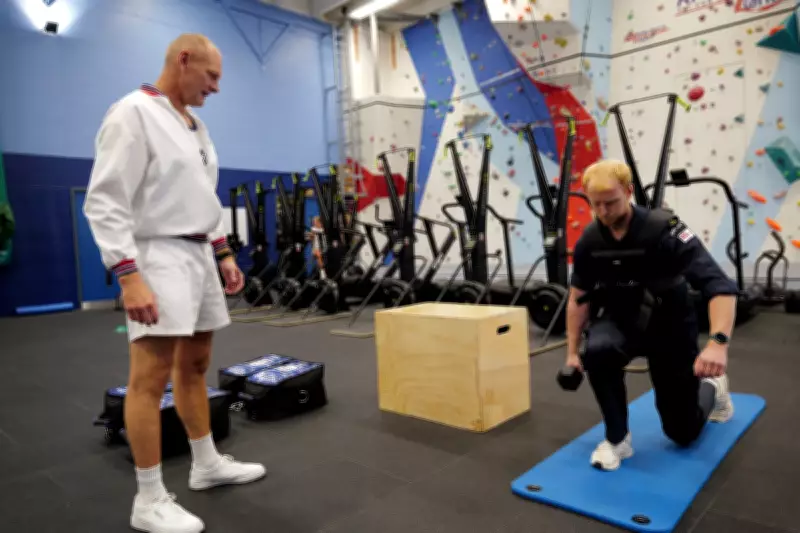
Upon arrival, I was handed a heavy woollen uniform, a stark contrast to my casual tracksuit. The gym, once a sports hall, now buzzes with sailors engaging in weightlifting and CrossFit-style workouts. Before my attempt, I watched three sailors complete the course effortlessly, including Lieutenant Commander Joseph Wood and Commander Serena Brotherton, setting a high bar.
The Test Breakdown
The PES test must be completed within 15 minutes and includes a series of stations designed to mimic shipboard tasks. It begins with a 60-meter kettlebell carry using two 20kg kettlebells, incorporating hurdles to simulate raised hatches. Next, a powerbag lift requires moving a 20kg bag between boxes, replicating equipment transport up ladders.

Following this, a 40kg kettlebell deadlift tests grip strength with a three-second hold at the top. The rope pull involves dragging 60kg of powerbags across gym flooring, emphasizing the grip-heavy nature of naval duties. After this, a 20kg weighted vest is donned for the remainder, representing firefighting gear.
The lunges with a 7.5kg dumbbell challenge balance, while a casualty drag of 80kg simulates moving an injured person. The test concludes with another 60-meter kettlebell carry, now with the added vest. I completed it in roughly six minutes, earning a pass.
Design and Rationale
Dr. Steve Powell, Head of Applied Physiology at the Institute of Naval Medicine, explained that the test was developed using a NATO framework. It focuses on the most physically demanding tasks identified through physiological analysis, such as oxygen consumption during firefighting or damage control scenarios.
Lieutenant Commander Wood highlighted the practicality, noting it takes under an hour including paperwork, unlike other military tests that can span four hours. The weights, like the 20kg powerbags mimicking AFFF canisters, are chosen for realism without being overly burdensome.
Pass Rates and Adaptations
As of September 2025, nearly 90% of Royal Navy personnel have taken the test, with a failure rate of only 0.35%. Among women, the rate is slightly higher at about 2%. Those who fail undergo a 12-week conditioning program, with most passing upon retesting within months.
Wood acknowledged that heavier, stronger individuals may have an advantage, but the test serves as a minimum standard for operational readiness. It does not aim to solve broader health issues like obesity but ensures sailors can perform critical tasks during emergencies.
Personal Reflections
At 6ft 2in and 90kg, the test aligned with my physiology, making the weights manageable compared to my gym routines. However, it underscored the importance of functional strength over pure aerobic fitness. The test's design, from the weighted vest to the casualty drag, effectively emulates real-world naval challenges, ensuring all sailors, regardless of age or gender, meet a baseline physical capacity for service.