

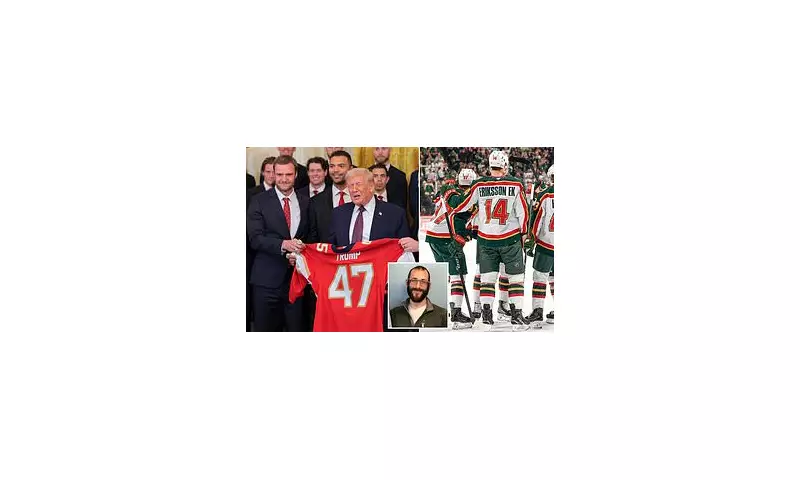
The National Hockey League and the Minnesota Wild franchise have faced a fierce backlash from fans and commentators after choosing to proceed with their scheduled Saturday night game against the Florida Panthers. This decision came in the immediate aftermath of a fatal officer-involved shooting in Minneapolis that claimed the life of 37-year-old Alex Pretti, an intensive care nurse.
Contrasting Responses from Sports Leagues
The controversy stems from the starkly different approaches taken by major sports organisations operating in the Minnesota area. While the NHL and the Wild opted to continue with their fixture at the Xcel Energy Center in Saint Paul, the National Basketball Association made the conscious decision to postpone the Minnesota Timberwolves versus Golden State Warriors game. The NBA stated its postponement was to "prioritise the safety and security of the Minneapolis community," creating a direct contrast that has fuelled much of the criticism.
Fan Outrage and Social Media Condemnation
Reaction on social media platforms, particularly X (formerly Twitter), was swift and severe. Numerous hockey fans expressed deep disappointment and anger at the perceived insensitivity of the decision. One user branded the league and team "spineless," while another commented that proceeding "as if nothing is amiss" was tragically typical for the NHL.

"The fact that they chose not to postpone the game, despite the other teams doing so... speaks volumes," wrote one critic. Another stated, "Seriously what's happening in Minnesota right now is way bigger than 'hockey day'." The sentiment was echoed by others who labelled the organisation "evil" and "trifling," with some comments using explicitly strong language to condemn the choice.
Details of the Minneapolis Incident
The game controversy unfolded against the backdrop of a tragic event in Minneapolis. According to authorities, federal agents from the Department of Homeland Security were in the area attempting to apprehend an individual described as an "illegal alien wanted for violent assault." During this operation, they encountered Alex Pretti.
The DHS released a statement claiming that Pretti was armed at the time of the confrontation, carrying a nine-millimeter semi-automatic handgun and two magazines. Officials stated that agents attempted to disarm him, but he "violently resisted," leading a Border Patrol agent to fire the fatal shot. Video footage from the scene appears to show agents wrestling with Pretti before taking him to the ground moments before the shooting occurred.
Family Response and Contested Narrative
In a blistering statement, Pretti's family vehemently contested the official account, launching a scathing attack on the Trump administration and the involved officers. They described the agents as "murdering and cowardly thugs" and called the statements from authorities "sickening lies" that were "reprehensible and disgusting."
The family insisted that video evidence shows Pretti was not holding a gun when approached, but rather had his phone in one hand and his other hand raised. They claimed he was trying to protect a woman who had been pushed down by agents while being pepper-sprayed. Minneapolis Police Chief Brian O'Hara later confirmed that Pretti had no serious criminal history, with records showing only minor parking violations, and that he was a lawful gun owner with a valid permit.
Broader Context and Political Undertones
The incident and the subsequent sports scheduling debate occur within a tense political climate. Notably, the Florida Panthers, who were the opponents in the contested game, are the reigning Stanley Cup champions. The team visited the White House earlier this month to celebrate their victory with former President Donald Trump, adding a layer of political symbolism to the event for some observers.
Furthermore, Pretti's death comes just two weeks after another fatal shooting in the area involving an Immigration and Customs Enforcement officer, which claimed the life of 37-year-old Renee Good. This pattern has intensified community concerns and scrutiny of federal law enforcement operations in Minneapolis.

The divergent decisions by the NHL and NBA have sparked a wider conversation about the role and responsibility of sports institutions during periods of community trauma and civil unrest. Critics argue that the choice to play on represents a failure to acknowledge the gravity of local events, while supporters of the decision may point to logistical challenges and a desire to maintain normalcy.





