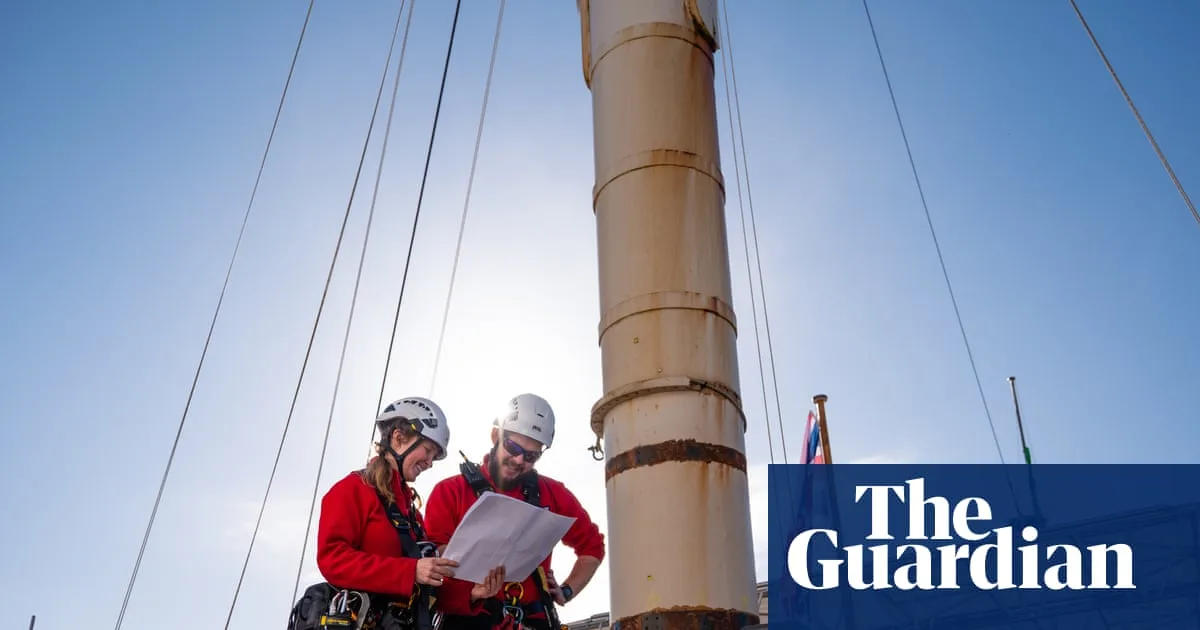
A 15-tonne wrought iron foremast has been successfully removed from HMS Victory, Admiral Nelson's flagship at the Battle of Trafalgar, as part of a £42 million conservation project. The operation, involving a 30-strong team of shipwrights and riggers, used a 750-tonne crane to lift the 23-metre mast from the ship overnight on Monday into Tuesday.
Patrizia Pierazzo, deputy project director, described the lift as a 'great start', noting that the team overcame initial challenges to safely remove the mast. Andrew Baines, executive director of museum operations at the National Museum of the Royal Navy, admitted to some anxiety, given the 250-year-old structure's fragility. He likened the lift to 'someone being yanked up by the hair' and swung from vertical to horizontal, a position the mast had not been in for 130 years.
In the coming days, weather permitting, the mizzen and bowsprit masts will also be removed and laid on a Portsmouth dockside for conservation. The ship's main mast was taken down in 2021 at the start of the 'Big Repair' project, which will encase the vessel in scaffolding until its completion in 2033.
The current masts are not original; they are wrought iron replacements from the decommissioned frigate HMS Shah, fitted in the 1890s after the original wooden masts rotted. Baines noted these are thought to be the only surviving 19th-century iron masts still in use. He said the restoration is a slow, careful process, adding: 'These masts need to be protected for another century plus.'
HMS Victory and Portsmouth Historic Dockyard remain open to visitors throughout the works.