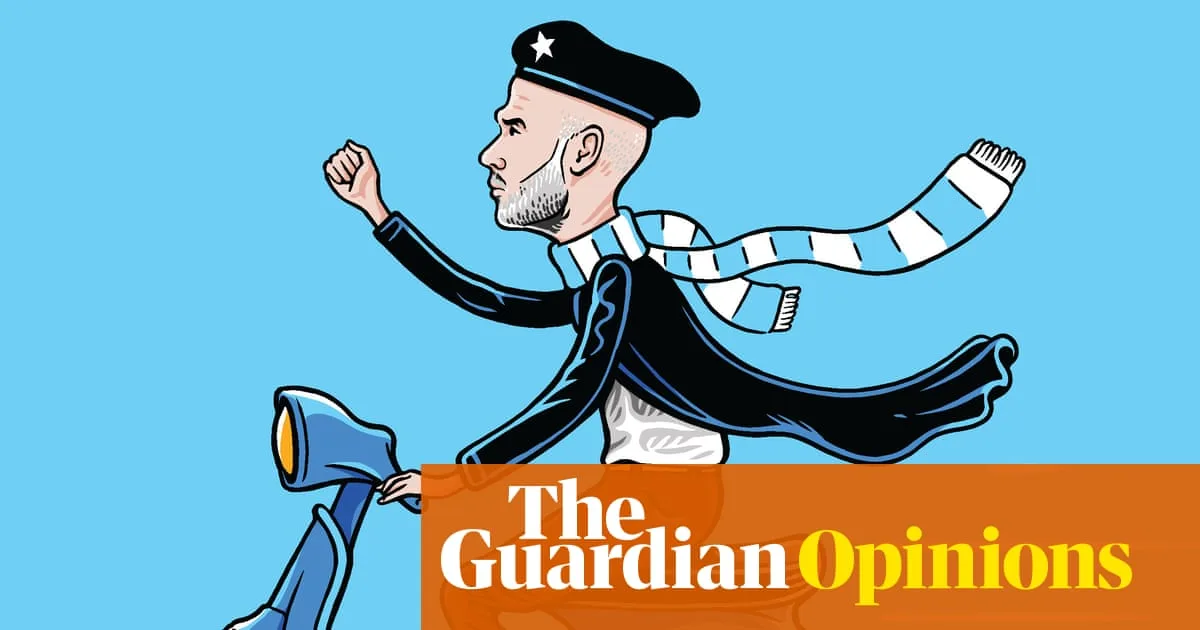
Pep Guardiola's Political Awakening: A Voice for the Underclass
Pep Guardiola, the mastermind behind Manchester City's dominance, has recently remodelled himself as an anti-autocratic voice for the underclass. This shift marks a dramatic plot twist in his career, moving from tactical genius to political campaigner. In Barcelona last week, Guardiola spoke with moral clarity about the bloodshed in Palestine, and in a gripping press conference, he expanded his focus to all suffering, urging action to save children globally. His words resonate like a charity anthem over a hyper-intense tactics video, blending football analysis with humanitarian appeals.
The Dual Nature of Guardiola's Stance
There are two critical perspectives on Guardiola's new activism. First, he is unequivocally right to use his public platform to highlight horrific militarised bloodshed. In an era where football increasingly intersects with power and propaganda, his refusal to "stick to football" is commendable. More figures in sport should follow his lead, speaking out against atrocities that often go unnoticed in mainstream discourse.
However, the second perspective cannot be ignored: Guardiola is a profound and performative hypocrite. As he champions human rights, he sits before advert boards promoting "Experience Abu Dhabi," representing a club owned by the UAE, a regime accused of complicity in atrocities in Sudan. This contradiction is not merely an addendum; it is central to understanding the Pep-as-activist dynamic. His employers, who deny involvement, are implicated in massacres that have left piles of bodies visible from space, making his calls for mercy ring hollow against a backdrop of state-sponsored violence.
The Sportswashing Paradox
Guardiola's role as a "fluffer" for autocratic owners highlights the sportswashing phenomenon, where regimes use sports to launder their reputations. By positioning himself as a compassionate figure, he inadvertently reinforces the UAE's soft power outreach, making his activism a tool in their propaganda machine. This isn't about trivial "whataboutery"; it's about real people suffering due to the very institutions he represents. The moral framework collapses when we view such horrors through the lens of football banter, reducing human tragedy to a side argument.
Ten years ago, questions arose about Guardiola's ambassador role for the Qatar World Cup, with comparisons to historical appeasement. Today, he stands as a key actor in a brilliantly managed piece of sport propaganda, where even his humanitarian statements serve to polish the image of his employers. From this angle, the spectacle is revolting, yet it reflects a broader societal compromise. Watching football itself involves moral trade-offs, as the sport we love for its joy and collectivism has been co-opted by powerful interests.
Guardiola's Inescapable Matrix
Ultimately, Guardiola is caught in the same matrix as all of us, where nothing is clean. His tactical obsession and hunger for victory have led him to complete "football Tetris," tessellating human blocks into perfect sporting maths, only to face the void of political reality. If he sounds muddled or compromised, it's because the world around him has been expertly compromised. His comments on Sudan may one day serve as historical evidence of the struggle for soft power and the co-opting of spectacle in a post-apocalyptic future.
In the end, Guardiola's activism is a reminder that even the most dominant figures in sport are not immune to the contradictions of modern life. While we applaud his courage to speak out, we must also critically examine the hypocrisies that define our times, recognising that the machine of power and propaganda is inescapable for all.