

In a significant development regarding international sports diplomacy, the French government has firmly rejected calls to boycott the upcoming 2026 FIFA World Cup over political tensions with the United States concerning Greenland. Sports Minister Marina Ferrari has publicly stated that there is "no desire" within her ministry to support such a boycott, emphasising the importance of keeping sport separate from political disputes.
Political Pressure Mounts Over Greenland Controversy
The controversy stems from former US President Donald Trump's renewed threats to annex Greenland, an autonomous territory of Denmark, which has sparked outrage across European capitals. Trump specifically targeted France among eight European nations with potential tariff threats in response to their opposition to his Greenland ambitions. This geopolitical manoeuvring has created unexpected ripples in the world of international football, with the 2026 World Cup scheduled to be co-hosted by the United States alongside Canada and Mexico.
French Political Figures Voice Opposition
Éric Coquerel, a prominent far-left French politician, has been particularly vocal in his criticism, arguing that the United States should be stripped of its co-hosting rights entirely. "Seriously one imagines going to play the World Cup in a country who attacks its 'neighbours', threatens to invade Greenland and rides rough shod over international law," Coquerel stated emphatically on Tuesday. His position reflects growing unease among some European political circles about participating in a major sporting event hosted by a nation engaging in what they perceive as aggressive territorial posturing.

Adding to the chorus of dissent, veteran French coach Claude Le Roy, who guided Cameroon to African Cup of Nations glory in 1988, suggested that African nations should consider boycotting the tournament in protest. The 77-year-old football figure told French newspaper Figaro: "One wonders whether it is not necessary to call for a boycott of the 2026 World Cup, given the behaviour of Donald Trump with regard to the continent."
Government Maintains Separation of Sport and Politics
Despite these mounting pressures, Minister Ferrari has maintained a consistent position supporting the traditional separation of sports and politics. "I am one who believes in keeping sport separate [from politics]," she affirmed. "The World Cup is an extremely important moment for those who love sport." Her comments underscore the French government's reluctance to allow geopolitical tensions to disrupt what is arguably the world's premier sporting event, scheduled to take place between 11 June and 19 July 2026.
Ferrari did acknowledge hearing "voices raised from certain political blocs" but stopped short of endorsing any boycott movement. She cautiously added: "Now, I will not anticipate what could happen," leaving a slight window for potential policy shifts should the political landscape evolve dramatically before the tournament.
European Responses Vary
The French position emerges just hours after the German government adopted a notably different approach to the same dilemma. Christiane Schenderlein, Germany's state minister for sports, explicitly stated that decisions regarding participation in major sporting events "lie solely with the competent sports associations, not with politicians." In a statement sent to AFP, she clarified that such assessments should be made by "the respective associations – in this case, the German FA and FIFA."
This divergence in European responses highlights the complex interplay between international sports governance and national political considerations. While Germany has effectively delegated the decision to sporting bodies, France has taken a more proactive governmental stance against boycott proposals while still maintaining the principle of sports autonomy.
FIFA's Relationship with Trump
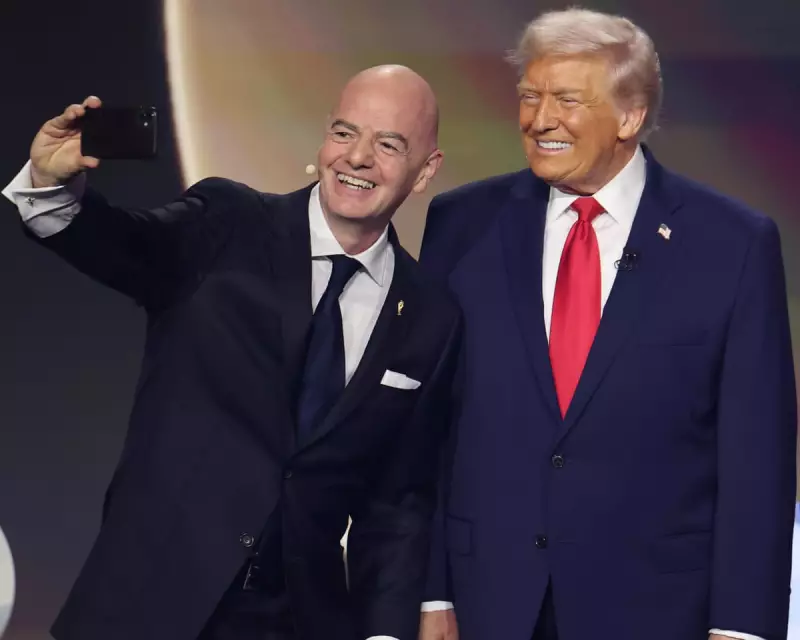
Complicating matters further is FIFA President Gianni Infantino's well-documented relationship with Donald Trump. The two were photographed taking a selfie together during the World Cup draw in December, symbolising their cordial rapport. Infantino has cultivated close ties with the former US president, even creating a special "FIFA Peace Prize" which he awarded to Trump at the same event.

This relationship between football's global governing body and the controversial political figure at the centre of the Greenland dispute adds another layer of complexity to the boycott debate. Critics argue that FIFA's cosy relationship with Trump undermines its ability to remain neutral in geopolitical conflicts that intersect with football governance.
The unfolding situation presents a significant test for international sports diplomacy as the 2026 World Cup approaches. With European football chiefs reportedly discussing their response to Trump's Greenland threats behind closed doors, the coming months may see further developments in this unusual collision of football, politics, and territorial ambitions.





