Formula One returns this weekend at the Miami Grand Prix after a five-week break, with teams introducing significant upgrades and new regulations. The enforced hiatus, following the cancellation of the Saudi Arabian and Bahrain GPs due to the war in the Middle East, allowed many teams to assess their cars amid ongoing rule changes.
Mercedes have dominated the season so far, with Kimi Antonelli leading George Russell by nine points in the championship. However, their advantage is less pronounced in close battles with Ferrari and McLaren. Mercedes have not brought major upgrades to Miami, while Ferrari and McLaren hope their developments can close the gap.
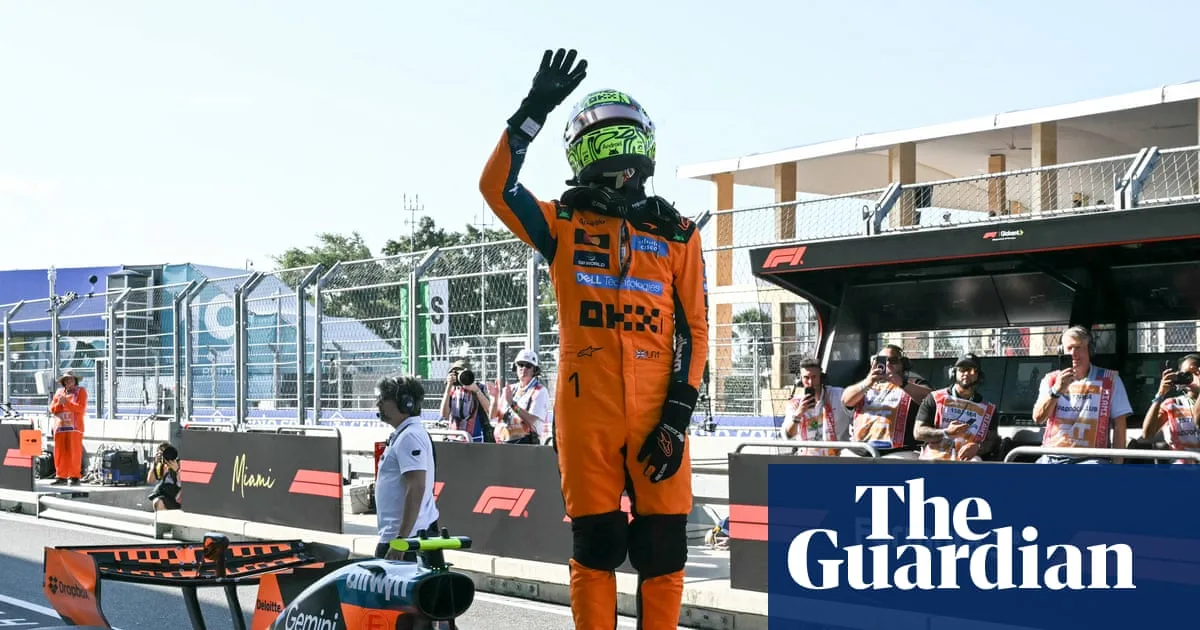
Lando Norris demonstrated McLaren's progress by taking pole for Saturday's sprint race, beating Antonelli by two-tenths. Oscar Piastri qualified third, with Charles Leclerc fourth, Max Verstappen fifth, and George Russell sixth. It is the first time this season a Mercedes has not been on pole in any format.
Red Bull also aim to address their car's issues with upgrades in Florida, as four-time champion Verstappen sits ninth in the standings. Ferrari, with Lewis Hamilton and Leclerc third and fourth respectively, are confident in their chassis and hope to ignite the title fight.
Drivers are managing rule adjustments aimed at reducing the impact of energy management on racing. Early practice on Friday showed no obvious discontent, but the real test comes with qualifying, the sprint, and the main race. The main race on Sunday is scheduled for 4pm, but local forecasters predict an 85% chance of heavy thunderstorms, prompting the FIA to consider bringing the start time forward. Lightning within an eight-mile radius would force a stoppage, and wet conditions would be a new challenge for these cars.