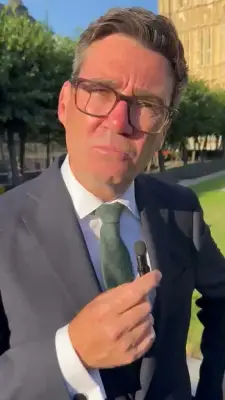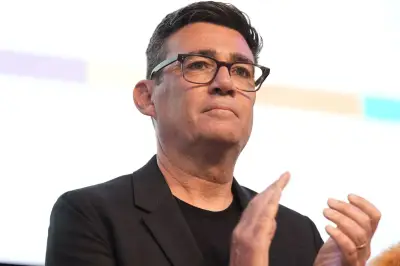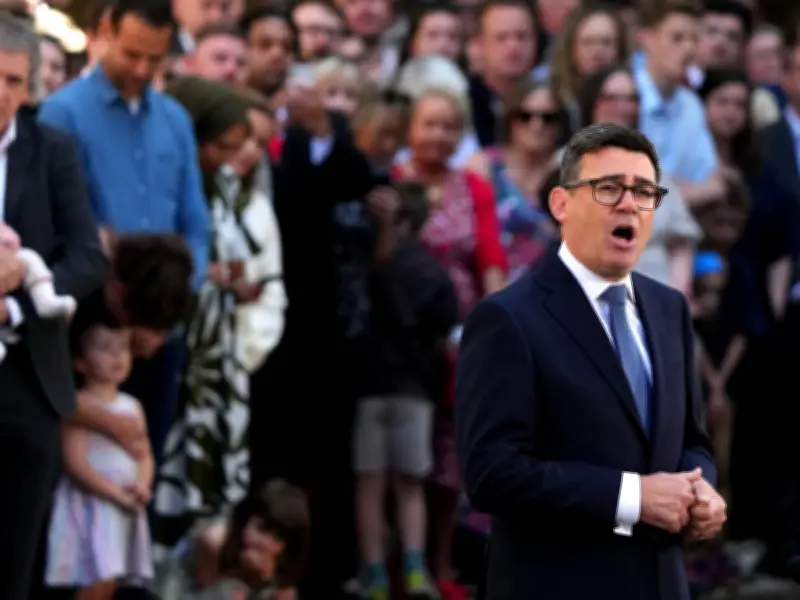
Andy Burnham's first day as Prime Minister was marked by a brutal cabinet purge that targeted allies of former PM Keir Starmer, while his inaugural speech outside Number 10 promised to end rough sleeping and devolve power from Westminster. The dual display of ruthlessness and reformist zeal offered the first real insight into how Britain's new leader intends to govern.
Cabinet Purge Targets Starmer Loyalists
Despite earlier talk of unity and a Cabinet representing all factions of the Parliamentary Labour Party, Burnham moved swiftly to remove those most closely associated with the previous regime. Liz Kendall, Attorney General Lord Richard Hermer, Rachel Reeves, David Lammy, Steve Reed and Peter Kyle were all early victims of the purge, setting the tone for what followed.
John Healey was appointed Chancellor just weeks after resigning as Defence Secretary in protest at Starmer's handling of the defence budget. While not a traditional Burnham supporter, bringing Healey back into government in such a prominent role sent a strong signal. Ed Miliband, widely tipped for the No 11 job and a longtime friend and ally of Burnham, was instead appointed Foreign Secretary in a coup for the 'soft left'.

Louise Haigh, who ran Burnham's campaign in Makerfield, returned to government as First Secretary of State and Chancellor of the Duchy of Lancaster. Shabana Mahmood remains as Home Secretary, indicating that Burnham does not intend to deviate from current immigration plans.
Those expecting a conciliatory approach to Starmerite faithfuls might have been surprised to see the former PM's closest allies depart so sharply. However, people who remember Burnham being blocked from standing in the Gorton and Denton by-election, Starmer's refusal to wait until September to depart, and the £5bn defence budget problem were less surprised. There was undoubtedly business that remained unsettled.
First Speech: A Promise to End Rough Sleeping
If the Cabinet appointments revealed Burnham the political operator, his first speech outside Number 10 introduced Burnham the reformer. Diagnosing a nation "fed up with politics" and promising a profound "circuit breaker" for the British state, Burnham sounded like a man reacting dynamically to the unprecedented chaos of the last decade.
But this wasn't a speech born from recent crises. The pledge to dismantle "point-scoring" politics and rewrite the rules of government echoed his May 2017 mayoral acceptance speech, where he also pledged to end rough sleeping in Greater Manchester by 2020. Today, almost a decade later, he pledged to do the same as Prime Minister: "I will soon go through that door behind me and issue my first instruction: to end rough sleeping in our country."
In a written statement, Burnham said: "For too long, we've been told that ending rough sleeping will take decades or even that it's impossible. I'm not having that. This is something a government can fix if it chooses to. Today, I'm choosing to." However, data from Greater Manchester shows the issue has worsened in recent years, despite schemes like A Bed Every Night and Housing First that reduced rough sleeping from its highest levels. Burnham's failure to deliver on his 2020 promise remains a political vulnerability.
Devolution at the Heart of Government
Throughout the speech, Burnham returned to ideas that defined his mayoralty: power has become too centralised, politics too tribal, communities left behind by Westminster. His promise to "take power out of here, and carry it into every postcode in the land" indicated that devolution will sit at the heart of his Government.
This will be welcomed by metro mayors and council leaders who have long argued that Whitehall retains too much control over transport, housing, skills and economic development. However, taking that philosophy from Greater Manchester to government presents a different challenge. As Mayor, Burnham often acted as a consensus builder between ten local authorities. As Prime Minister, he must balance competing demands of Whitehall departments, devolved governments, local authorities, Parliament and financial markets.

There was a tension in the speech: Burnham argued passionately for devolving power, yet one of his first promises was that he would personally "issue my first instruction" to end rough sleeping. This encapsulates the challenge of reconciling his instinct for localism with the reality that Prime Ministers govern through the central state.
Ideological Framework and Omissions
The speech represented a more overtly ideological Burnham than many expected. His claim that Britain "took some wrong turns" during the 1980s directly critiqued the Thatcher era, setting out the intellectual framework for what is likely to follow. He argued political power became centralised while economic power was privatised, leaving former industrial communities in permanent decline. His remedy: stronger public control over essentials, reindustrialisation through public procurement, and a new economic model built around place rather than markets.
Perhaps most ambitious was his promise to deliver "the biggest changes in the last 40 years" — an exceptionally high bar given the Thatcherite reforms, devolution, Brexit, financial crisis, austerity and pandemic that have reshaped the country. Strikingly, Burnham did not mention the NHS, traditionally a defining Labour issue, beyond a brief reference to a "preventative state" and mental health support for young people. Immigration, crime, policing and foreign policy were also largely absent, leaving some of Britain's biggest political questions unanswered.
Conclusion: Hope vs. Reality
Burnham's first day displayed both sides of his political character: ruthless in cabinet appointments, conciliatory and hopeful in his speech. The central question remains whether his mayoral philosophy can succeed nationally. His promise to end rough sleeping captures both the moral ambition and the risk of overpromising. If he succeeds, it will define his premiership; if not, critics will return to it throughout his time in Downing Street.