

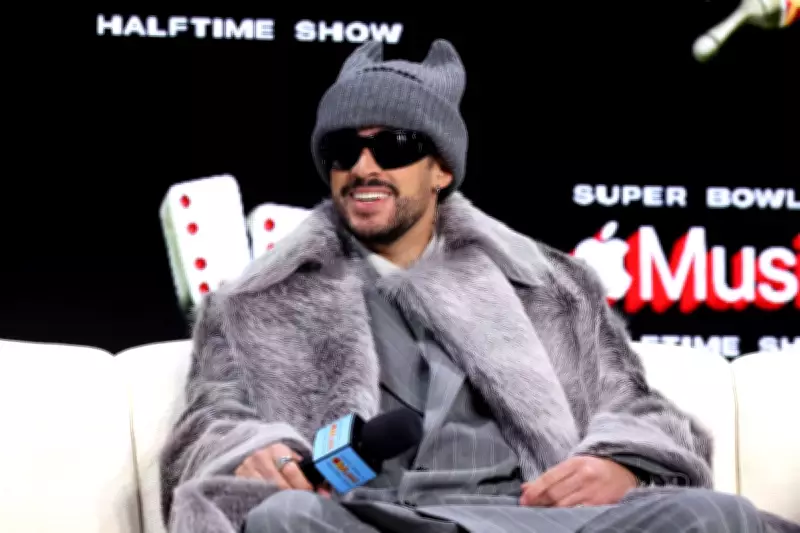
Puerto Rican rapper Bad Bunny is set to deliver one of the most significant performances of his career at the 2026 Super Bowl, yet he will not receive a single penny for his appearance. The 31-year-old artist, whose real name is Benito Antonio Martínez Ocasio, has been selected to headline this year's halftime show, sparking controversy among certain political factions, including some of Donald Trump's staunchest supporters. These critics have labeled him a "massive Trump hater" and an "anti-ICE activist," while also criticizing his lack of English-language songs. Despite the high-profile nature of the event, many may be surprised to learn that halftime show performers do not earn any direct payment for their efforts.
The NFL's No-Pay Policy for Halftime Stars
According to reports from Forbes, the National Football League does not provide financial compensation to halftime headliners, aside from a union-mandated minimum fee of a few hundred dollars that is absorbed into overall production costs. Instead, musicians largely rely on the unparalleled exposure generated by performing in front of millions of viewers. This tradition has been in place for years, with artists benefiting from significant boosts in music sales, streams, and brand visibility following their Super Bowl appearances.
Massive Exposure Over Monetary Gain
Recent examples highlight the substantial benefits that come with performing at the Super Bowl halftime show. Last year, Kendrick Lamar's performance during Super Bowl 2025, which attracted an average of 133.5 million viewers, led to a 430 percent increase in streams for his song "Not Like Us." Similarly, Rihanna experienced a dramatic surge in music sales and streams after her 2023 halftime show, with her Spotify streams jumping by 640 percent immediately after the concert. Her cosmetics brand, Fenty Beauty, also saw a notable uptick in sales.

It is estimated that within just twelve hours of Rihanna's performance, she accumulated approximately $88.3 million in media impact value, as measured by the brand performance insight tool Launchmetrics. Other artists have reaped similar rewards: Lady Gaga witnessed a 1000 percent increase in album and song sales following her 2017 halftime show, while Jennifer Lopez gained 2.3 million new Instagram followers after her 2020 appearance alongside Shakira.
High Production Costs and Artist Investments
The production of the Super Bowl halftime show carries a hefty price tag, often reaching around $10 million, covered by the NFL and its sponsors, such as Apple Music. These funds are allocated to cover staff salaries, elaborate sets, and advanced audio equipment. In some cases, artists have even contributed their own money to enhance the spectacle. For instance, in 2021, The Weeknd reportedly spent $7 million of his personal funds on the show, mirroring a similar investment by Dr. Dre the previous year.
Super Bowl LX Details and Historical Context
This year's Super Bowl LX is scheduled to take place on February 8 in Santa Clara, California, featuring a matchup between the New England Patriots and the Seattle Seahawks. These two teams previously faced off in 2015, with the Patriots emerging victorious by a final score of 28-24. As Bad Bunny prepares to take the stage, he joins a long line of performers who have leveraged the Super Bowl platform to amplify their careers through exposure rather than immediate financial gain.






