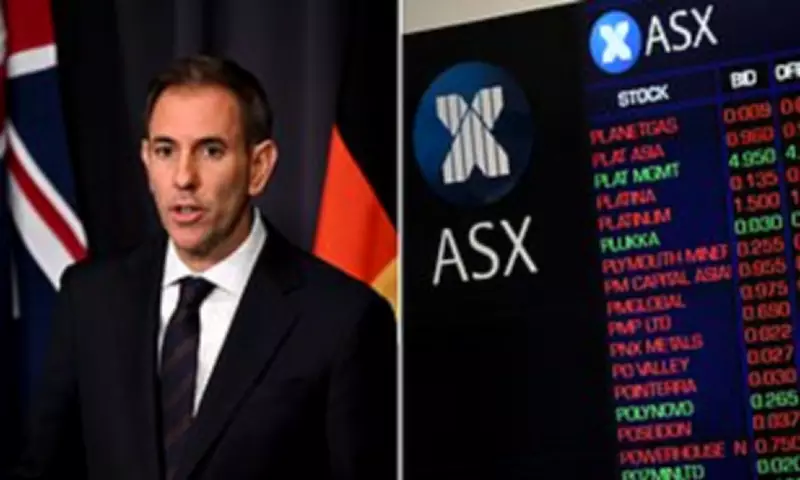
The Albanese government is reportedly planning to scrap the long-standing 50 per cent capital gains tax (CGT) discount and replace it with an inflation-indexation model for all new investments, potentially affecting individual share portfolios. The change is expected to be announced in the upcoming federal budget on May 12.
Scope of the Proposed Change
While earlier discussions focused solely on property, the proposal now appears set to extend across all asset classes, including personal shares. It remains unclear whether existing investors would be shielded from higher taxes, with no confirmation on whether current holdings would be grandfathered under the existing rules.
Under the current system, investors who hold an asset for more than 12 months can halve their capital gains tax bill, with only 50 per cent of profits added to assessable income and taxed at their marginal rate. Introduced in 1998, the discount aimed to simplify the tax system, encourage long-term investment, and offset the effects of inflation.

An inflation-indexation model, by contrast, would adjust an asset's purchase price in line with inflation, typically measured by the Consumer Price Index, before calculating capital gains. This would tax only real gains rather than nominal price increases.
Government's Stance
Prime Minister Anthony Albanese declined to detail specific tax changes when questioned in Canberra on Tuesday, instead pointing to the forthcoming budget. 'We'll have a budget on 12 May,' he said. Albanese framed the issue around fairness, saying intergenerational equity sat at the heart of his government's agenda. 'For many young people, they feel like they haven't got a fair crack compared with my generation,' he said, adding the budget would focus on 'resilience'.
Both Albanese and Treasurer Jim Chalmers have repeatedly highlighted intergenerational equity as a central theme of the budget.
Political Reactions
Opposition Leader Angus Taylor signalled the Coalition was unlikely to support changes to capital gains tax but stopped short of ruling them out, describing any proposal as a hypothetical until announced. 'Get the government to give a specific policy that lasts more than about 24 hours and I'll consider,' he told the ABC on Sunday. 'If you want less of something, tax it.'
It is understood the proposal has exposed divisions within the Coalition, with MPs concerned Labor could use the changes to win back younger voters lost at the past two elections.
Expert Opinion
Daily Mail Political Editor Peter van Onselen has criticised the proposed changes, warning they risk becoming a revenue-raising 'tax grab'. 'It makes more sense to keep capital gains taxes relatively consistent across investment classes so governments do not distort investment decisions with uneven tax policy,' he said.
Van Onselen argued that any increase to capital gains tax on investment properties should be matched by equivalent changes to the share market. 'If the government believes higher CGT on housing will help first-home buyers compete with investors, it is difficult to justify applying the same logic to shares,' he said.
He warned that removing concessions across both asset classes appeared to be motivated by budget repair. 'Stripping CGT concessions from both housing and shares feels less like reform and more like a tax grab to fund rampant government spending,' he said. 'I would be far more comfortable limiting CGT concessions if the Treasurer also committed to dramatic cuts in recurrent expenditure.'
'The biggest no-no would be applying these changes retrospectively, because that kind of uncertainty undermines investment confidence and is the sort of behaviour people associate with banana republics.'