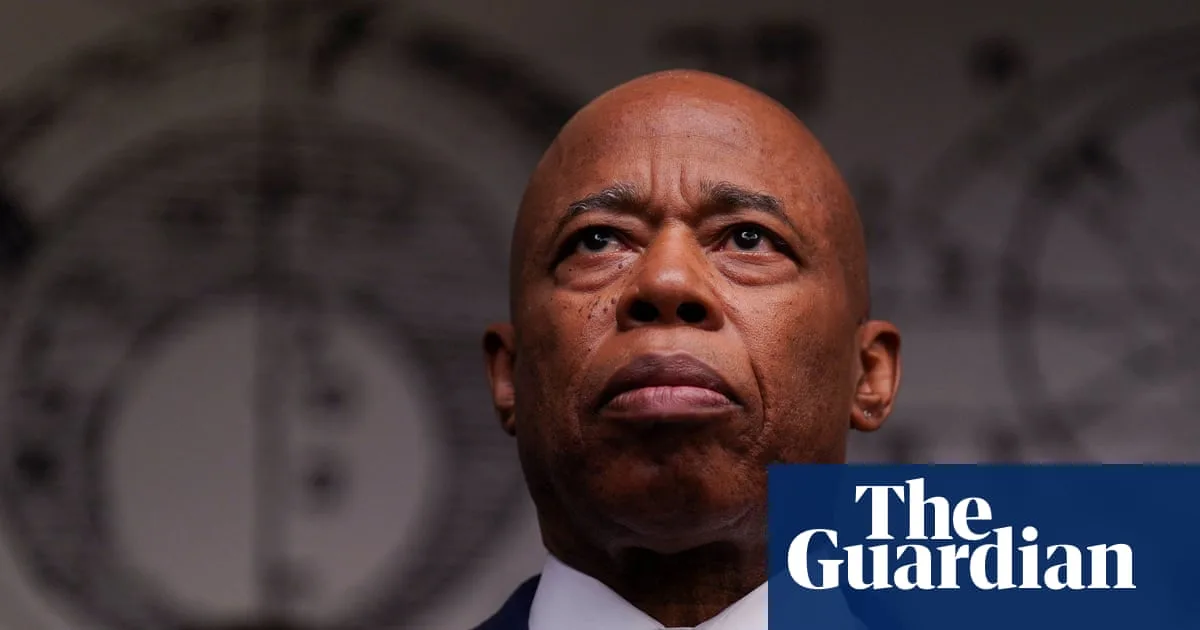
In a significant pre-emptive move, outgoing New York City Mayor Eric Adams has issued two executive orders aimed at combating antisemitism, just weeks before he cedes power to the city's mayor-elect, the vocal Israel critic Zohran Mamdani.
Executive Orders Target BDS and Protests
The first order, signed by Adams on 22 May 2025 at the Center for Jewish History, explicitly prohibits city agency heads and staff from endorsing any policy that discriminates against Israel, its citizens, or entities associated with it. Crucially, it bars officials overseeing the city's vast pension system—valued at over $250 billion—from making investment decisions aligned with the Boycott, Divestment and Sanctions (BDS) movement.
The city holds approximately $300 million in Israeli bonds and assets. Mamdani, a democratic socialist who will become New York's first Muslim mayor on 1 January, has previously criticised such investments and expressed support for BDS, setting the stage for a direct policy confrontation.
Protecting Houses of Worship and Political Reckoning
A second executive order directs the New York City police commissioner, Jessica Tisch, to evaluate proposals for regulating protest activity near houses of worship. This follows demonstrations last month outside an Upper East Side synagogue, which hosted an event promoting immigration to Israel, that sparked accusations of antisemitism.
Adams stated the measures aim to "protect New Yorkers' tax dollars and protect their right to practice their religion without harassment." He was unequivocal on social media, writing: "Executive Order 60 makes it clear: BDS has no place in our city. The movement is antisemitic in nature and discriminatory in practice."
A Clash of Ideologies and International Ripples
The orders are widely seen as an effort to box in Mamdani, whose support for the Palestinian cause has stirred tension within parts of the city's Jewish community. Mamdani will have the power to reverse the orders upon taking office, potentially fuelling further the heated debate over where criticism of Israel ends and antisemitism begins.
The political manoeuvring in New York has even drawn a reaction from Israeli Prime Minister Benjamin Netanyahu. At a New York Times Dealbook forum, Netanyahu confirmed he would still visit New York City despite Mamdani's past threat to have the NYPD enforce any International Criminal Court arrest warrant against him. The ICC has stated it has reasonable grounds to believe Netanyahu is responsible for alleged war crimes during the Israel-Hamas conflict in Gaza.
When asked if he would seek talks with Mamdani, Netanyahu replied, "If he changes his mind and says that we have the right to exist, that’ll be a good opening for a conversation." Mamdani has supported Israel's right to exist but has resisted defining it as a Jewish state, arguing no country should have a "hierarchy of citizenship."
This unfolding drama underscores how local governance in a global city like New York can quickly intersect with intense international diplomatic and ideological conflicts.