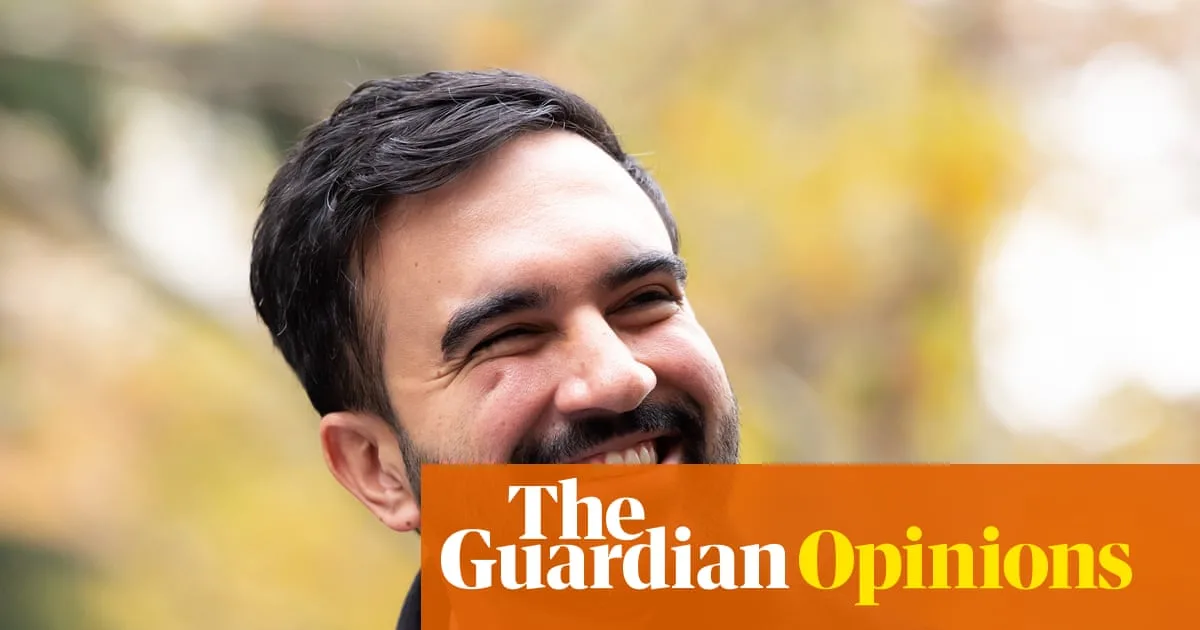
For the past month, I have been conducting a personal experiment: trying to smile like Zohran Mamdani, the incoming mayor of New York. It is not, as I discovered, an easy feat. Mamdani is known for his perpetual grin, even in the face of criticism and hostility. His detractors call him a 'jihadist', he meets Donald Trump, and Republican lawmakers campaign to investigate his citizenship – yet he keeps smiling.
I wondered whether his cheekbones ache, or if his face is stuck in that position. Does smiling so much trick him into feeling happy, despite the world being a 'raging dumpster fire'? Studies on whether smiling can improve mood are mixed; a recent one suggested a slight effect, but not enough to smile oneself out of depression.
I suspect Mamdani's reasons for grinning are not particularly uplifting. For racialised people, emotions are often policed. White men's anger may be seen as righteous, but the rage of black or brown individuals is always perceived as wrong. Research shows teachers are more likely to misperceive black children as angry. There is also a gender rage gap: women are frequently told to smile, and the pressure compounds for women of colour, like Serena Williams battling the 'Angry Black Woman' trope.

Repressing rage is unhealthy, but joy can be an act of resistance. Mamdani's grin is subversive: his critics would love to see him angry, to prove he is a 'scary brown man'. But his smile undercuts that narrative.
My month of constant grinning was challenging because my neutral expression is a scowl, and I cannot easily control my facial muscles. However, once I got the hang of it, I found it useful for staying composed in difficult situations, such as panels on Gaza where I faced outrageous questions. 'Channel Mamdani,' I told myself, and smiled.
My conclusion: smiling helped lower my heart rate and emotionally reset, but it made my cheeks ache and resulted in dreadful photos. I will keep the Mamdani grin for tough occasions, but for now, I am reverting to my usual expression.