One Nation's spectacular rise from a distant 6% of the vote in the last federal election to first or second in some recent polls has upended Australian politics, creating what pollsters describe as 'unknown territory' for predicting the next election outcome. Data from DemosAu's March MRP poll indicates the rightwing party now appears in the final three candidates in well over 100 seats, compared to just 26 seats in the previous election.
Urban Seats Pose Major Obstacle
Despite its national polling surge, One Nation continues to perform poorly in inner metropolitan electorates, according to George Hasanakos, head of research at DemosAu. This geographic weakness means the party would likely need to win approximately three-quarters of the 107 seats in outer metropolitan and rural and regional areas to attain government. The seat breakdown includes 62 rural/regional seats, 45 outer metropolitan seats, and 43 inner metropolitan seats.
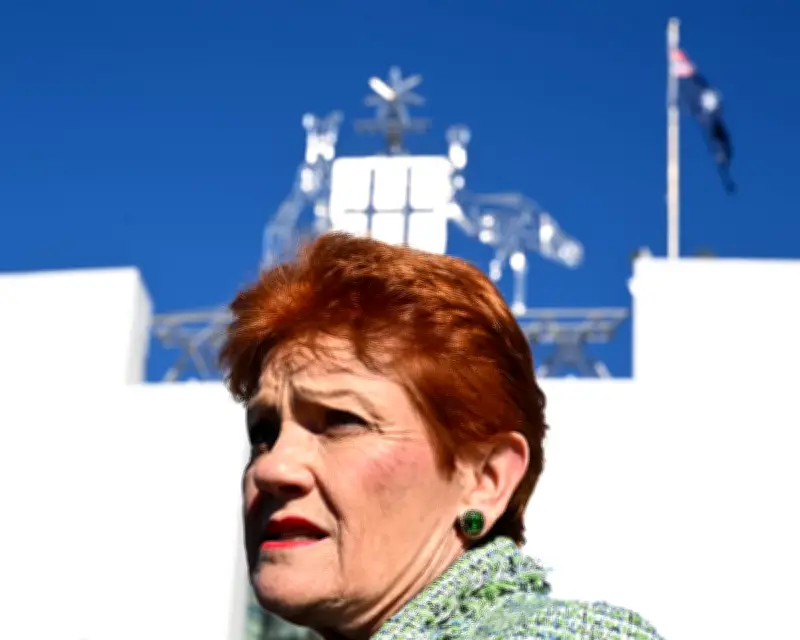
Pauline Hanson has stated she believes she has the ability to serve as prime minister and has considered running for the House of Representatives in 2028. However, the party's path to government remains unclear given the structural disadvantage in urban seats.

Preference Flow Uncertainty
Australia's preferential voting system adds another layer of complexity. Traditionally, pollsters could reliably estimate preference flows between Labor and the Coalition, but with One Nation now drawing significant support from former Coalition and Labor voters, those historical patterns may no longer apply. 'We're in a situation in the polls now where One Nation is the lead conservative party,' Hasanakos said. 'But they've taken a large portion, perhaps half, of all the conservative voters that used to vote for the Coalition. And so the proportion of Coalition supporters who are not fans of Pauline Hanson, all of a sudden they've become a larger share of the remaining Coalition voters. So this could very well impact preference flows.'
In the 2025 election, only a handful of seats were decided on first preferences, meaning preference flows determined outcomes in the vast majority of contests. With One Nation now a major contender in many seats, the final two candidates in 84 seats are projected to be Labor and One Nation, with the Coalition finishing third. How Coalition voters direct their preferences in these contests will be critical.
How-to-Vote Cards and Voter Behaviour
Murray Goot, emeritus professor of politics at Macquarie University, noted that how-to-vote cards distributed at polling booths will influence a 'significant' number of voters. Data from Victorian and South Australian elections suggests about 40% of major party voters follow their party's how-to-vote cards. However, if the Coalition's decline solidifies, it may struggle to maintain enough volunteers to staff every booth, potentially reducing the effectiveness of these cards.
Goot cautioned that while One Nation is doing well in polls, 'the serious matter is seats. You've got to be able to translate votes into seats, and there's no evidence that One Nation is winning as large a proportion of the seats as it is of the votes.'
Potential Coalition-One Nation Alliance
Given One Nation's difficulty in winning metropolitan seats, Goot raised the possibility that a combination of One Nation and Coalition seats could approach a majority. 'And for that, the Coalition has to win some metropolitan seats,' he said. Liberal frontbencher Dan Tehan has stated that coalition with One Nation is 'not even being talked about,' but the electoral arithmetic may force such discussions if neither major party can secure a majority on its own.
The interactive seat map based on DemosAu's March MRP poll illustrates the sensitivity of outcomes to preference flows, with even slight changes in how Coalition voters direct their preferences having a major impact on tight races.