

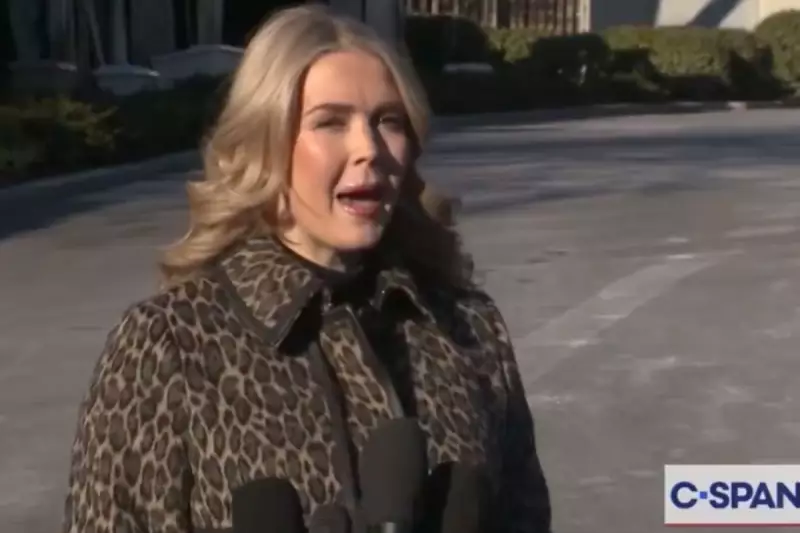
White House press secretary Karoline Leavitt has launched a fierce critique against Vanity Fair, accusing the publication of presenting a "disingenuous" and unfairly negative narrative about the Trump administration. The row erupted following the magazine's coverage of an exclusive interview with Susie Wiles, the Chief of Staff.
Chief of Staff's Claims Spark Media Row
The controversy centres on a Vanity Fair piece published on Wednesday 17 December 2025, which detailed remarks made by Susie Wiles in an exclusive interview. Wiles reportedly characterised former President Donald Trump as possessing an "alcoholic's personality" and labelled Vice President JD Vance a "conspiracy theorist for a decade." However, Wiles swiftly denounced the article, branding it a "hit piece" that deliberately stripped her comments of crucial context to fabricate a "chaotic and negative narrative."
White House Condemns 'Bias of Omission'
Weighing into the dispute, Press Secretary Karoline Leavitt provided a robust defence of the administration and a pointed criticism of the press. "The bias of omission was clearly present in this article," Leavitt stated, echoing Wiles' concerns. She expanded her critique to the wider media landscape, arguing that outlets frequently distort stories by "leaving out important context," a practice she implied was central to the Vanity Fair report.

Adding a visual dimension to the feud, Vanity Fair's Instagram account featured close-up photographs of several prominent Trump administration figures, including Ms Leavitt. This move further intertwined the magazine's editorial stance with its social media presentation, fuelling perceptions of a targeted narrative.
Broader Implications for Political Reporting
This incident highlights the ongoing, profound tension between the current administration and major media institutions. The accusations from both Wiles and Leavitt underscore a persistent belief within Trump's circle that coverage is often intentionally skewed. The specific charge of a "bias of omission" suggests a focus not on fabricated claims, but on the selective use of facts to guide readers toward a predetermined conclusion. This latest skirmish is likely to reinforce existing scepticism among the administration's supporters regarding mainstream political journalism.






