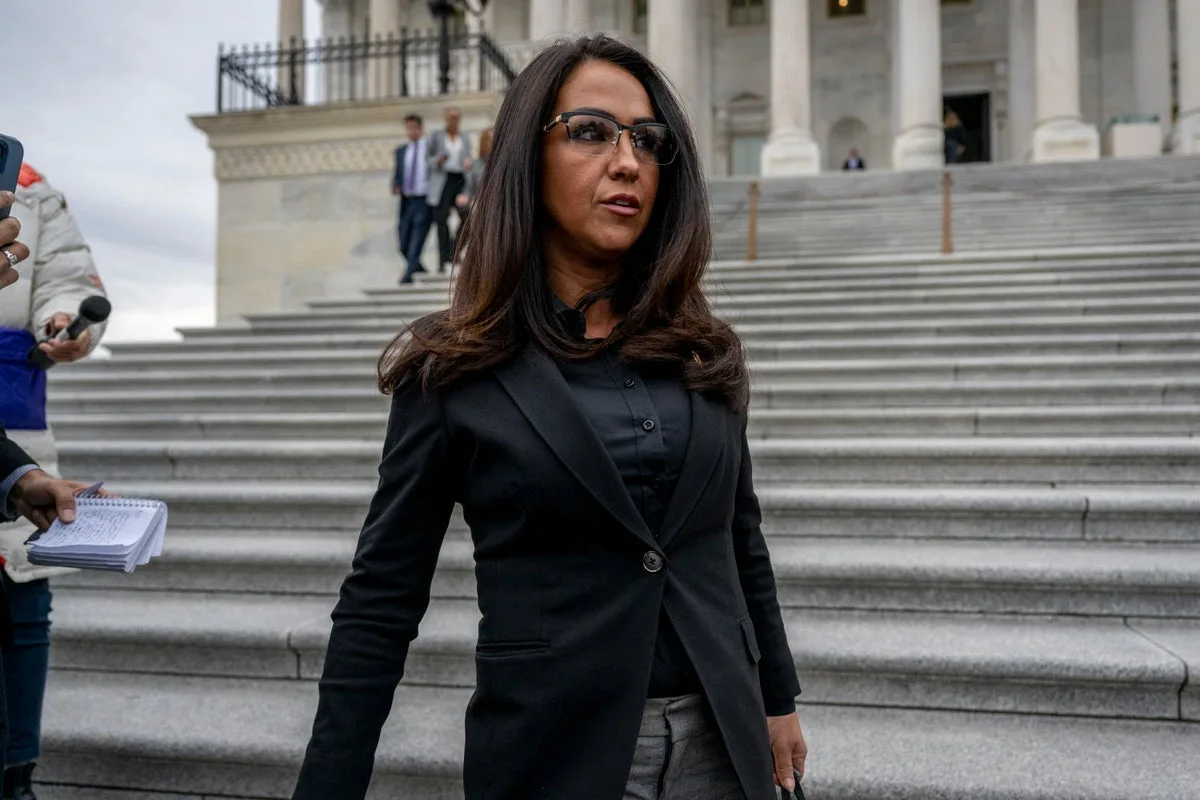
On Thursday, the House failed to override President Donald Trump’s veto of a bill championed by Representative Lauren Boebert to secure clean drinking water for her constituents, despite the bill passing unanimously the previous month. Boebert described the vote as “purely political” but said she would not take it personally, using her frustration as motivation to continue pushing the legislation.
The veto came after Boebert joined a discharge petition to force a vote on releasing files related to Jeffrey Epstein, highlighting the double-bind Republicans face when breaking with the president. Trump’s influence over the party base remains strong, leaving members like Boebert exposed when they defy him.
Also on Thursday, five Republican senators—Josh Hawley, Rand Paul, Susan Collins, Lisa Murkowski, and Todd Young—voted with Democrats on a War Powers Act resolution to limit future military action in Venezuela. Trump reacted angrily, stating that they “should never be elected to office again.” Senator John Cornyn, facing a tough primary, downplayed the incident, suggesting Trump’s anger might fade in a few days.

In the House, 17 Republicans joined Democrats to extend expanded tax credits for the Affordable Care Act’s health insurance marketplace. Most are in competitive re-election races, but risk Trump’s ire. Meanwhile, Trump’s stance on Venezuela has puzzled some Republicans, with Representative Carlos Gimenez describing it as “a means to an end” despite the president propping up Maduro’s deputy instead of supporting opposition leader Maria Corina Machado.
The fallout extended to Marjorie Taylor Greene, who formally resigned earlier this week after clashing with Trump over the Epstein files. Her departure underscores the risks Republican lawmakers face when they diverge from the president’s agenda.