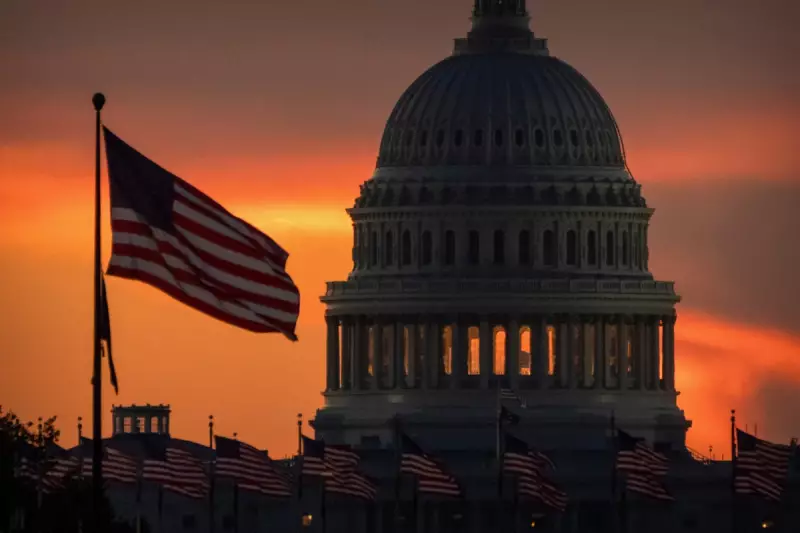
In an unprecedented display of political infighting, the US House of Representatives witnessed a dramatic surge in censure activity last week, voting on as many formal reprimands in just seven days as it had throughout the entire preceding two-year congressional session.
A Week of Unprecedented Political Rebukes
The flurry of action began on Monday, when Washington Democrat Rep. Marie Gluesenkamp Perez successfully secured a rebuke against her party colleague, the retiring Illinois Rep. Jesus “Chuy” Garcia. She accused him of attempting to subvert the election of his successor.
The following day, South Carolina Republican Rep. Ralph Norman submitted a motion to censure U.S. Virgin Islands Democratic Del. Stacey Plaskett. This effort failed, but it emerged amidst revelations that Plaskett had been in contact via text with the late convicted sex offender Jeffrey Epstein back in 2019.

The week's censure attempts concluded on Thursday with another failed motion. South Carolina Rep. Nancy Mace, a Republican, sought disciplinary action against fellow Republican, Florida Rep. Cory Mills, citing a range of alleged offenses including corruption. Mills's case was subsequently referred to the House Ethics Committee for further investigation.
Bipartisan Backlash and a Push for Reform
This concentrated burst of political reprimands stands in stark contrast to recent history. The entire 118th Congress, which ran from 2023 to 2025, saw only three censure votes, all targeting Democratic representatives Adam Schiff, Rashida Tlaib, and Jamaal Bowman between June and December 2023. Not a single formal reprimand was issued in either chamber during the entire 2022 and 2024 calendar years, highlighting the extraordinary nature of last week's events.
This sudden appetite for censure has alarmed members on both sides of the aisle, prompting a rare bipartisan initiative to change the rules. Virginia Democratic Rep. Don Beyer and Nebraska Republican Rep. Don Bacon are now championing legislation to raise the threshold for securing a censure vote. Their proposal would require a 60-percent majority instead of a simple majority, making it significantly harder to advance such resolutions.
Beyer told The Washington Post that their plan is gaining cross-party support, stating he was motivated by growing weary of “the tension, the anger, the refusal to work together.” He expressed hope for a vote on the reform early next year.
The Evolving Role of Censure in Modern Politics
A censure resolution is a formal statement of disapproval against a member of Congress, the president, a judge, or a government official. For representatives and senators, it can carry disciplinary consequences, such as the removal from committee assignments, a power granted to Congress by the U.S. Constitution.
However, critics argue the process is being weaponised. Minnesota Democratic Rep. Ilhan Omar, who was herself the target of a failed censure push by Rep. Mace in September, told the Post that the tool is being overused and stifles “civil debate.”
“It puts us in a really bad shape when it becomes a tool to fundraise and to get your name out there,” Omar said, suggesting some members are exploiting the process for attention.
This sentiment was echoed by former Virginia Republican congresswoman Barbara Comstock, who offered a damning assessment of the cultural shift. She noted that in the past, members often resigned when faced with serious allegations, but today they are more likely to stand their ground. Comstock attributed this change to the example set by former President Donald Trump, stating, “Back in the day, these type of actions weren’t taken because there still was some sense of shame and decency by the members themselves.”
As the House grapples with this new normal, the bipartisan push for reform signals a growing consensus that the escalating cycle of censures is damaging the institution's ability to function effectively.