

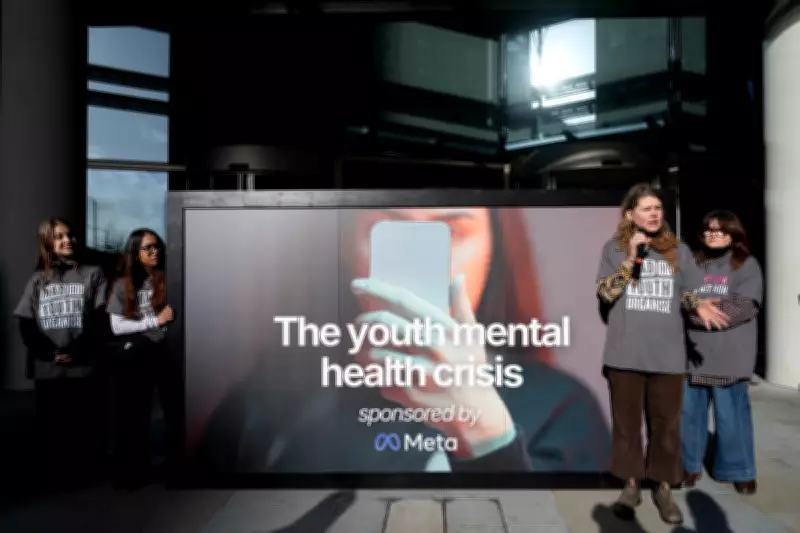
Youth Activists Stage London Protest Against Meta Over Mental Health Concerns
Young campaigners assembled outside Meta's London headquarters on Wednesday morning, branding social media platforms as "addictive" and "dangerous" for their mental wellbeing. The demonstration, orchestrated by the charity Mad Youth Organise, urged the government to impose stricter regulations on major technology corporations.
Demands for a 'Misery Tax' and Policy Reform
The protesters unveiled a billboard declaring "The youth mental health crisis - sponsored by Meta," advocating for a four percent levy on the UK revenue of tech companies. They propose that these funds be reinvested into mental health services and the development of community-led digital platforms. This action follows recent parliamentary decisions where MPs rejected a blanket social media ban for under-16s, instead granting ministers enhanced powers after consultation.
Diarmaid McDonald, director of Just Treatment, the campaign group supporting Mad Youth Organise, emphasised the protest's goal to "recognise the critical role social media is playing in undermining people's health." He argued for a tax on firms contributing to the youth mental health crisis, stating, "It's about trying not to have a knee-jerk reaction to this really important problem and implementing a solution that isn't going to fix it and is going to make other problems worse."

Personal Stories Highlight Algorithmic Harms
Chloe Yates, a 27-year-old protester, shared her experience of using social media from age 11, becoming addicted by 15. She described how algorithms served her extreme content, acting as an "accelerator" for her mental health struggles, including suicidal ideation and self-harm intentions. Yates believes this unregulated exposure directly led to her diagnosis of anxiety and depression and subsequent admission to a psychiatric ward at 15.
"There is definitely a clear link for me," Yates said. "It was like accessing a free slope, and it was a massive accelerator because it introduced me to dangerous and sinister concepts that I didn't know about before."
Another protester, Hannah Hunt, 27, recounted how social media feeds filled with "pro-ana" and "thinspo" content exacerbated her anorexia diagnosis at 14. She called the platforms a "blueprint of self-destruction," noting that her recovery required significant efforts to disengage from these sites.
Criticism of Current Measures and Call for Accountability
Both Yates and Hunt expressed concerns that algorithms have become more efficient and harmful over time, with Hunt remarking, "They've worked out how to make their money, and that's by keeping people online." However, they opposed outright social media bans, with Hunt acknowledging its potential for connection, especially among marginalised groups like queer communities.
Yates viewed the government's consultation as "positive" but stressed that outcomes must hold platforms accountable rather than users. This protest coincides with Meta facing legal action in the US over allegations of deliberately addicting and harming children, a case seen as a potential precedent for global lawsuits.
The activists highlighted NHS data showing over 550,000 children and young people on waiting lists for mental health treatment in England, attributing part of this crisis to social media's influence. Meta has been contacted for comment regarding the protest and allegations.






