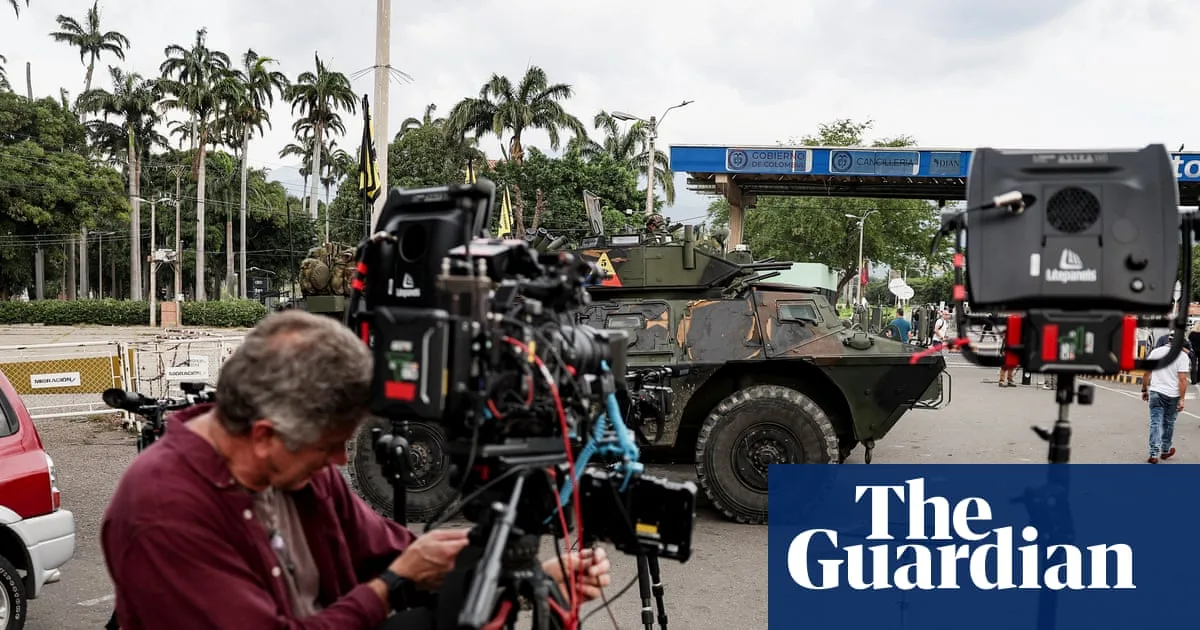
Venezuelan authorities have launched a significant crackdown on the press, detaining at least 14 journalists and media workers in the wake of President Nicolás Maduro's dramatic removal from power by United States forces. The detentions, which included 13 international media staff, occurred in Caracas on Monday, just three days after the US operation.
Widespread Detentions and Confiscations
According to the National Union of Press Workers (SNTP), the detentions targeted journalists covering the political upheaval. Twelve of those detained were later released, with one individual deported. However, two journalists remain in the custody of state intelligence services. The union reported that security forces confiscated communication devices and conducted invasive searches of their contents, including contacts, private messages, emails, and social media accounts.
"This type of action not only threatens the privacy and the security of sources but also is a pattern of criminalisation of journalism," the SNTP stated in a post on the social media platform X.
Targeting the National Assembly and Borders
Five journalists were detained while covering the opening session of Venezuela's National Assembly, where they were prohibited from recording or photographing the proceedings. Others were taken by military intelligence officers to a National Guard command post. The crackdown extended beyond the capital.
On the border with Colombia, Univision journalist Juan Carlos Vélez and his crew were briefly held by the Venezuelan National Guard. Vélez reported that guardsmen seized their equipment and erased video footage. Two other Colombian news teams faced similar brief detentions. The actions follow an incident on Sunday where a Guardian journalist had notes confiscated and was ordered to leave the country.
A Pattern of Press Persecution
This latest incident fits a longstanding pattern of restricting independent journalism in Venezuela. Authorities have consistently declined visas for foreign reporters, severely limiting outside coverage. The National Association of Journalists has documented the arrest of 21 Venezuelan reporters in the first 11 months of 2025 alone, often on charges like "terrorism," "conspiracy," and "dissemination of false information."
International watchdog Reporters Without Borders condemns these charges as tools to persecute critical reporting. The organisation has warned that short-term forced disappearances have become an established tactic in Venezuela's suppression of a free press. The detentions create a chilling effect, further obscuring the situation on the ground following the unprecedented US military action that captured Maduro and his wife, who now face criminal charges in New York.




