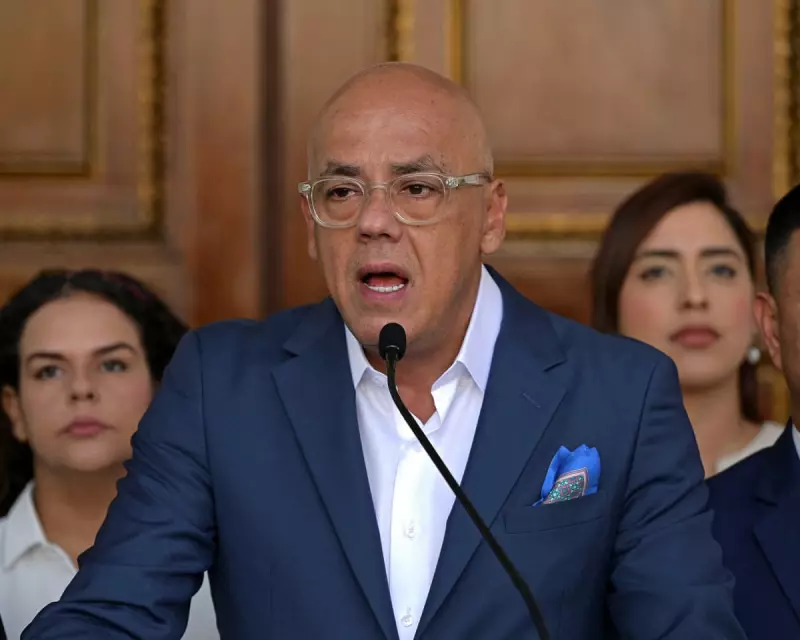
In a significant move, the Venezuelan government has declared it will release an "important number" of detainees, including both Venezuelan and foreign nationals. The announcement was made in Caracas on Thursday by congressional president Jorge Rodríguez, who framed the decision as a unilateral gesture to "consolidate peace" within the republic.
A Gesture for Peace and International Response
Jorge Rodríguez, brother of acting president Delcy Rodríguez, stated the releases were a "unilateral gesture to reaffirm our unbreakable decision to consolidate peace in the republic and peaceful coexistence among all". The development comes just five days after a major US operation targeted the regime of Nicolás Maduro.
Spain's foreign ministry swiftly confirmed the release of five Spanish nationals, one of whom holds dual citizenship. The individuals are reportedly preparing to travel to Spain with assistance from the embassy in Caracas. The ministry welcomed the decision, calling it "a positive step in the new phase Venezuela is entering".

Spanish foreign minister José Manuel Albares identified the dual national as Rocío San Miguel, a Spanish-Venezuelan lawyer and human rights defender. San Miguel was detained in February 2024 and faced accusations of treason, conspiracy, and terrorism in connection with an alleged plot to assassinate President Maduro.
Scale of Detentions and Cautious Optimism
The exact number of individuals to be freed remains unclear. Prior to the announcement, human rights organisations estimated Venezuela held between 800 and 1,000 political prisoners. Most were detained for participating in protests following the widely disputed 2024 presidential election.
Estimates also suggested over 40 foreign nationals were detained, including around 20 Spaniards and five US citizens. Among the Americans is James Luckey-Lange, 28, who disappeared last December and was held at a military counterintelligence headquarters in Caracas.
The announcement has been met with cautious optimism by monitoring groups. Alfredo Romero of the NGO Foro Penal, which estimates 806 political prisoners remain, posted a video expressing "high expectations for the release of all political prisoners". He urged that this must mark a real transformation, not a "fiction" where some are freed only for others to be jailed.
Conditions and Calls for Full Liberation
Other organisations emphasised the need for the releases to be unconditional. The NGO Justicia, Encuentro y Perdón, which estimated 1,011 political prisoners, stated it awaited "effective, immediate and verifiable" releases. It stressed that freedom is a fundamental human right, not a concession from those in power.
The Comité por la Libertad de los Presos Políticos criticised the ongoing "opacity and discretion" surrounding the process, which it said increases the anguish of families. They and others demand releases be "full, immediate and without conditions", a reference to past instances where freed individuals faced travel bans and restrictions on speaking publicly.
This new wave of releases follows a previous pledge by the regime to free 187 people over the Christmas and New Year period, a promise that was only partially fulfilled and independently verified.
At the press conference, Jorge Rodríguez concluded, "Consider this gesture by the Bolivarian government, with its broad intention of seeking peace, as the contribution that all of us must make so that our republic can continue its life in peace and in pursuit of prosperity."