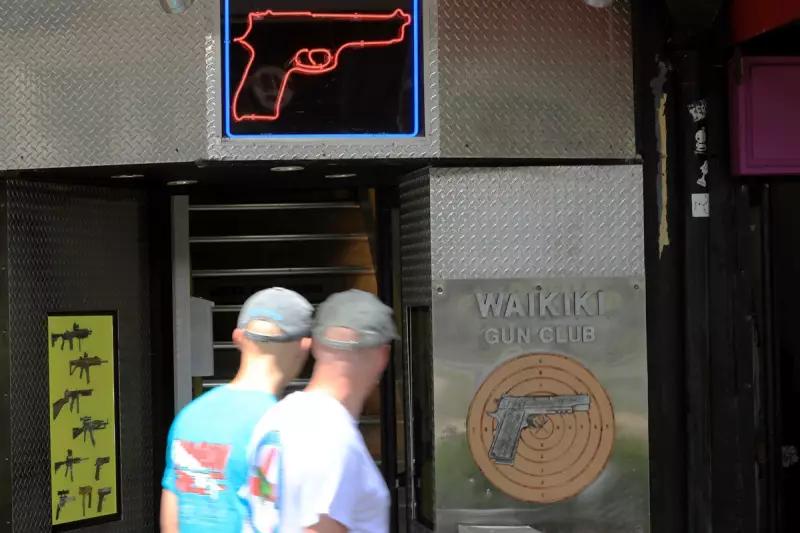
The United States Supreme Court will hear arguments on Tuesday in a landmark case that could significantly alter the landscape of gun legislation in Hawaii, a state long renowned for having some of America's strictest firearms regulations.
The Core of the Legal Dispute
At the heart of the case is a state law, enacted after a pivotal 2022 Supreme Court ruling, which establishes a default rule that firearms cannot be carried on private property open to the public—such as shops, hotels, and restaurants—unless the owner explicitly grants permission, either verbally or via a posted sign. Three residents from Maui initiated the lawsuit in 2023, challenging this and other restrictions that prohibit carrying guns in locations like beaches, banks, bars, and establishments serving alcohol.
The plaintiffs contend that these laws infringe upon their Second Amendment right to bear arms for self-defence. They argue the rules are particularly burdensome in remote areas and note that many business owners are reluctant to display "guns allowed" signage for fear of alarming customers, especially tourists from regions unaccustomed to public firearm possession.

A Legal Journey to the Nation's Highest Court
The legal path to this moment has been complex. After a federal judge in Honolulu blocked the restrictions, a three-judge appeals court panel in 2024 reinstated most of them, permitting bans on beaches, parks, bars, and private property without owner consent. However, the Supreme Court has chosen to focus solely on the private property aspect for this hearing.
Representing the plaintiffs is attorney Alan Beck, who asserts that if the default ban is upheld, "the Second Amendment right to carry firearms for self-defence will effectively be eviscerated." This marks his first argument before the Supreme Court. On the opposing side, Chris Marvin, a Hawaii resident and expert with Everytown for Gun Safety, supports the restriction, framing it as an extension of basic courtesy and the right of property owners to control their premises.
Historical Tradition vs. Island Realities
The 2022 Supreme Court precedent requires modern gun laws to align with the nation's historical tradition of firearm regulation. Hawaii's defence leans heavily on its unique history, noting that King Kamehameha III of the Hawaiian Kingdom prohibited deadly weapons long before US statehood. The state maintains a tradition of strict control, correlating with some of the nation's lowest rates of gun violence.
Yet, Beck challenges this historical argument, stating, "The laws of a monarchy that predates the United States is not part of our American tradition of constitutional rights." He also highlights Hawaii's vibrant hunting culture, particularly on the outer islands, countering the perception that state residents are universally opposed to firearms.
The Supreme Court's forthcoming decision will not only determine the fate of Hawaii's specific law but could also set a significant precedent for how Second Amendment rights interact with private property rights across the United States, forcing a balance between individual liberty and the autonomy of business owners.