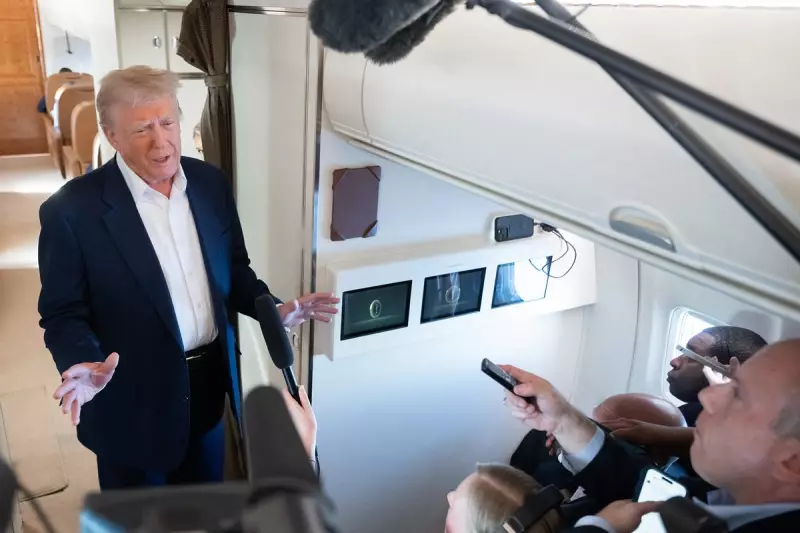
One year into Donald Trump's unprecedented second term, the atmosphere within the White House briefing room has undergone a profound transformation. For journalists who covered his tumultuous first administration, the expected chaos has been replaced by a more disciplined, yet ultimately more concerning, approach to the media.
From Chaos to Control: The Evolution of Trump's Media Strategy
When Donald Trump took the oath of office for the second time on 19 January 2025, veteran reporters braced for a repeat of the past. His first term, beginning in 2017, was characterised by infamous press secretaries like Sean Spicer and Sarah Huckabee Sanders, constant leaks, and a combative, often bizarre relationship with the press corps. Reporters became accustomed to early mornings for confrontational interviews with officials like Kellyanne Conway and the president's own lengthy, pandemic-era briefings.
This time, the initial "first day of school" vibe was deceptive. While Press Secretary Karoline Leavitt and Communications Director Steven Cheung run a more professionally responsive operation behind the scenes, the overarching strategy has shifted dramatically. The leaky ship has been sealed, and a new, systematic approach to managing the narrative has been implemented.

The New Media Order: Sychophants and Banned Outlets
The most significant change came in February 2025, when Leavitt's office announced it would take control of the press "pool" rotation. This system determines which outlets travel with the president and cover his Oval Office appearances. While reputable outlets like The Independent remain in the rotation, others have been sidelined.
The Associated Press (AP) was banned for refusing to acknowledge Trump's proclamation that the Gulf of Mexico should be called the Gulf of America. Their case is currently being evaluated by the courts. In their traditional first-question seat, Leavitt has installed a "new media" section, often filled with sympathetic voices.
This seat has hosted figures like notorious plagiarist-turned-MAGA commentator Benny Johnson, who used his platform to spread a fabricated story about his house being set ablaze, and podcaster Tim Pool, who used his time to complain about mainstream press coverage. Leavitt has defended this by saying the administration "welcomes diverse viewpoints."
A Chilling Precedent: Attacks on Journalists and Press Freedom
The administration's antipathy towards critical reporting has moved beyond rhetoric into action. Reporters, including this correspondent, have been placed on White House-authored lists attacking them as biased for accurate reporting. The situation is even more severe elsewhere in Washington.
In 2025, the Pentagon press corps surrendered their credentials en masse after Defense Secretary Pete Hegseth demanded they sign pledges to only publish pre-approved information—the definition of propaganda. They were replaced by allies like the disgraced former congressman Matt Gaetz and controversial figure Laura Loomer.
In a stark warning to potential government sources, FBI agents recently searched the home of a Washington Post reporter and seized her devices as part of a leak investigation, despite it not being illegal for journalists to receive classified information.
While Trump himself has largely avoided the briefing room, he has dispatched Vice President JD Vance to berate the press corps, most recently over coverage of the Immigration and Customs Enforcement (ICE) shooting of Minneapolis resident Renee Good. Leavitt has also adopted aggressive tactics, recently smearing a reporter from The Hill as "a left-wing hack" for offering a contrary opinion.
The dirty secret remains that Trump, for all his "fake news" and "enemy of the people" rhetoric, privately enjoys engaging with reporters. The fundamental and chilling difference in this second term is that he is now surrounded by senior officials like Vance, Hegseth, and Attorney General Pam Bondi who genuinely believe that antagonistic talk and actively work to marginalise a free press.