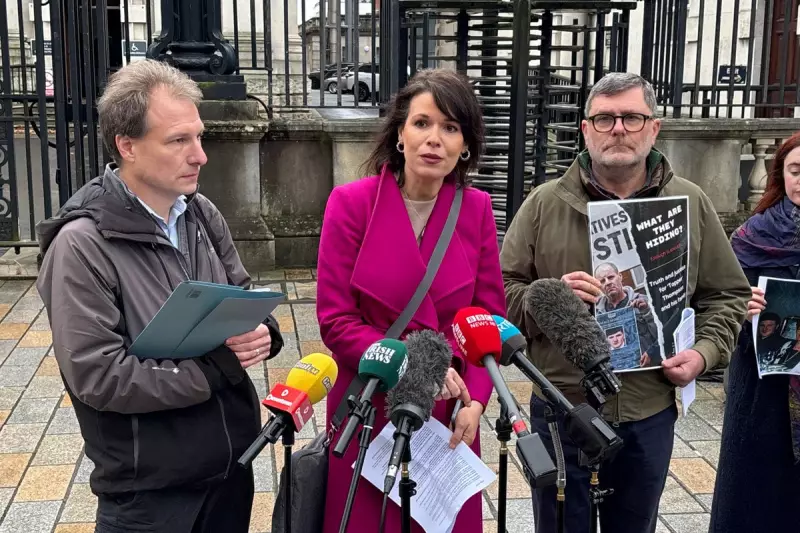
Human rights organisations are weighing a potential appeal to the European Court of Human Rights following a landmark UK Supreme Court ruling that allows the Government to withhold sensitive material from a Troubles-related inquest in Northern Ireland.
A Setback for Truth and Justice
Amnesty International labelled it a "grim day for truth" after the Government successfully appealed against lower court decisions. The case centres on the inquest into the death of Liam Paul Thompson, 25, who was shot by loyalists in the Springfield Park area on April 27, 1994. His family has long maintained that state collusion played a part in his murder.
Previously, both the High Court and the Court of Appeal in Belfast had supported the coroner's decision to release summaries, or 'gists', of the sensitive material as part of her findings. The Government's challenge to the UK's highest court has now overturned those rulings.

Families Vow to Continue Fight
Reacting to the judgment in Belfast, campaigners immediately voiced profound concern about the implications for dozens of other unresolved legacy cases. They emphasised that the legal battle is far from over.
Daniel Holder, director of the Committee on the Administration of Justice (CAJ), which represented the victim's late brother Eugene Thompson, stated they would consult the family on next steps. "There is the potential for the European Court of Human Rights to get involved in this – this isn't the end of the line," he said. Holder also pointed to broader international pressure, noting that three UN experts have already declared that a national security veto power in Northern Ireland's legacy legislation breaches international law.
Grainne Teggart, Amnesty International's deputy director in Northern Ireland, affirmed that victims' families would persist in their struggle. "Today is not the end, victims will continue to fight, and they will continue to be supported by ours and other organisations to get the truth that is due to them," she said.
Mark Thompson of Relatives for Justice said the ruling reinforced the perception that "those running agents/informers remain unaccountable, above and beyond the law." He paid tribute to Eugene Thompson, who died earlier this year, and pledged that the extended family would continue to seek justice.
Political Reaction and Calls for Transparency
The political response reflected deep divisions on the issue of disclosure. West Belfast MP Paul Maskey called the Supreme Court's decision "extremely disappointing and indeed concerning," pledging to stand with the Thompson family.
In a notable intervention, UUP MLA Doug Beattie argued for greater transparency, stating: "Failure to disclose all information should be done by exception; it should not be standard practice." He questioned how national security could be compromised by releasing information on the murder while redacting names and covert methods.
The ruling sets a significant precedent for how sensitive state information is handled in legacy inquests, with campaigners now looking to Strasbourg as a possible next arena for their decades-long fight for accountability.