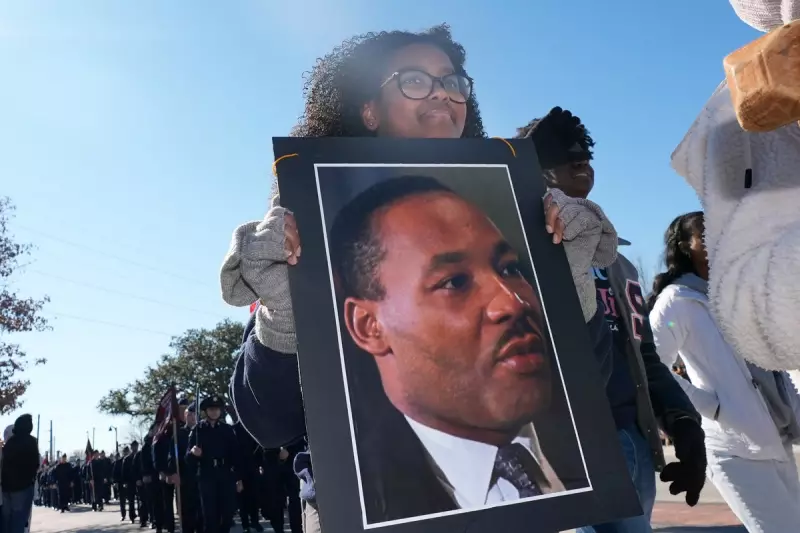
Each third Monday in January, the United States observes Martin Luther King Jr. Day, a federal holiday honouring the legendary civil rights leader. The day, which falls close to King's 15 January birthday, is now marked by millions of workers across government, institutions, and private industry. Yet its establishment followed a prolonged and difficult political battle, taking over 15 years to pass Congress and a further 17 years to be recognised in all 50 states.
The Controversial Campaign for a National Holiday
The push for a federal holiday began amidst national grief. Just four days after Dr. King was assassinated outside a Memphis motel on 4 April 1968, U.S. Democratic Representative John Conyers of Michigan proposed the first legislation. As director of the Martin Luther King, Jr. Research and Education Institute at Stanford University, Lerone Martin notes that King was a polarising figure at the time of his death. Polls indicated many Americans distrusted him or considered his speeches on poverty, housing, and the Vietnam War too radical.
For the next 15 years, the Congressional Black Caucus, founded by Conyers, repeatedly tried to bring the bill to a vote. Opposition was fierce, with critics levelling unfounded accusations that King was a communist or a womaniser, and arguing that public holidays should not honour private citizens. Throughout this period, King's widow, Coretta Scott King, led a relentless lobbying effort. Musician Stevie Wonder bolstered the campaign with his 1980 song "Happy Birthday," rallying public support.

A Shift in Climate and Final Acceptance
By the 1980s, the American social landscape had shifted. Public reflection on racial progress and regret over the Vietnam War created a more receptive environment. In 1983, two decades after King's seminal "I Have a Dream" speech, legislation finally cleared Congress. President Ronald Reagan signed it into law, establishing the holiday.
However, Reagan's signature did not guarantee nationwide observance. It would take 17 more years for all 50 states to recognise the day, with much resistance centred in the South. Arizona became a particular flashpoint when Governor Evan Mecham rescinded the holiday in 1987. Activist Dr. Warren H. Stewart Sr. recalled Mecham stating, "Black people don't need a holiday. Y'all need jobs."
This sparked a major boycott, with entertainers cancelling events and companies moving conventions. The decisive blow came when Arizona lost the right to host the Super Bowl. In 1992, a voter initiative reinstated the holiday, making Arizona the first state to do so by popular vote. South Carolina was the final holdout, only adopting the holiday in 2000, albeit alongside a Confederate Memorial Day.
A 'Day On, Not a Day Off': The Evolution into Service
Now in its 42nd year, Martin Luther King Jr. Day has evolved into the nation's only federal holiday designated as a National Day of Service. This transformation was cemented in 1994 when President Bill Clinton signed legislation from Congressman John Lewis and Senator Harris Wofford. The ethos promoted by the King family is for it to be a "day on, not a day off."
Major cities and suburbs host parades, festivals, and concerts, while service projects range from community clean-ups to food packing and blood donations. The federal agency AmeriCorps has distributed $1.5 million in grants to 200 nonprofits and faith-based groups for MLK Day projects. CEO Michael Smith estimates hundreds of thousands of people participate annually, with engagement expanding beyond organised events.
Dr. King's daughter, Reverend Bernice King, CEO of the King Center in Atlanta, urges people to move beyond quoting her father and to commit daily to nonviolence and good work. Similarly, Lerone Martin emphasises the importance of engaging with King's own writings, like his "Letter from the Birmingham Jail," to arm oneself with his ideals and continue a meaningful conversation with his legacy throughout the entire year.