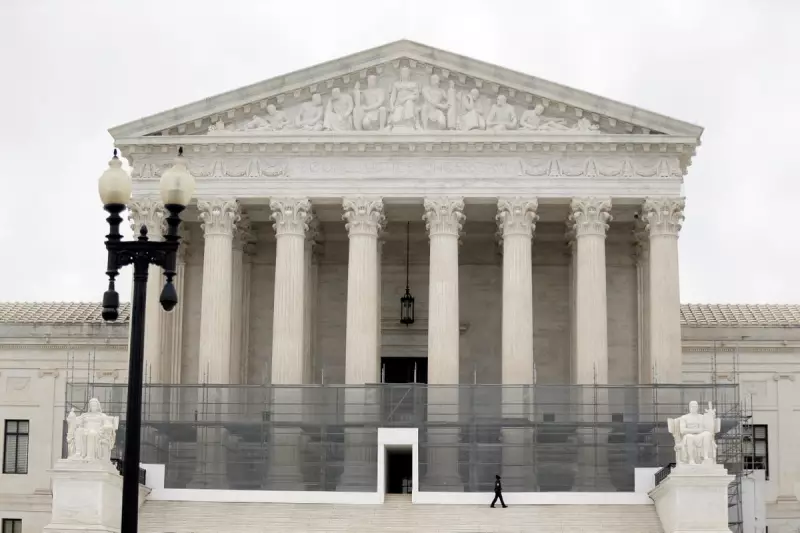
The United States Supreme Court appears poised to strike down Hawaii's contentious restrictions on carrying firearms in commercial establishments, including stores and hotels, during a pivotal hearing that could reshape gun rights across private property nationwide.
Conservative Justices Challenge Hawaii's 'Vampire Rule'
During oral arguments on Tuesday, conservative justices expressed significant scepticism toward Hawaii's legal position, which bars individuals from bringing guns into places like shopping malls and hotels unless the property owner explicitly grants permission. This provision has been colloquially dubbed the "vampire rule" due to its requirement for specific authorisation.
Justice Samuel Alito delivered a particularly pointed critique, asserting that the state's approach effectively "relegates the Second Amendment to second-class status." The justices questioned whether similar restrictions could be applied to First Amendment freedoms, such as speech, on private property, highlighting fundamental constitutional concerns.

Landmark 2022 Ruling Transforms Hawaii's Gun Landscape
The current case represents the latest major firearms dispute to reach the Supreme Court since its groundbreaking 2022 decision, which affirmed that the Second Amendment generally protects an individual's right to carry firearms in public spaces. Prior to that ruling, Hawaii had issued very few concealed-carry permits, but attorney Neal Katyal noted that thousands have been granted in the intervening years.
Hawaii's defence maintains that the measure is designed to protect private property owners' rights to determine whether firearms are welcome on their premises. However, this argument faced rigorous scrutiny from the bench.
Broader Implications and Political Backing
The legal challenge has received backing from the Trump administration, which supports overturning the Hawaii law. Four other states have enacted similar legislation, though comparable restrictions on firearms in private property have been blocked in jurisdictions like New York.
Should the Supreme Court strike down the measure, Hawaii business owners would retain the ability to implement their own policies prohibiting firearms on their premises. Importantly, the outcome would not affect existing state restrictions on guns in locations such as parks, beaches, and establishments serving alcohol.
Case Background and Future Proceedings
The case reached the Supreme Court after being challenged by a gun-rights organisation and three residents from Maui. While a lower court judge initially blocked the law, an appeals court permitted its enforcement, setting the stage for the current review.
The justices are expected to deliver their ruling by late June. This term, the court is also hearing another significant firearms case concerning whether individuals who regularly use marijuana or other drugs can legally possess guns.
Recent Supreme Court Gun Rulings Provide Context
In recent years, the Supreme Court has issued several consequential decisions on firearm regulations. The justices struck down a federal ban on bump stock accessories implemented during Donald Trump's first term, while upholding regulations on so-called "ghost guns" imposed under President Joe Biden's administration. The court also maintained a federal gun law designed to protect victims of domestic violence.
This evolving jurisprudence underscores the court's continued engagement with Second Amendment issues, with the Hawaii case representing another critical juncture in defining the balance between gun rights and property owners' autonomy.