Scottish Government Warns Blanket Trans Prisoner Rule Violates Human Rights
Scottish Government: Blanket Trans Prison Rule Violates Rights

The Scottish Government has published detailed legal arguments asserting that implementing a blanket rule requiring transgender offenders to be placed exclusively in prisons matching their biological sex would constitute a violation of certain prisoners' fundamental rights. This submission comes ahead of a crucial hearing scheduled at the Court of Session in Edinburgh next month.

Legal Clash Over Prison Placement Policy

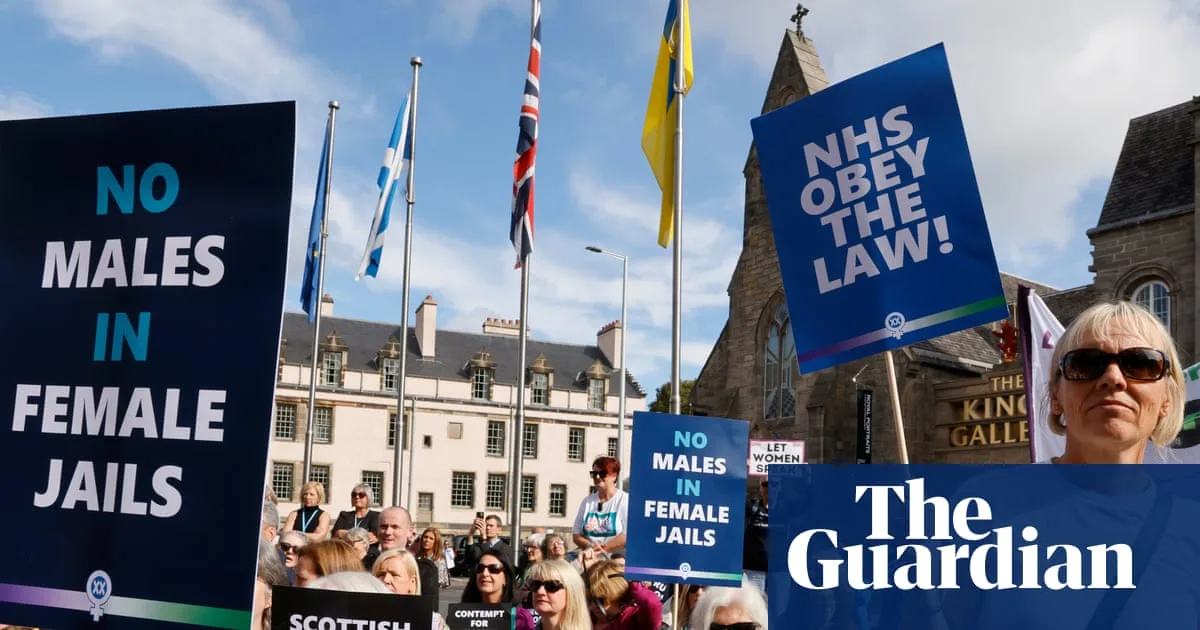
Ministers have formally presented their position in advance of a significant legal confrontation with women's rights campaigners who strongly oppose the placement of trans women within female-only prison facilities. The advocacy group For Women Scotland is returning to court to challenge the Scottish Government, having previously secured a landmark legal victory against Holyrood ministers in 2025 regarding this contentious policy.

The group's successful Supreme Court case in April last year established judicial clarity that the term "woman" within the Equality Act specifically refers to a biological woman. Despite this ruling, the Scottish Government maintains that a rigid, one-size-fits-all approach to prisoner placement would be inappropriate and potentially unlawful.

Human Rights Considerations Take Centre Stage

In legal documents prepared for the February hearing, Scottish Government lawyers contend that a "blanket rule" dictating prison placement based solely on biological sex "would violate the rights of some prisoners." The papers further argue that in certain circumstances, placing prisoners in facilities designated for the opposite biological sex may be necessary to prevent breaches of the Human Rights Act.

The published arguments stress that current Scottish Prison Service guidance, which outlines where inmates should be housed following individualised assessments, "is not unlawful." This guidance considers multiple factors beyond biological sex alone.

Historical Context and Recent Controversies

The legal battle occurs against the backdrop of public outcry following the case of trans rapist Isla Bryson, formerly known as Adam Graham. After being convicted of sex attacks on two women in 2023, Bryson was initially placed in Cornton Vale women's prison in Stirling before being transferred to a male facility.

However, the Scottish Government's legal submission notes that transgender prisoners have been held in prisons for those of the opposite biological sex "since, at latest, 2006." The document clarifies that "only a minority of transgender prisoners have been held in prisons of the opposite sex" and that "the number of prisoners so detained has been low."

Individualised Assessments Versus Blanket Rules

The legal arguments reveal that the placement of these prisoners "has not given rise to any significant operational issue in the prisons in which they have been detained." Prisoners who have been placed in facilities opposite to their birth sex include those holding gender recognition certificates, individuals who have lived in their acquired gender "for decades," and transgender men with masculine appearance.

Crucially, the Scottish Government emphasises that placement decisions are not made "solely on the basis of those personal attributes." Instead, an "individualised assessment" is conducted in accordance with established prison guidance. This guidance is "informed by evidence" highlighting both an increased suicide risk during an inmate's first three months in custody and a "known increased risk of suicide for transgender individuals."

Government's Stance on Risk and International Norms

The legal submission states that Scottish ministers maintain a "well-founded concern that being required to adopt a policy that a transgender prisoner can never be held in a prison for the opposite biological sex could give rise to an unacceptable risk of harm."

While acknowledging that "separate prisons for males and females is the international norm," the government argues this should remain "subject to individual assessment." The papers reference the European Committee for the Prevention of Torture, which considers that "as a matter of principle transgender prisoners should be accommodated in the prison section corresponding to the gender with which they identify."

Political Opposition and Campaigner Response

Scottish Conservative equalities spokesperson Tess White criticised the government's position, stating: "It beggars belief that SNP ministers are still arguing that male-bodied criminals can be housed in women's prisons. Even after the Isla Bryson scandal and the Supreme Court ruling, John Swinney is continuing to betray women by doubling down on the Nationalists' reckless gender self-ID policy."

White further insisted: "The highest court in the land was clear that the definition of a woman is based on biological sex. It is shocking that John Swinney is using taxpayer's money to effectively oppose this principle in court. Women's rights to single-sex spaces must be protected. No male-bodied criminal should be housed in a female prison – end of story."

For Women Scotland responded to the government's arguments, stating: "The Scottish Government's argument makes a great deal about the supposed human right of male prisoners to be placed in the female estate but, apparently, they have not considered that women also have rights. Article 3 protects everyone from torture, inhuman treatment, or degrading punishment, yet women in Scottish prisons are routinely subject to boundary violation and physical or mental abuse from the men they are locked up with."

The group noted they were "pleased, however, that the Equality and Human Rights Commission does not agree with the Government's position and that they have intervened in support of our case." They highlighted that "80% of transgender prisoners are housed in an estate which corresponds to their biological sex" and questioned why certain male prisoners should have a "human right" to be placed with women when others do not.

For Women Scotland concluded: "Rather than admit they were wrong and accept the Supreme Court ruling, Scottish ministers prefer to play dangerous games with women's lives and safety."




