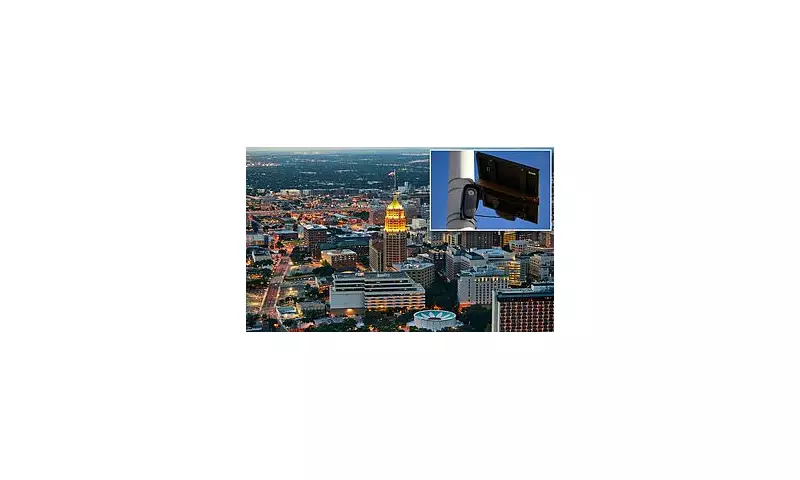
A neighbourhood in San Antonio, Texas, is confronting a wave of unease over the sudden appearance of mysterious surveillance cameras installed across public areas. This surge coincides with heightened national concerns about government overreach and the erosion of personal privacy.
The Rise of the Unseen Observer
On the city's northside, residents have reported a growing number of unexplained black devices, fixed to poles and powered by solar panels. These are Flock Safety automatic license plate recognition (ALPR) cameras. They systematically scan and record the license plate of every passing vehicle, logging its make, model, and colour.
While such technology is frequently employed by police forces to combat crime and traffic offences, the deployment in San Antonio has a more opaque dimension. The cameras have also been widely adopted by private businesses, shopping malls, homeowners' associations, and smaller towns. This patchwork of operators has left many locals in the dark about who is ultimately collecting their sensitive data.

A Data Harvesting Grey Zone
The core anxiety gripping the community revolves around accountability and the potential misuse of harvested information. Residents fear the data could be sold commercially or shared with federal agencies like Immigration and Customs Enforcement (ICE). Flock Safety itself states the collected data extends beyond mere license plates to include other details that can identify a vehicle's owner.
One local, quoted by My San Antonio, captured the prevailing mood: "Since we live in a big brother world, I thought it important to share this with others. The cameras are being deployed and aren't secure. We should all be discussing these cameras and getting them out of our city." Online forums like Reddit reflect the confusion, with users describing the system as a "legal grey zone" used by both private entities and law enforcement.
Critics argue the cameras constitute a 24/7 mass surveillance system that tracks the movements of law-abiding citizens, storing data in searchable databases accessible by hundreds of agencies. This concern is not merely theoretical. In Oakland, California, anti-surveillance advocate Brian Hofer filed a lawsuit alleging the police department shared license plate data with ICE, violating state law. Hofer branded Flock a "shady vendor" and resigned from a city privacy commission in protest.
Cross-Political Opposition and Legal Challenges
The backlash is creating unlikely alliances. Opposition has emerged in at least seven states, including Arizona, Colorado, and Tennessee. Jay Hill, a conservative from Murfreesboro, Tennessee, told NBC the system tracks ordinary citizens, not criminals. In Sedona, Arizona, 72-year-old Sandy Boyce, a Trump voter, found common cause with liberals to successfully lobby her city council to terminate its contract with Flock Safety.
In response to criticism, Flock Safety announced it would stop a 'national lookup' feature for federal agencies and claimed it would adhere to sanctuary city policies like Oakland's, which restrict cooperation with ICE. However, these assurances have done little to quell the fundamental disquiet in San Antonio and beyond.
The situation underscores a deepening national debate: where is the line between public safety and intrusive surveillance? For the residents of this Texas community, the silent, solar-powered cameras represent a disturbing step into a monitored future where the watchers themselves remain unseen and unaccountable.