
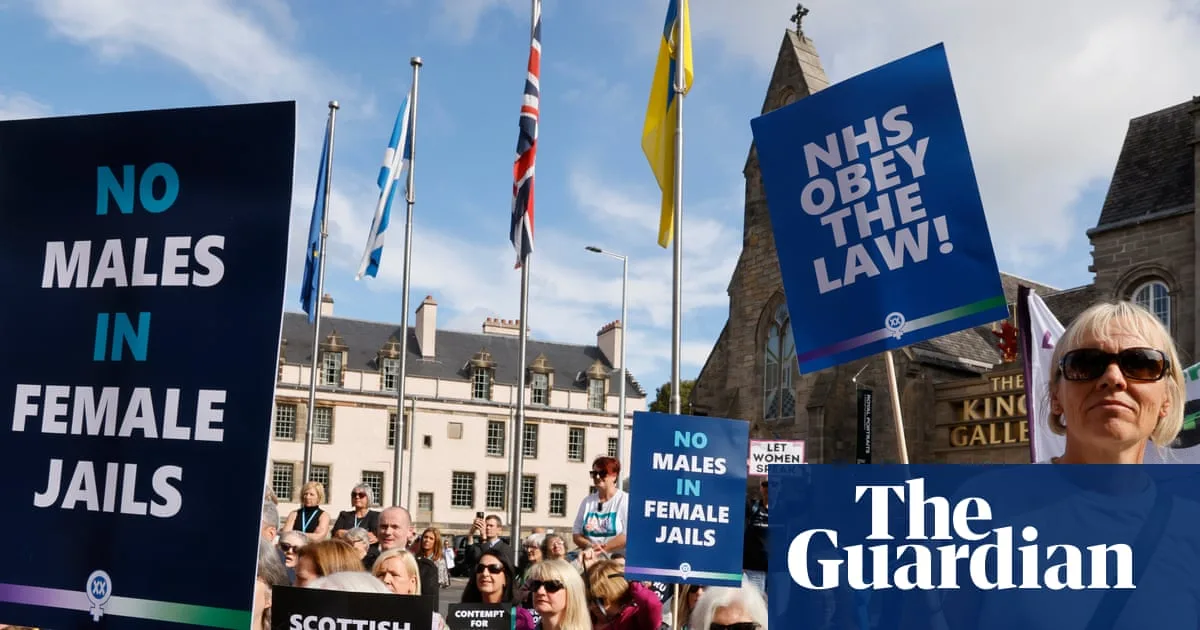
The Scottish government has argued that a blanket rule requiring transgender women to be housed in men's prisons, even when they pose no risk, would be a 'fundamental denial' of their identity. Gerry Moynihan KC, representing the SNP government, told the Court of Session that such a rule could contravene obligations under the European Convention on Human Rights.
The case is the latest legal challenge by For Women Scotland, which is contesting Scottish government guidance that trans prisoners should be housed based on individual risk assessment. The group argues this guidance contradicts last April's Supreme Court ruling that, for the purposes of the Equality Act, the definition of a woman refers to biological sex.
Moynihan argued that the Supreme Court decision was not a universal proposition and that ministers must consider the mental health and rehabilitation of prisoners. He highlighted the risk of suicide if trans inmates are placed in facilities not aligned with their lived gender, stating that the aim is to treat people in the best way for their wellbeing.
The Equality and Human Rights Commission (EHRC) intervened, telling the court that the Scottish government should revise its guidance in light of the Supreme Court ruling. Janys Scott KC, for the EHRC, said it was 'regrettable' that there was a hiatus in national guidance, as the UK government still considers new rules.
The judicial review comes as the SNP faces pressure over single-sex provision in other public sectors. Patient Safety Commissioner Karen Titchener told Holyrood's health committee she had received complaints about female patients feeling unsafe, questioning why single-sex wards are not standard, particularly in mental health.




