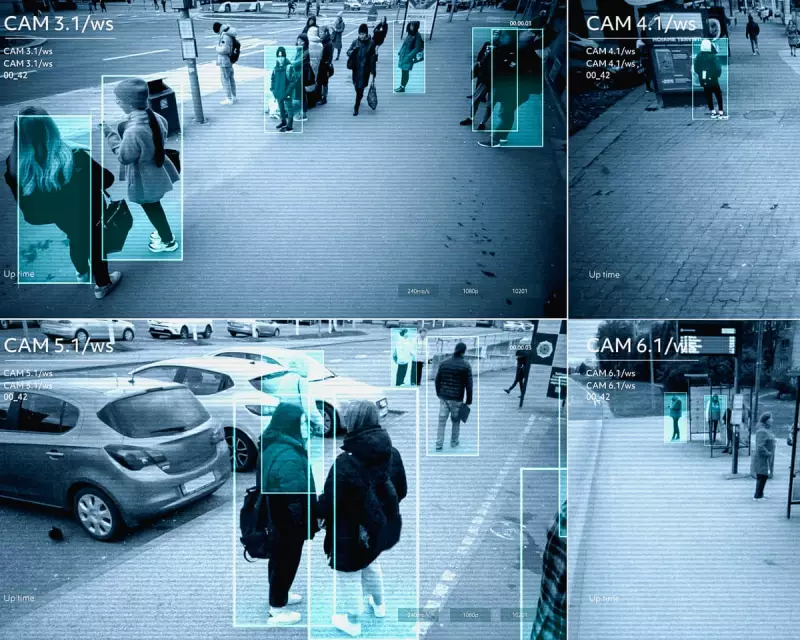
The Labour government's ambitious drive to expand the use of live facial recognition (LFR) technology by police forces across England and Wales is facing mounting criticism over data security and ethical concerns. Experts and civil liberties groups warn that the sensitive biometric data being harvested could easily fall into the wrong hands, creating unprecedented risks to public privacy and trust.
The Scale of the Surveillance Expansion
Under the new plans, spearheaded by Home Secretary Yvette Cooper, police are being actively encouraged to deploy LFR cameras more widely. This technology scans crowds in real-time, comparing live feeds against watchlists of individuals. The stated aim is to locate serious criminals and missing persons more efficiently. However, the rapid rollout is occurring without a comprehensive new legal framework specifically governing its use, relying instead on a patchwork of existing laws and codes of practice.
The most alarming aspect is the proposed centralisation of biometric data. Plans are advancing to connect various police databases, creating vast, interlinked pools of sensitive information. This includes not just facial images, but other biometric markers and personal data. Critics argue that such concentrated databases become high-value targets for cyber-attacks, insider threats, or even future governments with different agendas. The potential for function creep—where data collected for one purpose is later used for another—is a significant fear.

Who Could Get Their Hands on the Data?
The phrase "the wrong hands" extends beyond hackers. Serious concerns exist about access by unauthorised police personnel, other government agencies, or even private contractors involved in maintaining the systems. There is also a profound anxiety about how a future administration might exploit these tools. Once collected and centralised, this data could be repurposed for mass surveillance, social control, or monitoring of political dissent.
Furthermore, the accuracy of the technology remains problematic, with studies showing higher error rates for women and people of colour. This raises the spectre of discriminatory policing and false accusations, with life-altering consequences for innocent individuals. The lack of robust, independent oversight and clear avenues for redress compounds these dangers.
A Crisis of Public Trust and Liberty
The controversy strikes at the heart of the relationship between the state and the citizen. Proponents argue the technology is a vital tool for modern policing. Yet, the opposition, comprising civil liberty organisations like Big Brother Watch and privacy experts, contends that the government is sleepwalking into a surveillance society. They warn that the erosion of privacy is often incremental and irreversible.
The Labour Party, historically a defender of civil liberties, now finds itself accused of betraying those principles in pursuit of a techno-solution to crime. This policy direction risks alienating its own supporters and undermining public trust in both the police and the government's ability to safeguard fundamental rights. The debate is no longer just about crime fighting; it is about what kind of society Britain wants to become.
In conclusion, while the government pursues its law enforcement agenda, the warnings are clear. Without stringent, primary legislation that mandates transparency, strict access controls, independent oversight, and clear limits on data retention and use, the expansion of live facial recognition threatens to place extraordinary power—and intimate personal data—into hands that may misuse it, with lasting damage to democracy and freedom.