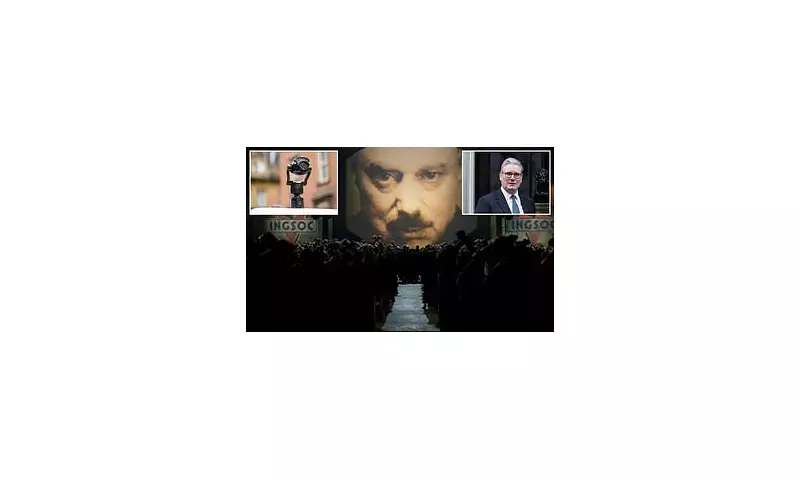
The Labour government is facing accusations of creating a 'Big Brother Britain' with controversial plans for a nationwide mass rollout of facial recognition surveillance technology. Critics have warned that new laws being sought by ministers could pave the way for cameras to be deployed in cities, towns, and villages across every police force area.
A 'Massive Step Forward' or a Dystopian Overreach?
While the move has been welcomed by some in law enforcement, including a former counter-terrorism police chief who branded it a 'massive step forward for law enforcement', civil liberties groups and political opponents have hit out fiercely. They describe the scheme as 'dystopian' and warn of a profound 'erosion of civil liberties', drawing direct parallels with the authoritarian surveillance state depicted in George Orwell's novel, 1984.
This expansion forms part of a series of Labour measures that have raised concerns about freedoms, including plans for mandatory digital ID cards and scrapping jury trials for all but the most serious crimes. Former shadow home secretary David Davis voiced alarm after police leaders suggested cameras could be placed in shopping centres, stadiums, and transport hubs to hunt for criminals and missing persons.

'Welcome to Big Brother Britain,' Davis stated. 'Something of this magnitude should not happen without full and detailed debate in the House of Commons.'
How the Technology Works and the Scale of Its Use
The proposed system involves live facial recognition cameras that capture digital images of pedestrians. Biometric software then analyses facial features, comparing them against police watchlists. If a match is found, officers are alerted. Data from individuals not on a watchlist is supposed to be deleted immediately.
Proponents point to its accuracy and success. According to tests, only one in 33,000 scans results in a false alert. The Metropolitan Police have made 1,300 arrests using the technology over the past two years, including apprehending 100 sex offenders who breached licence conditions. Policing Minister Sarah Jones described it as the 'biggest breakthrough for catching criminals since DNA matching'.
However, Silkie Carlo, director of Big Brother Watch, highlighted the scale of existing surveillance, noting that police records show over seven million innocent people in England and Wales were scanned by police facial recognition cameras in the past year alone. 'For our streets to be safer the government need to focus their resources on real criminals rather than spending public money turning the country into an open prison,' she argued.
Consultation, Concerns, and a National Database
The government has launched a ten-week public consultation to gauge opinion on how the technology should be used, overseen, and scrutinised by a new regulator. Key questions include whether police should access other databases like passport and driver's licence photos to track criminals.
Civil servants are already working with police to establish a new national facial recognition system holding millions of images from custody records, immigration data, and featuring missing people, including children. Critics demand clarity on crucial safeguards:
- What restrictions will govern live facial recognition?
- How long can images be retained?
- Will children's photos be used?
- What judicial oversight will apply?
'What happens to innocent people's photos? The Commons must decide the limits of state surveillance in a free society,' David Davis emphasised. The Equality and Human Rights Commission has previously declared the Met's policy on live facial recognition 'unlawful', adding further weight to calls for rigorous parliamentary scrutiny before any national rollout.