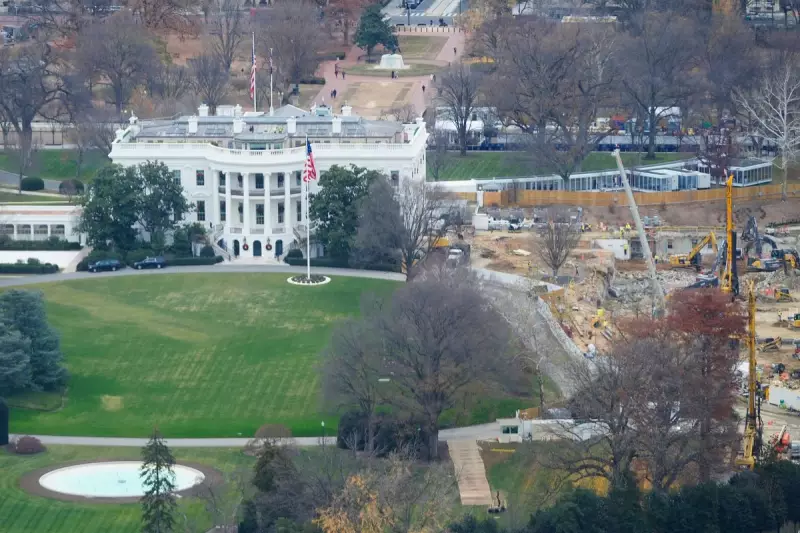
A federal judge has indicated he will allow the controversial construction of a $400 million ballroom at the White House to continue, dealing a blow to historic preservationists seeking to halt the project. Judge Richard J. Leon signalled during a hearing on Tuesday that he was leaning toward denying a request for a temporary work stoppage, arguing the plaintiffs had not demonstrated "irreparable harm."
Legal Battle Over Presidential Project
The lawsuit was filed last week by the National Trust for Historic Preservation, a privately funded group. It sought to block President Donald Trump's gold-plated ballroom project until it underwent multiple independent reviews and received approval from Congress. The Trust argued that no president, including Trump, is legally permitted to demolish portions of the White House without any review.
However, Judge Leon stated the organisation failed to meet the legal threshold for an injunction. He did, however, order the White House to submit its plans within two weeks to the National Capital Planning Commission and the Commission of Fine Arts for review.

Trump Hails Decision and Revises Cost
President Trump celebrated the judge's preliminary stance at a White House Hanukkah event on Tuesday evening, thanking Judge Leon for his "courage." During his remarks, Trump also increased the publicly stated price tag of the project from $300 million to an estimated $400 million, though he quipped he "should do it for less."
"We're donating a $400 million ballroom, and we got sued not to build it," Trump said, framing the project as a donation. He added that he inflated the figure to avoid media criticism if costs slightly overran.
Preservationists Vow to Continue Fight
Carol Quillen, President and CEO of the National Trust, responded by affirming the group's commitment to ensuring the law is followed. "We remain fully committed to upholding the interests of the American people and advocating for compliance with the law," Quillen stated, emphasising the need for public comment on the project.
The Trust's attorney, Tad Heuer, argued in court that allowing construction to proceed without reviews lets the government dictate facts on the ground. "It's not about the need for a ballroom. It's about the need to follow the law," Heuer asserted.
Security Concerns and Legislative Backlash
In court, Adam Gustafson, the principal deputy assistant attorney general, contended the Trust had no legal standing to sue. He also cited unspecified national security reasons for why underground construction must continue, details of which were not disclosed in open court.
Judge Leon issued a warning to the administration, cautioning them against making decisions on underground infrastructure—like plumbing and gas lines—that would predetermine the scope of the above-ground ballroom. He promised the court would "address it" if that occurred.
The project, which began with the demolition of the historic East Wing in October, will create a 90,000 square-foot ballroom. President Trump claims it will be funded by private donors, including major tech firms and cryptocurrency companies.
In response, Democrats have introduced the Stop Ballroom Bribery Act, led by Senator Elizabeth Warren and Representative Robert Garcia. The proposed legislation aims to increase transparency around donations and ban contributions from individuals with conflicts of interest.