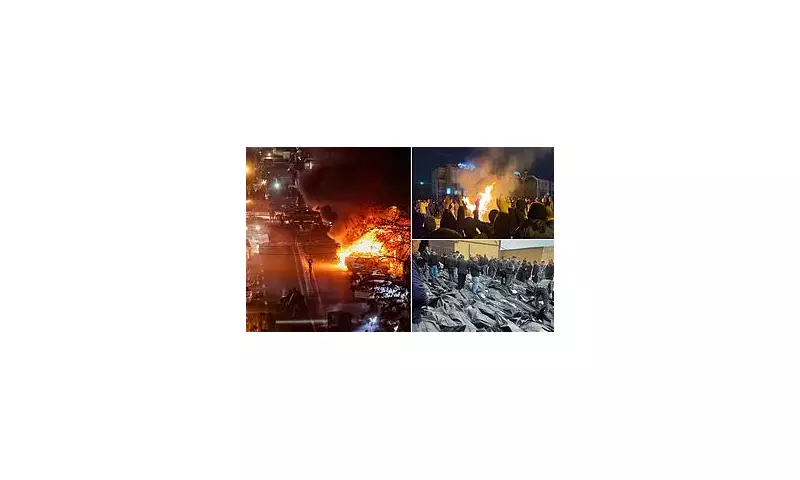
Iranian authorities have made a stark admission, confirming that over 5,000 people have been killed during recent nationwide protests, while simultaneously threatening to carry out executions of detained protesters in a dramatic policy reversal.
Official Toll and a Sinister Warning
An anonymous government official told Reuters that the death toll in the Iran protests had surpassed 5,000, with at least 500 of those being security personnel. The official blamed "terrorists and armed rioters" for killing "innocent Iranians," stating that some of the worst violence occurred in Kurdish areas in the northwest.
This admission came alongside a severe warning from the judiciary. Spokesperson Asghar Jahangir stated that a series of actions by detainees had been identified as "Mohareb"—an Islamic legal term meaning to wage war against God, which is punishable by death under Iranian law.

International Pressure and a Temporary Reprieve
The threat of executions marks a dramatic U-turn from statements made just days earlier. Iran's Foreign Minister, Abbas Araqchi, told Fox News last week that "there is no plan for hanging at all" and that "hanging is out of the question," a move seen as bowing to pressure from then-US President Donald Trump.
Trump had warned Iran that his administration would "act accordingly" if killings continued or executions proceeded. The case of 26-year-old clothes shop owner Erfan Soltani, the first protester sentenced to death in the latest unrest, became a focal point. Following international pressure and Trump's warnings, his family reported his execution was postponed.
A Darker Picture Emerges from Medical Reports
While the official death toll stands at over 5,000, a separate medical report compiled by doctors inside Iran and seen by The Times paints a far grimmer picture. It claims at least 16,500 protesters have been killed and more than 300,000 wounded in just three weeks.
Professor Amir Parasta, an Iranian-German surgeon involved in the report, described a "whole new level of brutality," with injuries consistent with military-grade weapons rather than the crowd-control measures used in past protests. "This is genocide under the cover of digital darkness," Parasta stated.
The protests, which began on December 28, 2025, over economic grievances, have evolved into broader anti-government demonstrations. Iran's dual approach has involved a violent crackdown while acknowledging the legitimacy of protests over economic problems.
In response to the escalating violence, Britain, France, Germany, and Italy have all summoned Iranian ambassadors to protest the regime's actions.