

US Immigration Agents Deploy Meta AI Glasses for Covert Surveillance Operations
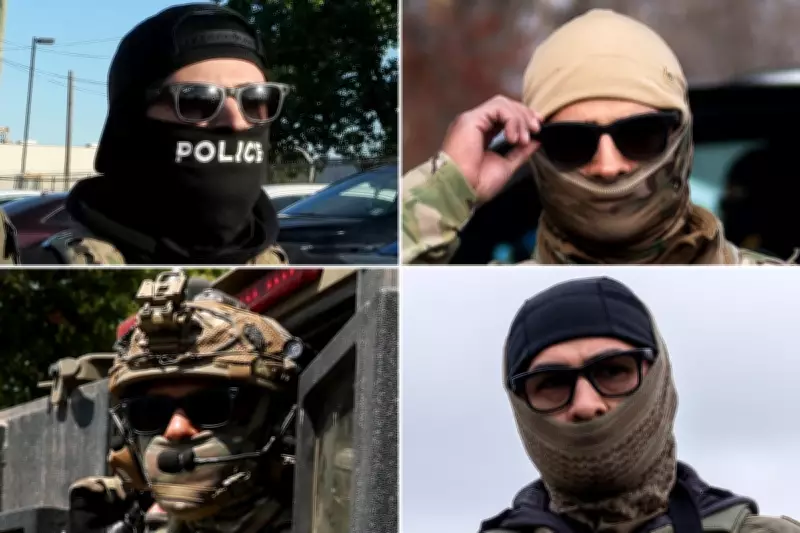
Immigration and Customs Enforcement (ICE) and Border Patrol agents across the United States are increasingly utilizing personal Meta AI smart glasses to surveil communities, according to an investigation by The Independent. This practice has ignited significant alarm among civil liberties experts and protesters, who fear the footage could be weaponized to target critics of President Donald Trump's aggressive nationwide deportation campaign.
Expanding Surveillance Arsenal Beyond Official Channels
While federal agencies have ramped up deployment of government-issued body cameras and facial recognition scanners over the past year, accompanying nearly 400,000 immigrant arrests and frequent clashes with demonstrators, the use of personal Meta glasses represents a concerning escalation. Agents in six states have been observed wearing these devices since Trump assumed office, with documented instances of recording and photographing members of the public without their knowledge.
The Meta AI glasses, which retail from $379, feature voice-controlled artificial intelligence capable of real-time image analysis, internet connectivity, and live-streaming capabilities. These functions create the potential for agents to feed captured video and images directly into facial recognition software or law enforcement databases, circumventing established oversight protocols.

Civil Liberties Experts Sound Alarm Over Constitutional Violations
Patrick G. Eddington, a surveillance analyst and senior fellow at the Cato Institute, expressed profound concern about the "widespread" adoption of Meta glasses by federal agents. He highlighted the Trump administration's troubling tendency to classify citizens who record or protest agents as national security threats, noting that peaceful observation of government operations constitutes "100 percent First Amendment-protected activity" that should not populate government databases.
"The purpose of it all, quite clearly, with this regime, is to gather as much data as they can on anybody who they believe is a threat to the regime," Eddington told The Independent. "They are aggregating data on individuals and on groups and they are using it for the purpose of politically going after people."
Eviscerating Established Surveillance Safeguards
Jay Stanley, senior policy analyst for the ACLU's Speech, Privacy, and Technology Project, warned that agents using personal devices "eviscerates" crucial safeguards built into government surveillance programs. Clear federal agency policies dictate when official cameras should be activated and how sensitive data must be stored for later review—protections completely bypassed when agents employ personal equipment.
"If an officer is using their own personal device, that just blows out of the water any of the needed policies that have to accompany this form of government surveillance," Stanley emphasized, characterizing the practice as indicative of the "lawlessness" permeating the current administration.
Documented Incidents Reveal Pattern of Covert Recording
In Evanston, Illinois, on December 17, Border Patrol agents utilized Meta glasses to film protesters during an immigration operation at a Home Depot parking lot. Liz Myers, an Army veteran who witnessed the incident, only realized she had been recorded after submitting her own footage to Northwestern University's Daily Northwestern newspaper, which identified the agents' surveillance activity.
"They're keeping records of people who are protesting them," Myers asserted, expressing concern that the footage could be employed to track administration critics. Her observations align with broader reports from multiple cities where individuals filming immigration agents have subsequently had their faces, license plates, or homes documented by federal personnel.
Administration's Troubling Rhetoric and Policy Directives
The surveillance expansion occurs alongside alarming administration rhetoric and policy shifts. Outgoing Homeland Security Secretary Kristi Noem declared in July that filming agents during operations constitutes a form of "violence," while a September national security memo listed criticisms of "law enforcement and border control" as key indicators for domestic terrorism investigations.

Furthermore, an ICE agent in Maine allegedly informed a woman filming arrests that "We have a nice little database and now you're considered a domestic terrorist"—a statement that has prompted her participation in a class action lawsuit challenging administration retaliation against First Amendment activities.
Deepening Ties Between Tech Giants and Immigration Enforcement
The Trump administration has significantly strengthened relationships with surveillance and technology corporations. The Department of Homeland Security maintains at least $1 billion in contracts with Palantir—co-founded by Trump donor Peter Thiel—for AI and data mining tools to identify migrants for deportation. Customs and Border Protection recently secured access to Clearview AI's facial recognition database, while the White House promotes AI integration into national security systems.
Meta's connections to the administration are particularly noteworthy, with the company contributing to Trump's inauguration and White House ballroom project. CEO Mark Zuckerberg visited Trump at Mar-a-Lago post-election and attended the presidential swearing-in ceremony as a guest of honor.
Technical Vulnerabilities and Privacy Implications
Security researchers have identified methods to disable the white LED indicator light on Meta glasses that signals recording activity, while third-party sellers on Amazon offer covers to obscure the light entirely. These vulnerabilities enable covert surveillance without subjects' awareness. Additionally, The New York Times reported in February that Meta is exploring official facial recognition capabilities for the glasses, potentially amplifying privacy concerns.
The implications became starkly evident last month when a Los Angeles judge threatened contempt charges against anyone using smart glasses to record inside her courtroom during Zuckerberg's social media addiction trial, explicitly prohibiting facial recognition of jurors.
Constitutional Concerns and Future Implications
Despite DHS assertions that personal recording devices are unauthorized and that no domestic terrorist database exists, documented incidents and expert analysis suggest a systematic erosion of constitutional protections. As immigration operations continue nationwide—albeit with reduced Minneapolis presence following the fatal January shootings of protesters Alex Pretti and Renee Good—the utilization of personal surveillance technology by federal agents represents a dangerous precedent.
"I am a vet," Myers concluded. "I took an oath to defend the Constitution, and everything that they're doing is violating the Constitution in several ways. I do see them as being domestic terrorists."





