In a controversial move that has sparked outrage among civil liberties advocates, US Immigration and Customs Enforcement spent nearly $100,000 on additional pepper ball munitions just four days after a young anti-ICE protester was permanently blinded by one of the projectiles. The timing of the purchase, revealed through federal procurement records examined by The Independent, has raised serious questions about the agency's use of force protocols and accountability measures.
Protester Blinded During Orange County Demonstration
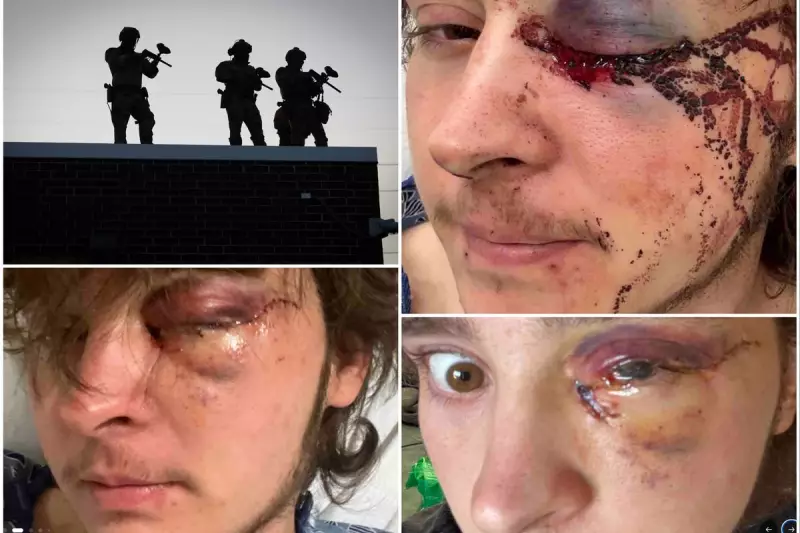
On January 9, 21-year-old college student Kaden Rummler was participating in a demonstration outside a federal building in Orange County, California when he was struck in the left eye by a projectile fired from close range by a federal agent. The impact not only destroyed his vision in that eye permanently but also fractured his skull, according to medical documentation and a GoFundMe page established to assist with his substantial medical expenses.
Witnesses at the scene identified the projectile as a pepper ball round, though the Department of Homeland Security, ICE's parent agency, has not officially confirmed this detail. Rummler endured a two-day hospital stay and six hours of surgery following the incident, and was subsequently charged with one count of disorderly conduct, a misdemeanor offence.

Substantial Purchase Follows Serious Injury
Federal procurement data reveals that on January 13, just four days after Rummler's blinding, ICE spent $98,666.25 on additional "less-lethal pepper ball projectiles for control crowd to support ICE – Office of Firearms and Tactical Programs at Fort Benning, GA." The substantial order raises immediate concerns about the agency's procurement priorities following serious injuries caused by these weapons.
According to ICE documentation, the Office of Firearms and Tactical Programs exists to "support the mission of U.S. Immigration and Customs Enforcement by providing world class firearms and tactical training, equipment, support, and guidance to promote officer safety and effective execution of the ICE law enforcement mission."
Pattern of Controversial Pepper Ball Use
This incident is not isolated within ICE's recent history of crowd control tactics. In October, ICE agents in Chicago shot a Presbyterian minister in the head with a pepper ball while he was praying with demonstrators at a street protest. Reverend David Black, who was wearing clerical garb at the time, was offering prayers when officers fired at him without provocation, according to a subsequent lawsuit he filed against the agency.
That same month, another pastor was shot in the face at close range with a pepper ball round by an ICE agent at a protest in Northern California. Reverend Jorge Bautista reported receiving no warnings before the agent fired, stating "It just felt like they had no procedures whatsoever."
Medical Evidence Contradicts 'Non-Lethal' Claims
Despite being marketed as non-lethal alternatives to traditional firearms, pepper ball rounds have been responsible for dozens of deaths and thousands of serious injuries globally according to Amnesty International research. A comprehensive 2017 peer-reviewed study by American physicians concluded that these projectiles "have caused significant morbidity and mortality during the past 27 years, much of it from penetrative injuries and head, neck and torso trauma."
The medical researchers specifically warned that "given their inherent inaccuracy, potential for misuse and associated health consequences of severe injury, disability and death, non-lethal rounds do not appear to be appropriate weapons for use in crowd-control settings." They called for urgent establishment of international guidelines on crowd-control weapons to prevent unnecessary injuries and deaths.
Conflicting Accounts of Protest Events
Department of Homeland Security spokeswoman Tricia McLaughlin described Rummler and other Santa Ana protesters as a "mob" and "violent rioters," claiming they threw rocks, bottles, and fireworks at federal officers. However, local officials contradicted this characterization, stating the group didn't throw anything more serious than a few orange traffic cones during the demonstration.

The protest where Rummler was injured was organized in response to the January 7 shooting of Minneapolis poet and mother-of-three Renee Nicole Good, which demonstrators characterized as a "public execution." A second protester at the same demonstration told the Los Angeles Times that he too was blinded in one eye by a projectile fired by federal agents.
Legal and Oversight Concerns Mount
Rummler's attorney, John Washington, called the shooting a "completely unacceptable use of force" and noted his client was fortunate to survive the incident. "Any officers with just the most basic training would know you don't shoot someone ever in the face with this... let alone at point-blank range," Washington told the Associated Press, adding "and that's because it is a lethal weapon when used like that, and it very nearly was."
Nick Schwellenbach, a senior investigator at the watchdog nonprofit Project on Government Oversight, noted that while he doesn't know how the newly purchased pepper balls will be utilized, ICE's Office of Firearms and Tactical Programs "definitely does play a role in equipping agents, not simply training them."
As ICE has intensified its enforcement tactics in recent months, federal judges have begun imposing limitations on how agents can respond to peaceful protesters. The agency declined to respond to requests for information about where the latest batch of pepper ball rounds will be deployed, and whether they will be used for training or distributed to officers in the field.
The procurement records also reveal that DHS recently spent approximately $160,000 on "parka jackets" to keep immigration officers warm during what the agency describes as an "urgent enforcement mission" in Minneapolis-Saint Paul, highlighting continued investment in enforcement infrastructure even as questions mount about appropriate use of force.